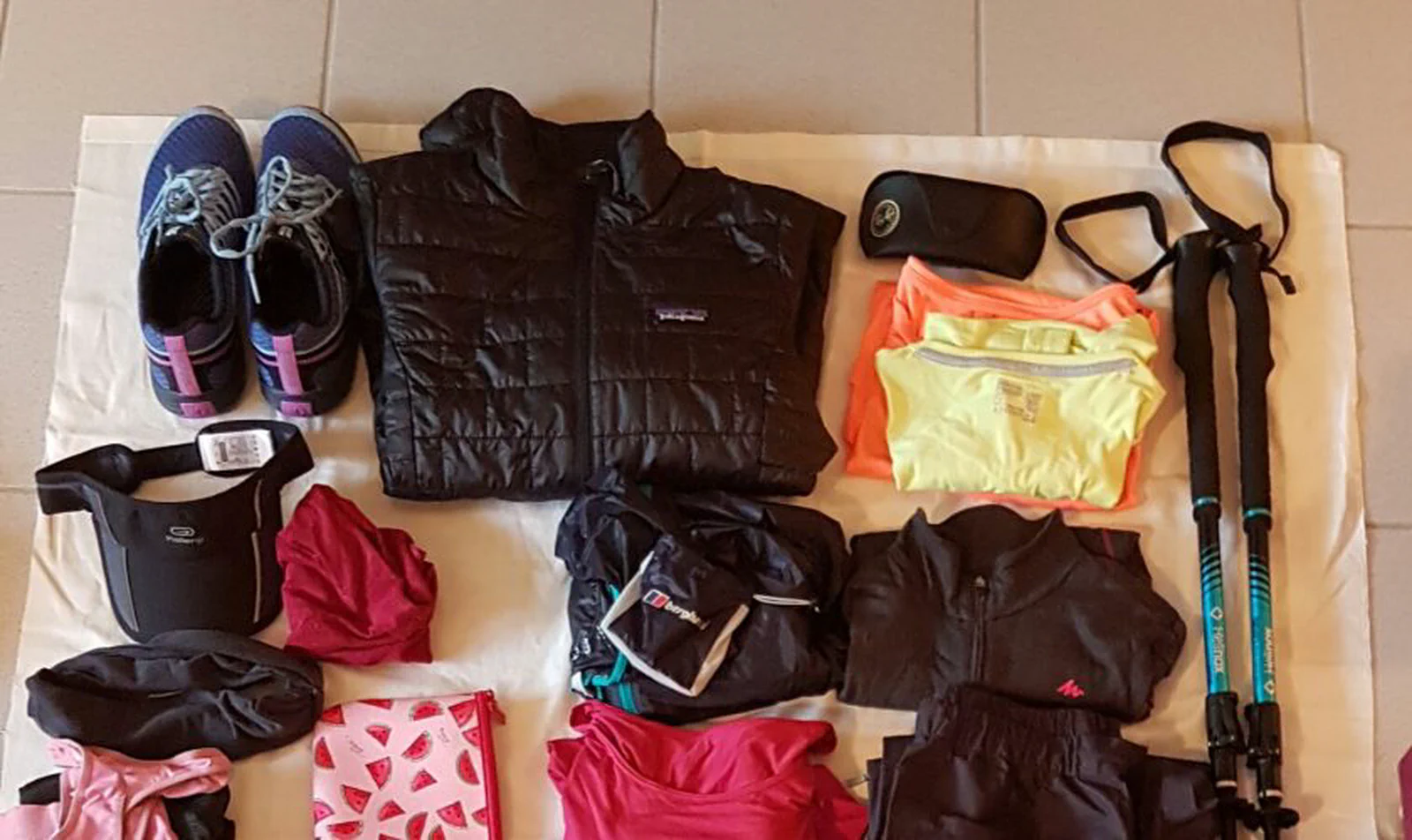
Hours of research and a small fortune went into our ultralight gear. The target from our plan : around six kilos of luggage each, not counting food. For 3000 kilometres, rain, river crossings and nights in the mountains.
In Jasmin’s rucksack
approx. 5 kg (the sleeping bag is missing from the picture)
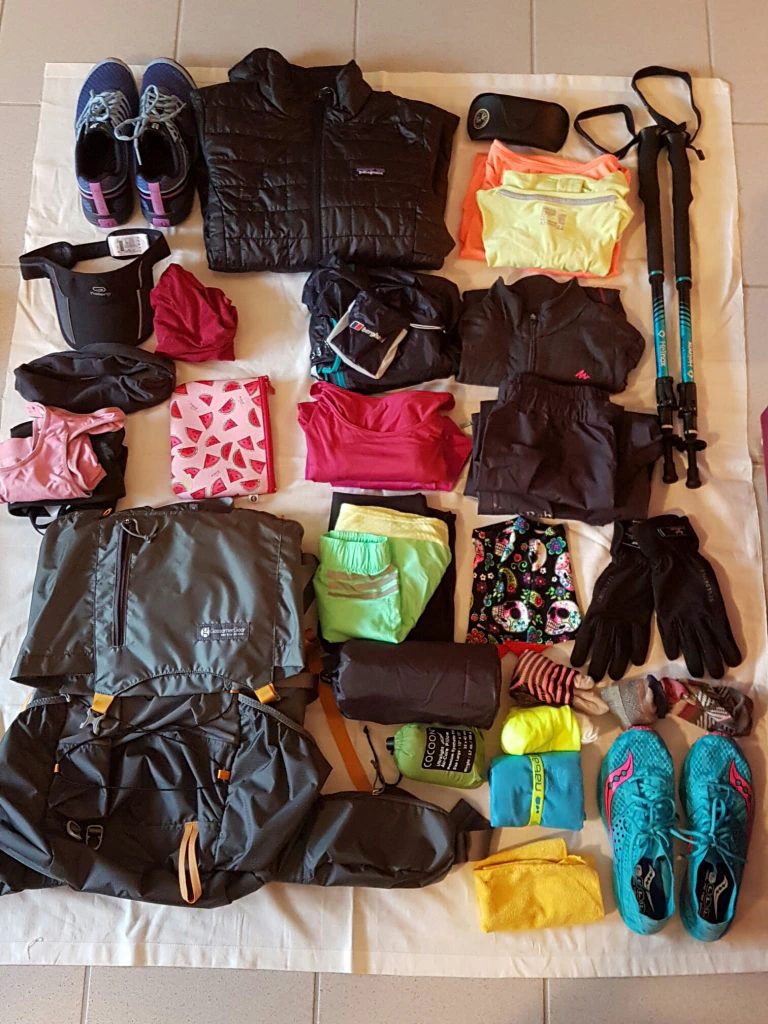
What’s in the picture:
- Rucksack with hip belt and lid pocket
- Two pairs of shoes: light trail runners instead of heavy hiking boots
- Trekking poles
- Insulated jacket
- Rain jacket
- Base layers to change into, long- and short-sleeved
- Trousers to change into
- Gloves and a buff
- Socks, several pairs
- Inflatable pillow
- Microfibre towel
- Wash bag and a hip pouch for everything that needs to be within reach
In Jan’s rucksack
approx. 7 kilos (the sleeping bag is missing from the picture).
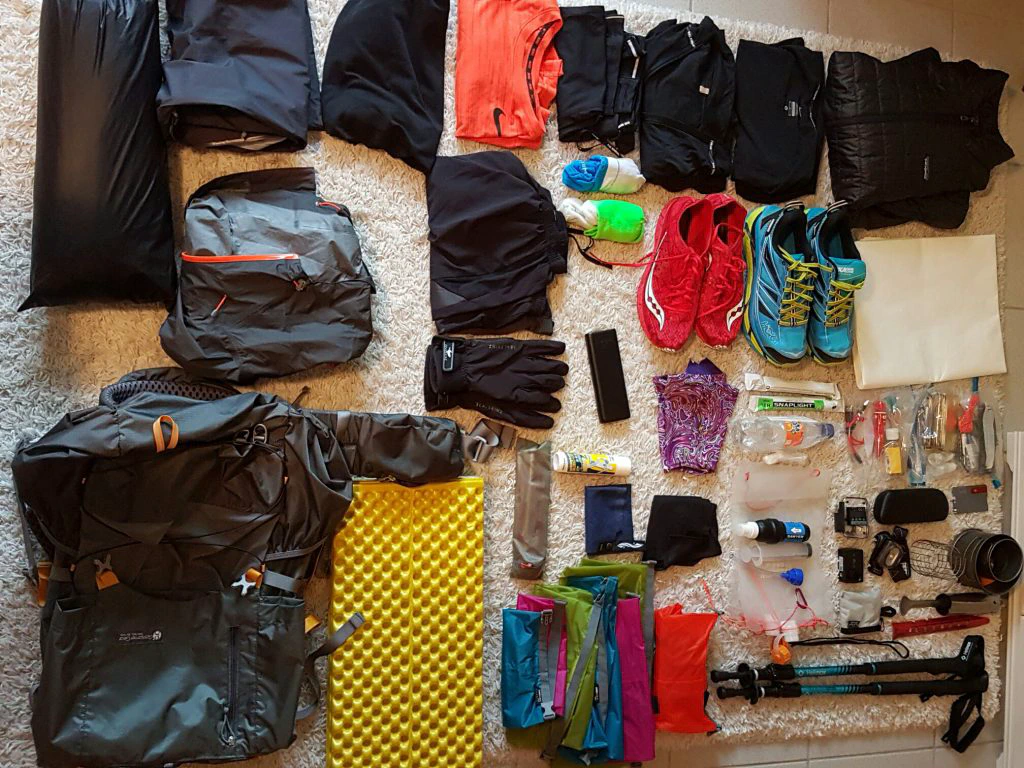
Jan’s pile also holds the things we share:
- Two-person tent
- Foam sleeping mat
- Stove and pot
- Water filter and collapsible water bags
- Head torch and power bank
- Colourful dry bags, so everything stays dry and we can find it again in the rucksack
- Tent pegs, sun cream and odds and ends in zip bags
- Two pairs of trail runners, trekking poles, insulated jacket, rain gear, base layers and gloves, just like mine
Every gram counts
Following the motto “every gram counts”, we then went through it all once more and cut anything without an absolutely life-sustaining reason to exist.
38 grams saved?
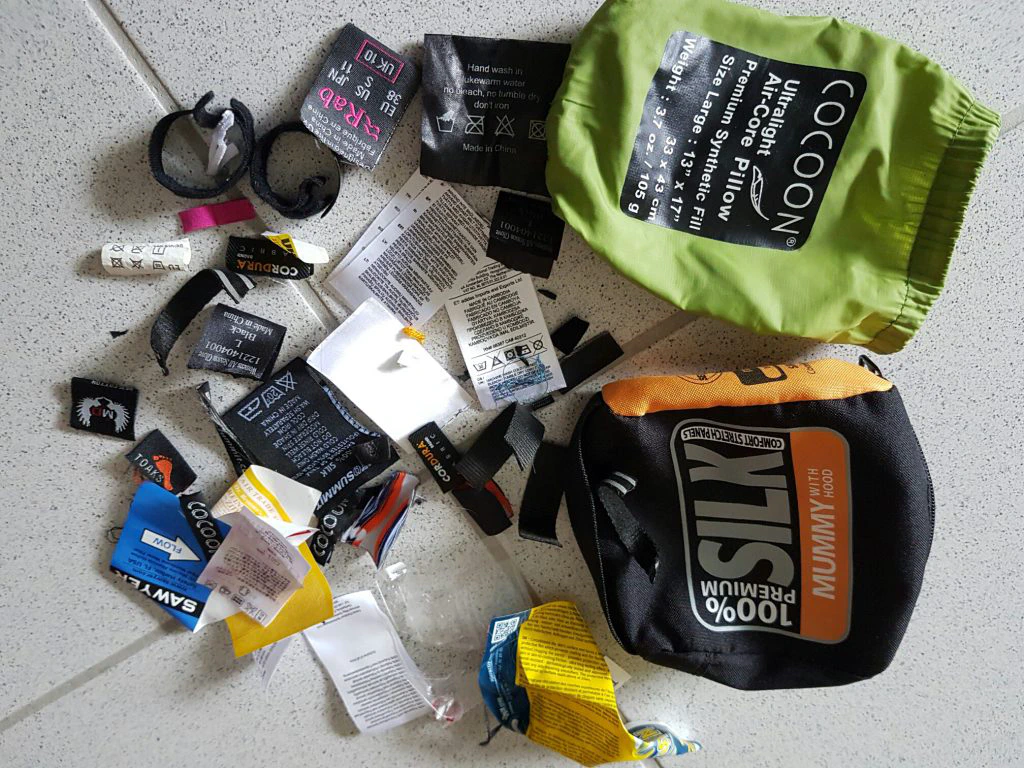
Care labels, tags, superfluous straps and packaging – all of it had to go. What remained were the light stuff sacks, for example from the inflatable pillow and the silk liner for the sleeping bag.
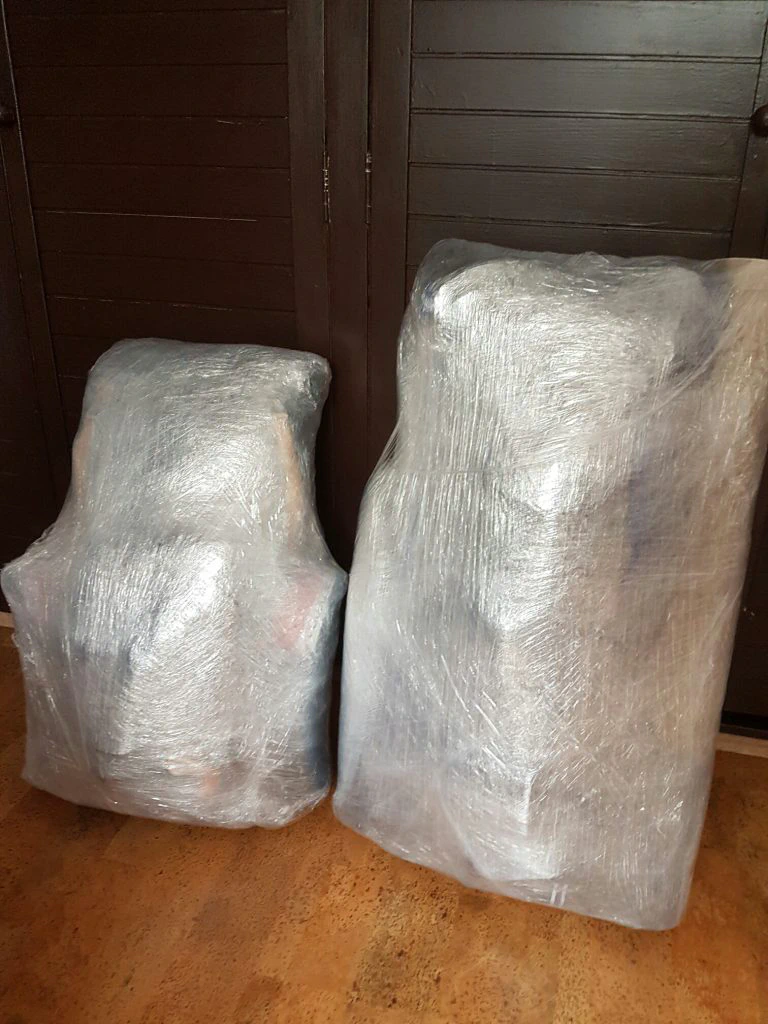
Safely wrapped in two rolls of cling film, off it went to the airport.
Postscript: what proved itself on the trail
Looking back, our section reports show which parts of the gear really mattered:
- Trekking poles: indispensable. On the ridge of the Tararua Ranges we could not have stood up to the wind without them (Section 9 ), and on the river crossings of the Bush Stream Track they kept us upright, even if they trembled in the current (Section 15 ).
- Trail runners instead of hiking boots: wet feet are the normal state of affairs on the Te Araroa. After 1000 kilometres we had 18 days of wet shoes behind us (Section 7 ). And at some point wet shoes stop bothering you, only muddy ones do.
- The tent: up to kilometre 1000 we slept in it for 17 nights. What we learned: in a meadow the tent is wet with condensation in the morning; under trees it stays dry – but in a storm something might come down from above.
And how did it go with the food? That’s in the next post: Trail Cuisine .