
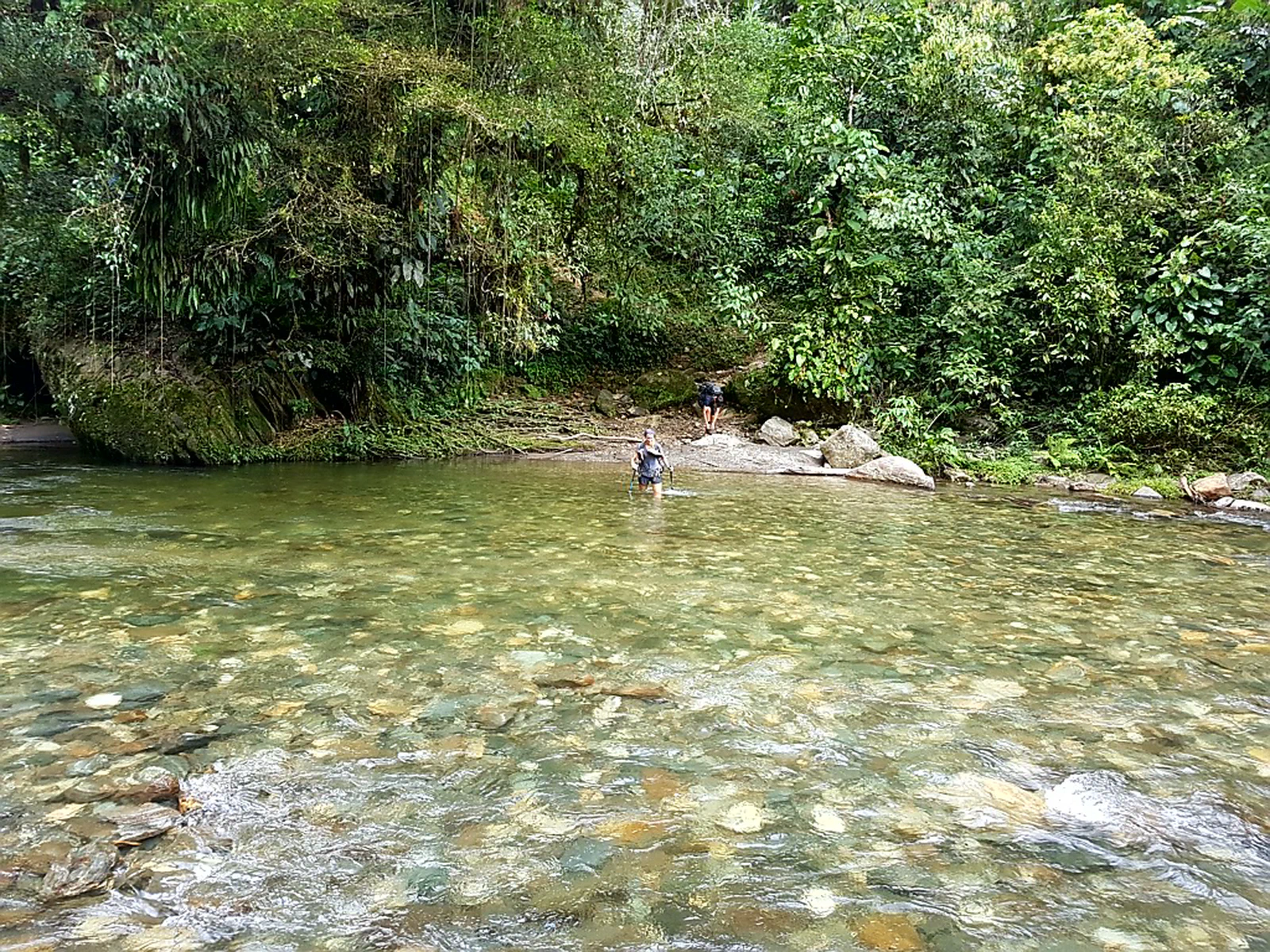
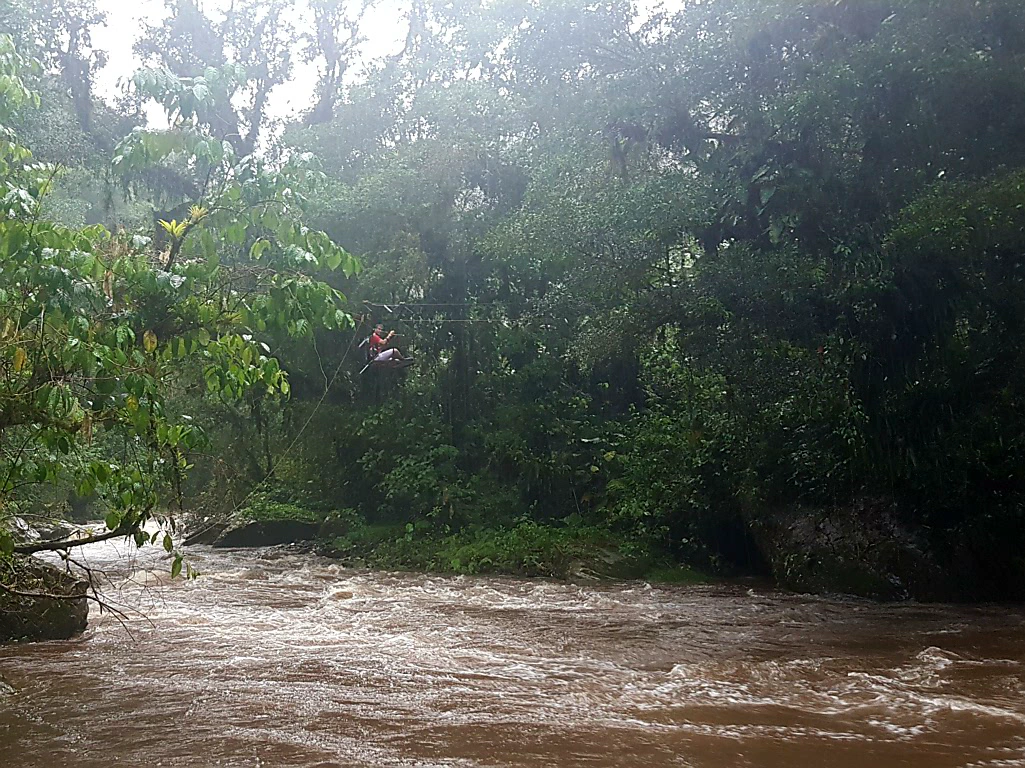
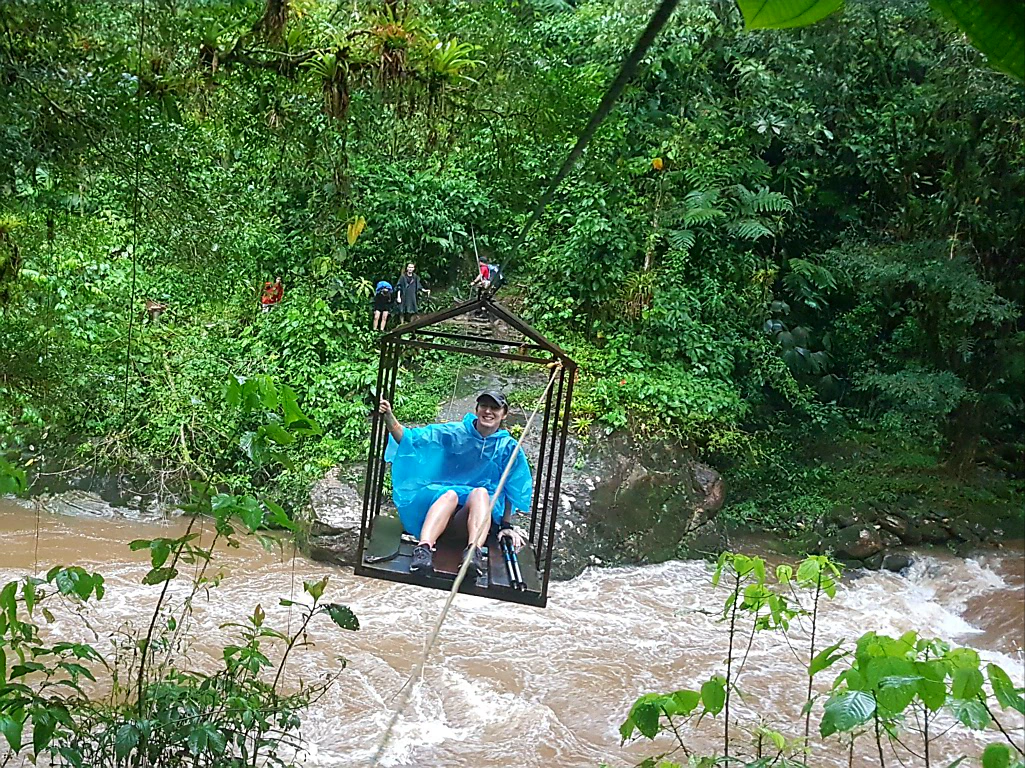
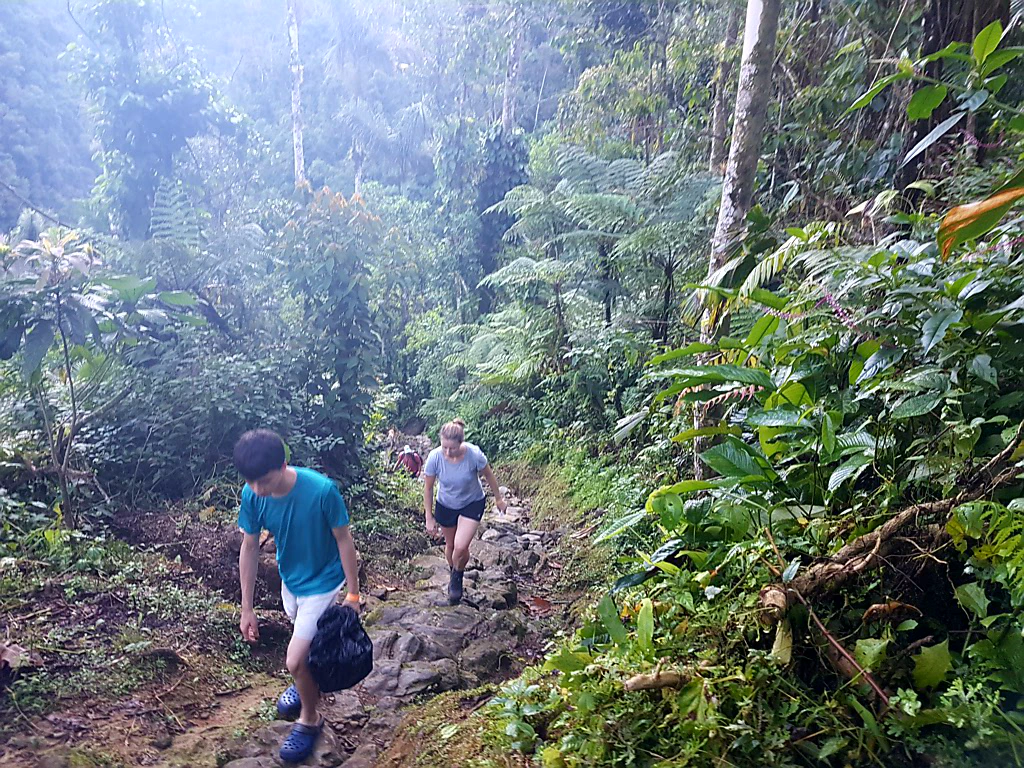
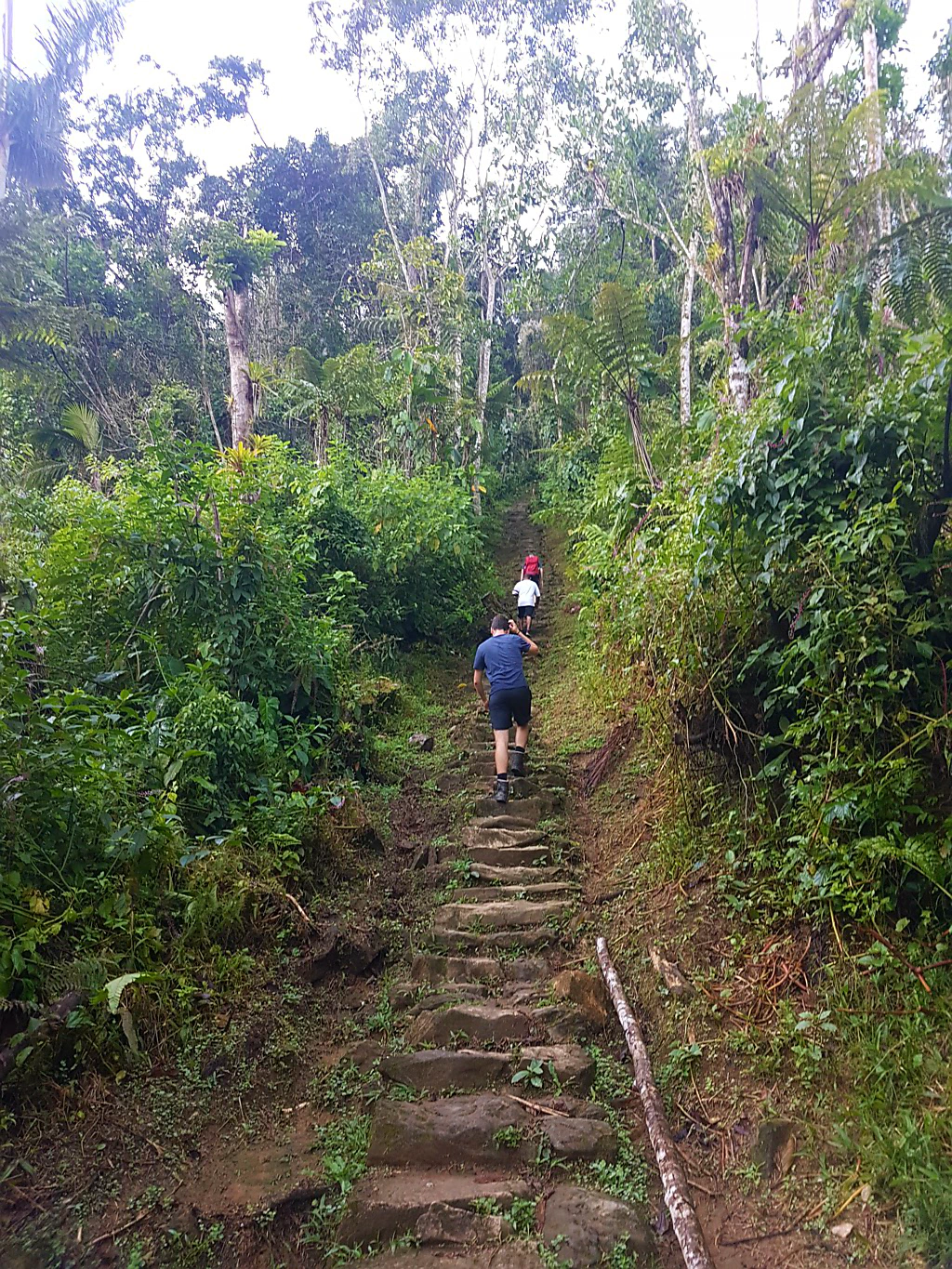
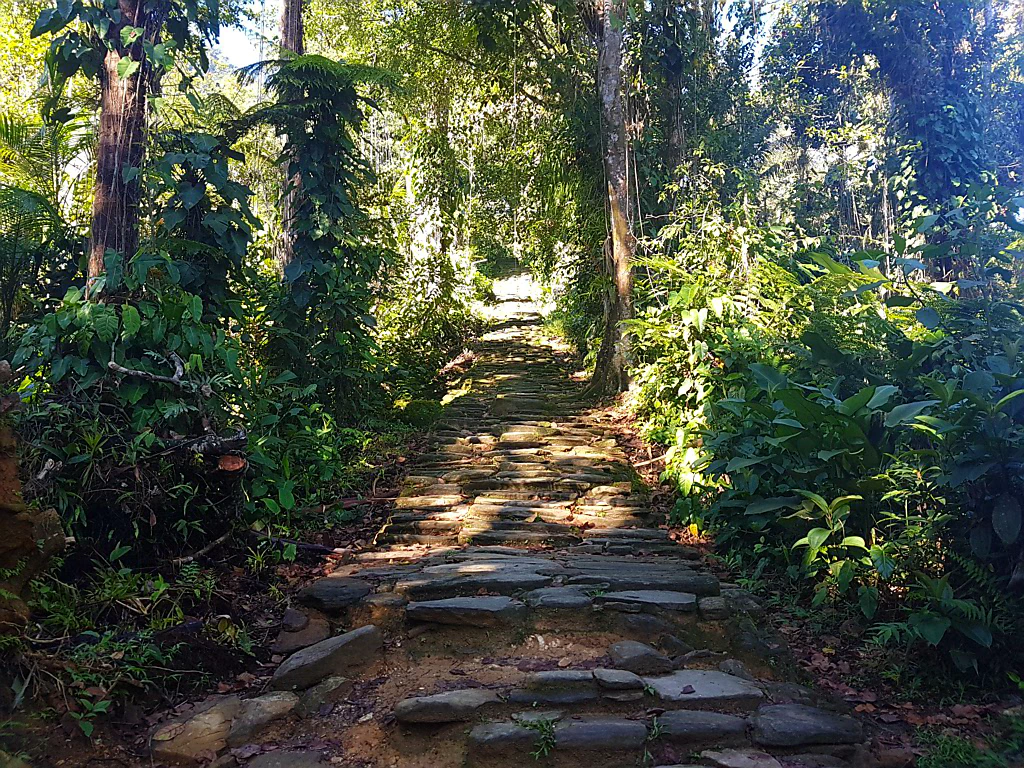
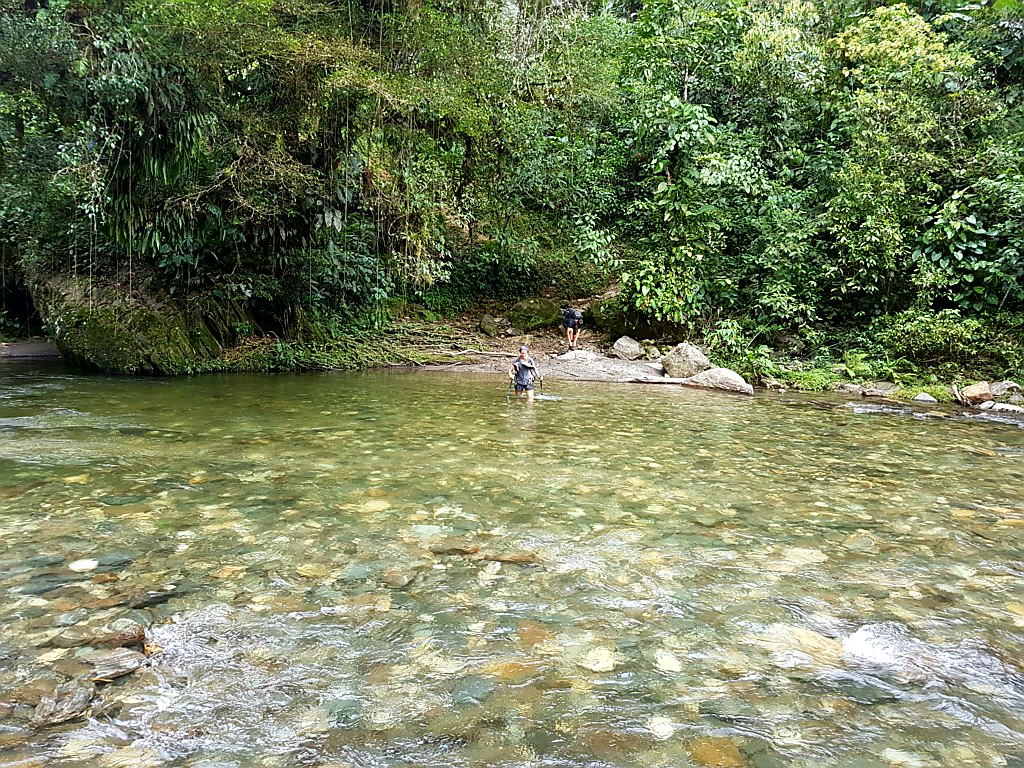
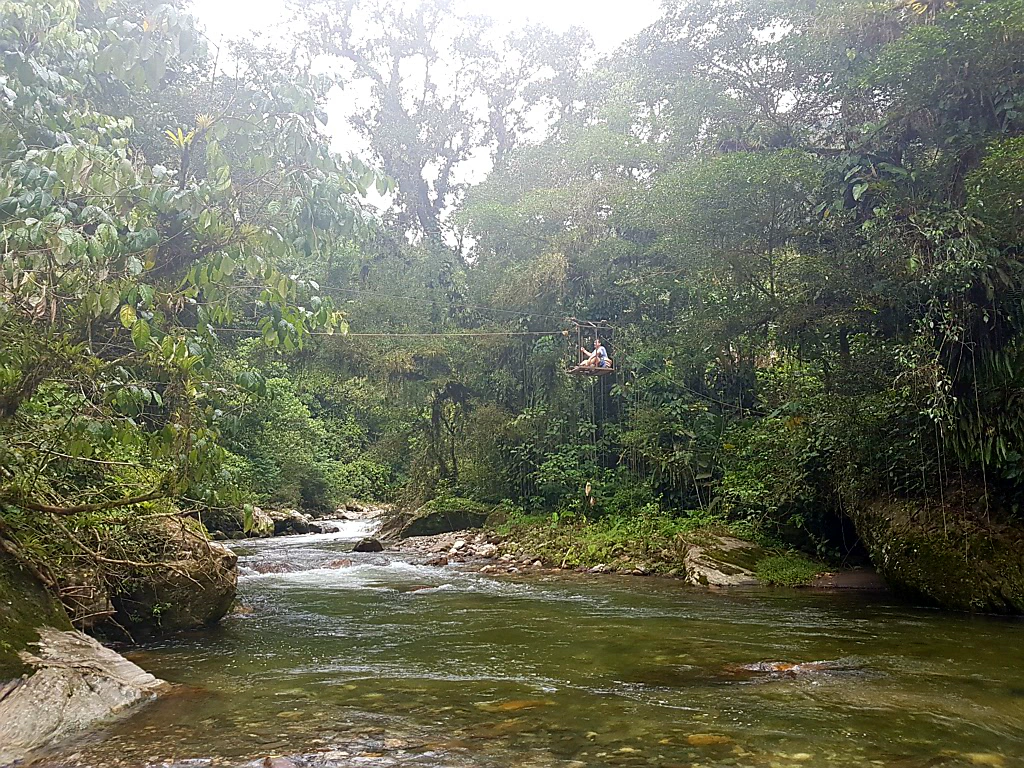
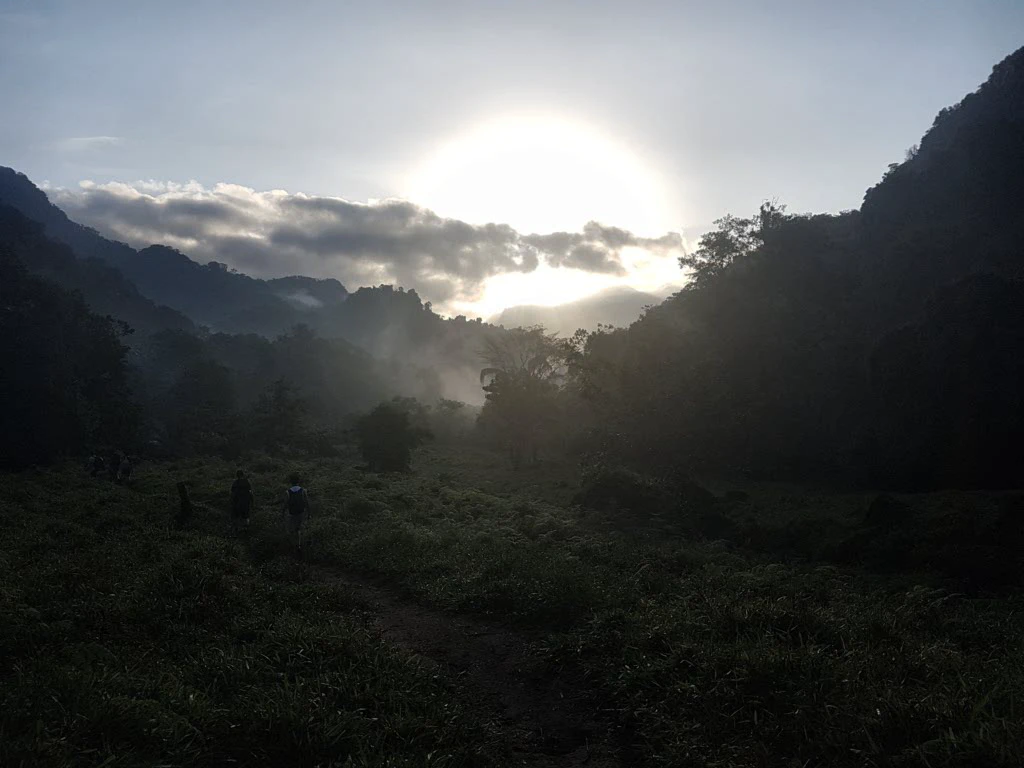
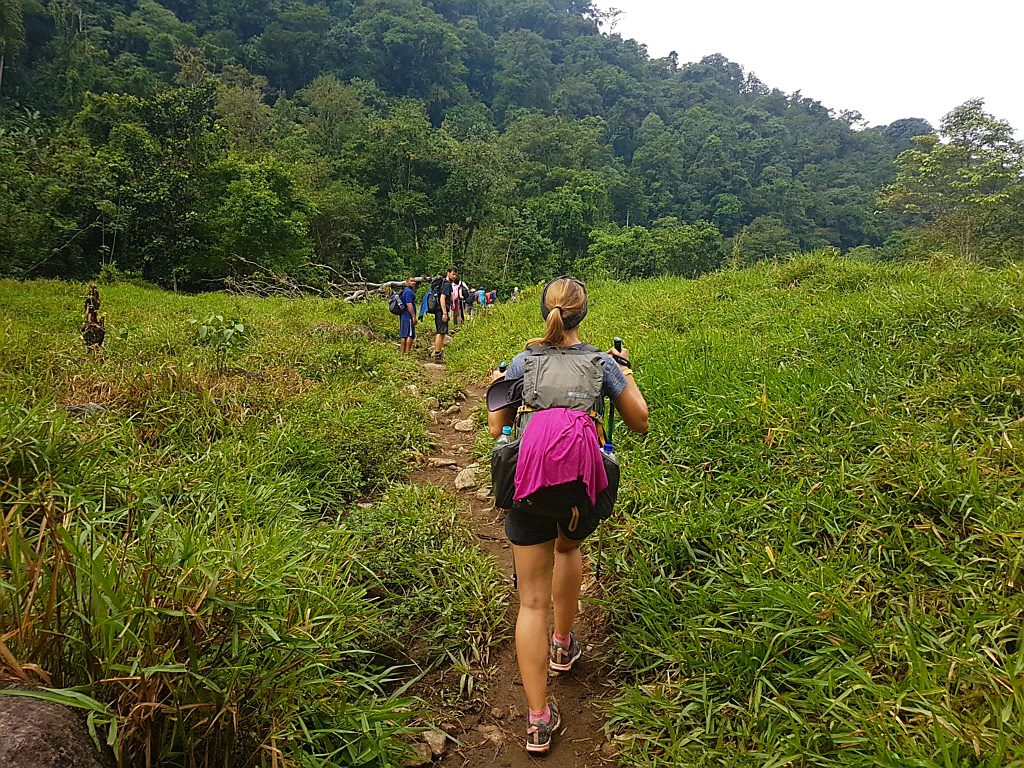
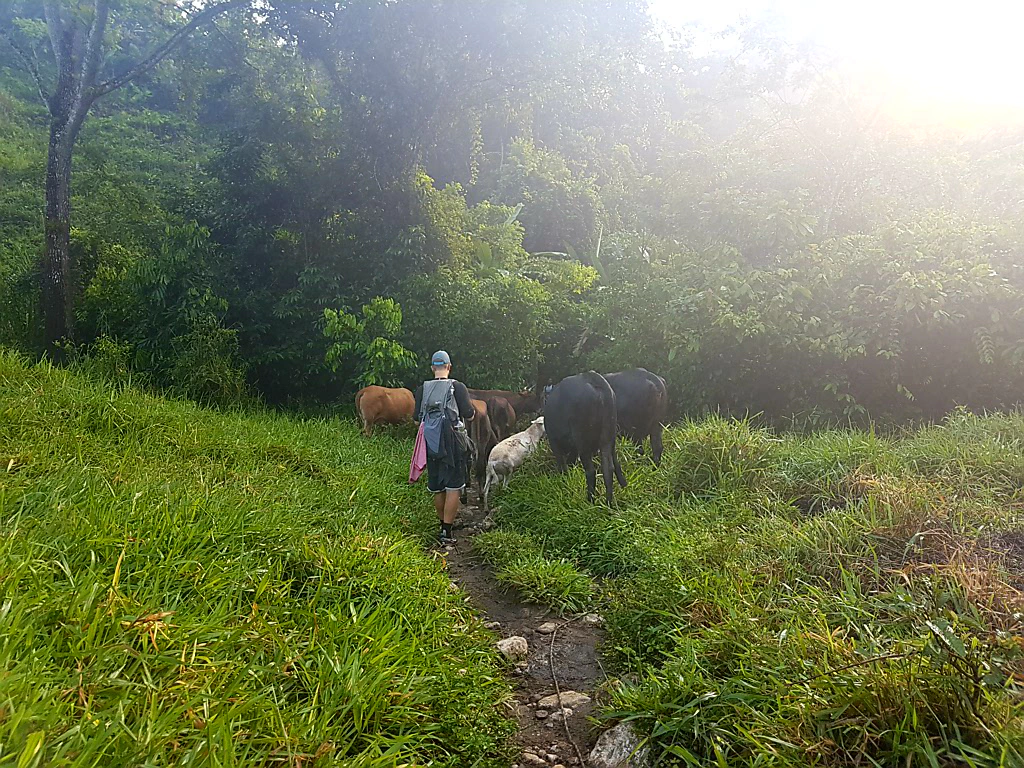
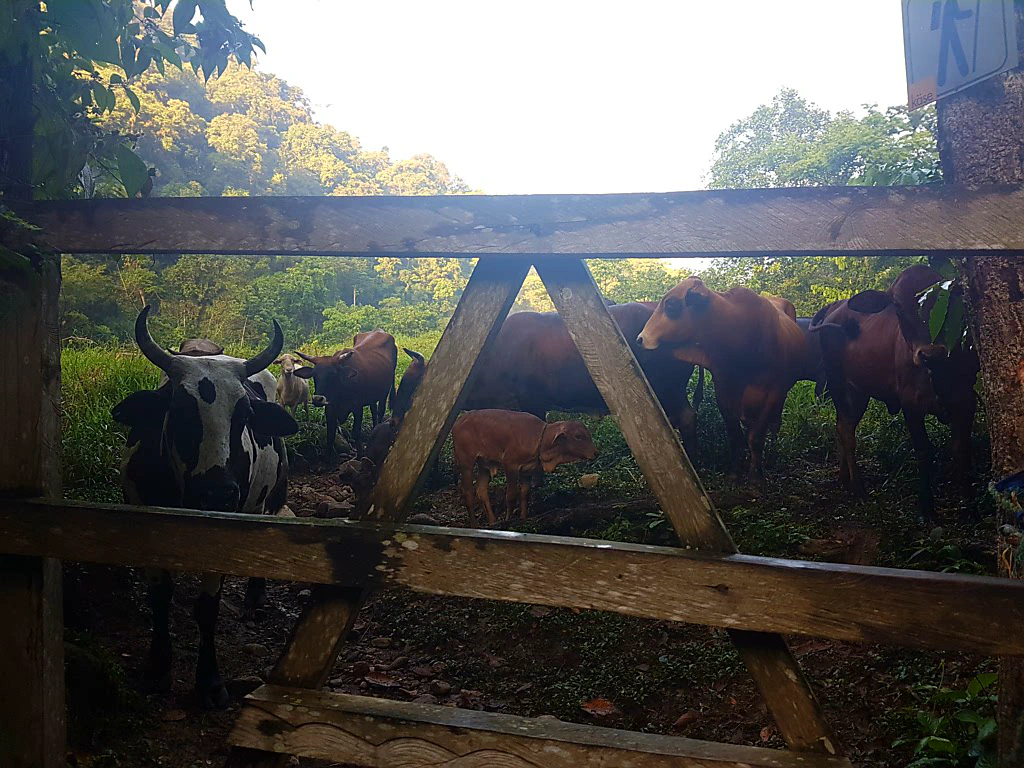
We spent the last four days in the Sierra Nevada de Santa Marta and walked to Colombia’s Machu Picchu: the Ciudad Perdida. Through deep green rainforest, on whose paths you keep meeting members of the Kogi tribe: the man driving either a piglet or a mule ahead of him, the woman barefoot and endlessly crocheting bags for coca leaves, followed by a countless brood of children in white clothes. In between, the banana trees open up beautiful views over the endless Sierra Nevada. We cross the Buritaca river in a gondola hanging from a rope and catch sight of the ruins after climbing 1200 stone steps.
In recent years this walk has become the Colombian adventure par excellence. After eight tourists were kidnapped in 2003 and held for up to 100 days, the ruined city gained international fame and moved a long way up adventurers’ bucket lists. At peak times that can now mean up to 200 people a day - so that for the first time this year, during Semana Santa, the available beds and hammocks ran out. The indigenous Kogi and Wiwa peoples, who live around the trail to the Ciudad Perdida, are currently negotiating a limit of a maximum of 120 visitors a day.
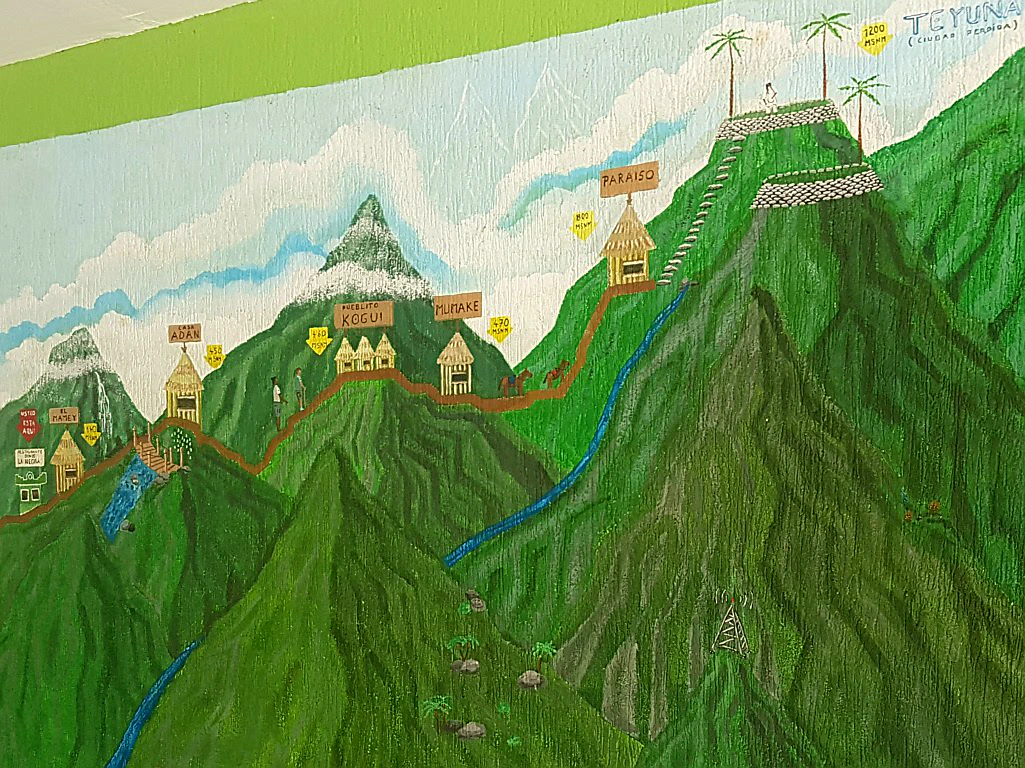
From the trailhead to the Ciudad Perdida it is 23 km, which you walk out and back. The 46 km walk, including transport to and from Santa Marta, is spread over four days. As with our trip to Punta Gallinas in the Guajira desert , we chose Magic Tour. Not least because it let us haggle a small discount.
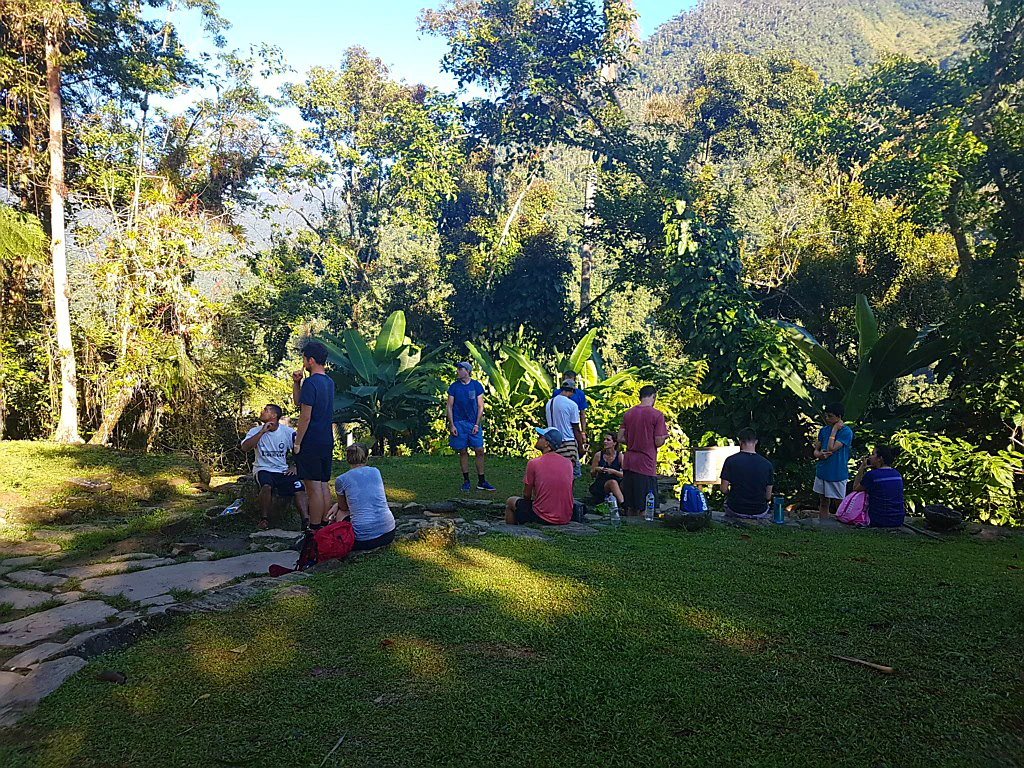
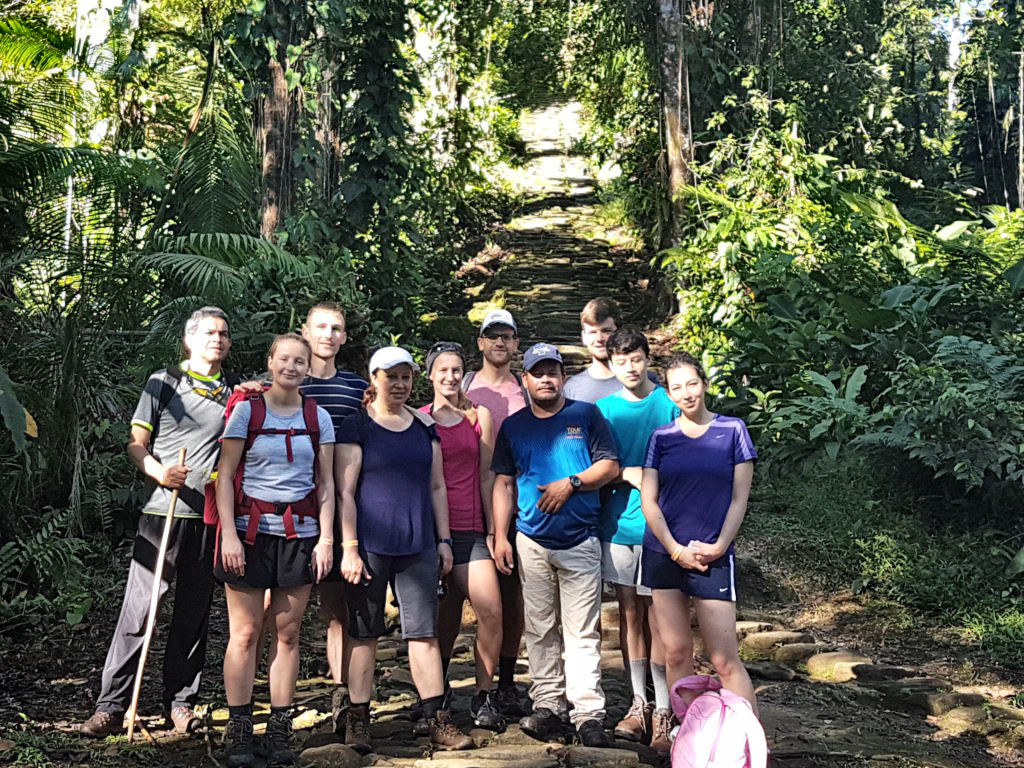
Happily, unlike every other tour and walk we have done so far, we set off at a humane hour: meeting point 9 am. Together with Eliska and Tom from the Czech Republic, who currently live in Puebla (Mexico), and Jonas from Germany, we climbed into the jeep to drive to the trailhead. Our group also included a Colombian family from Bogotá, who travelled in a second jeep. As a special feature of this tour we had not only our guide Jesús but also a translator, Tomás, on board.
You can only become a guide for the Ciudad Perdida, by the way, after a two-year “course of study”. Why in those two years you would not also learn the phrases you recite in English is not entirely clear to me. In fact all the other groups had a translator with them as well.
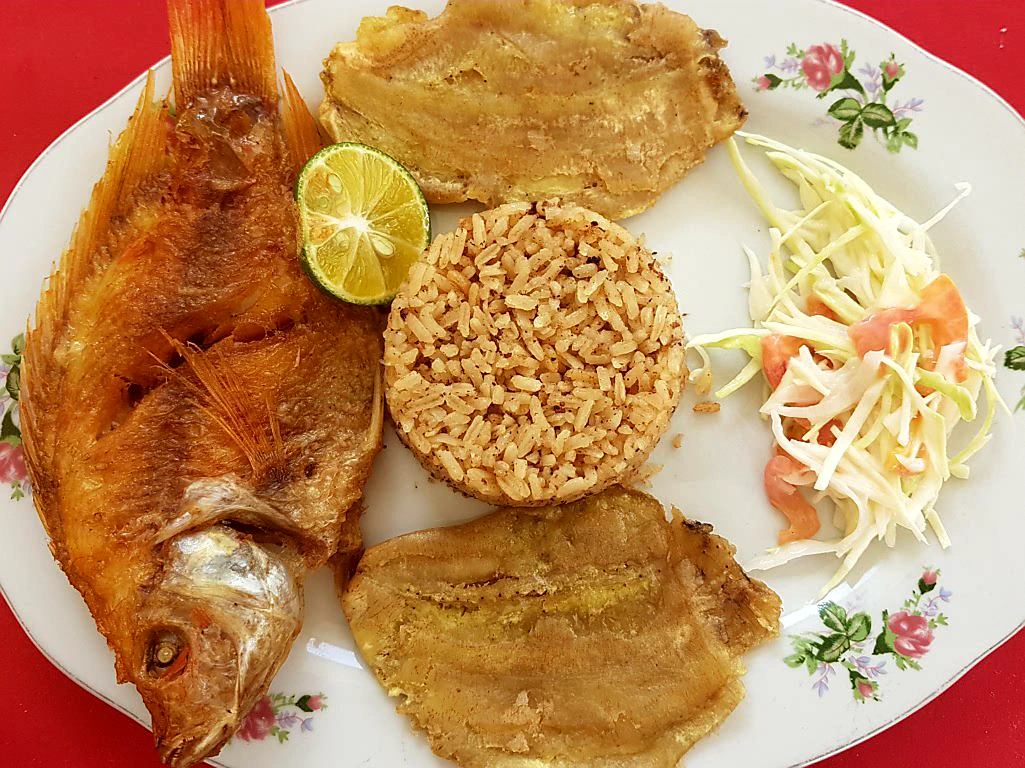
Before we started the trail there was a substantial lunch. Organised multi-day tours seem to have that quality of insisting on three full meals a day, with lunch and dinner inevitably having to include meat (or fish).
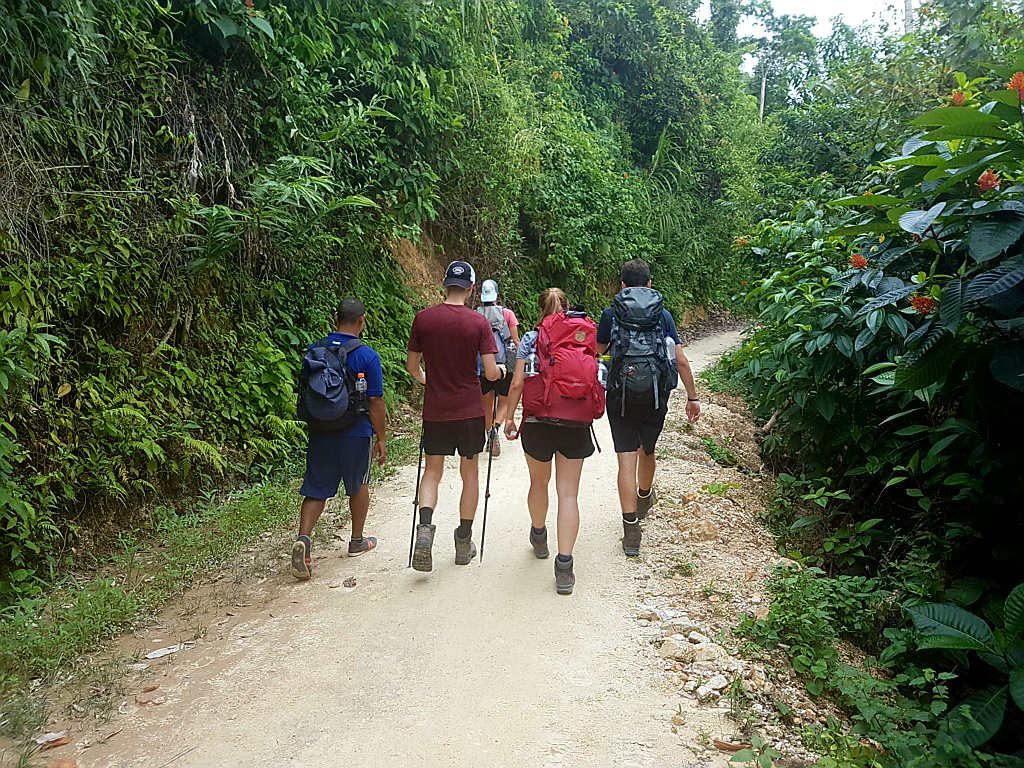
Around 1 pm we finally set off and quickly establish a few things:
- We have ended up with a cool bunch!
- Our translator is extremely likeable.
- The guide has no appetite for the walk, nor for us, and even less for doing his job and passing us a bit of information. He generally brings up the rear and plods along leisurely behind the group. Nothing may be decided without him, though, so every time we have to wait for him before we get our break-time provisions (watermelon, pineapple or oranges - yummy!) or our bed allocation.
Happily our translator makes up for our guide’s lack of information, answering all our questions in detail.
The first day is only half a walking day, the sun is shining, the path is easy - and yet we are soaked through after 15 minutes. There is simply no escaping the high humidity!
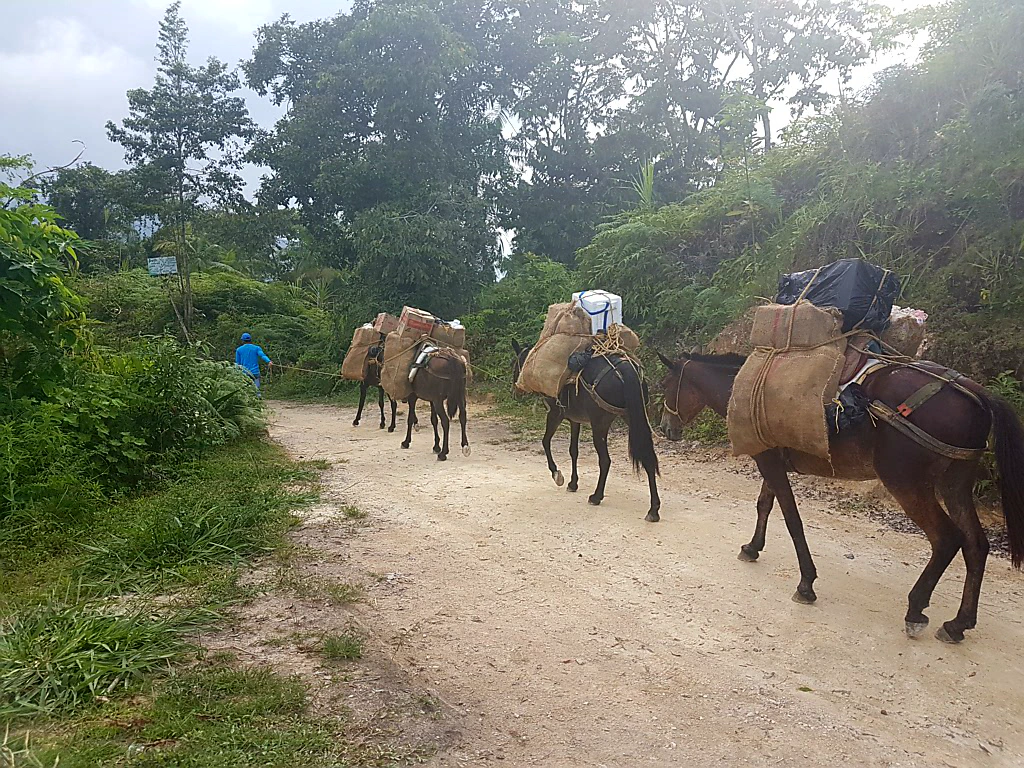
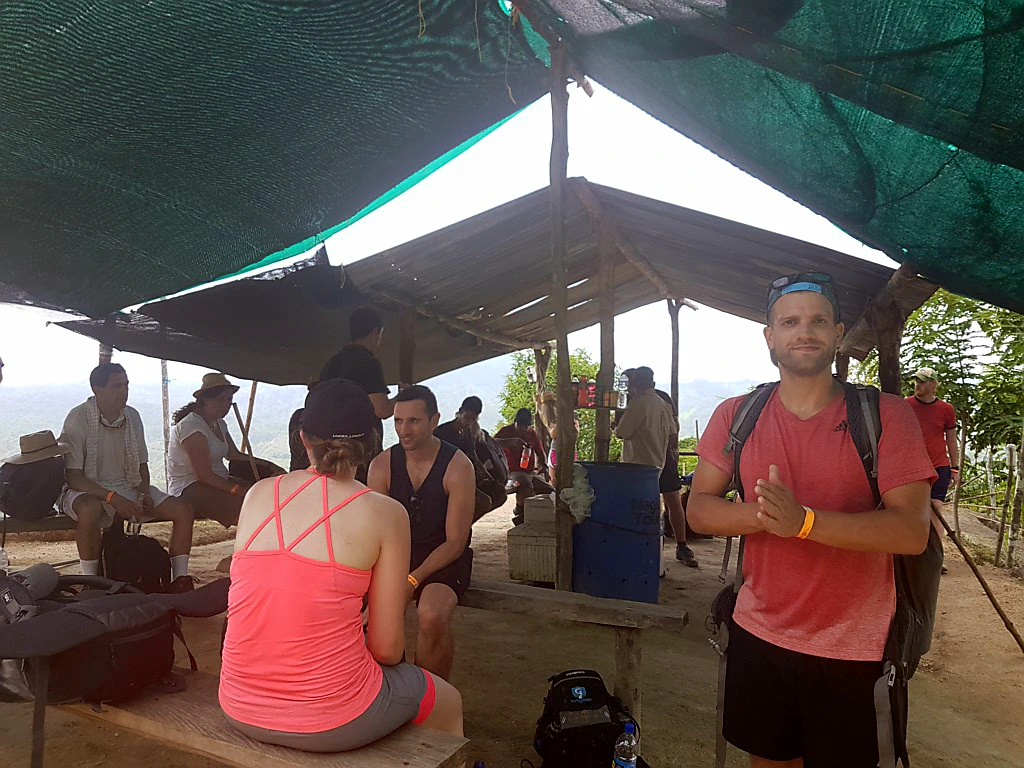
Along the way we keep seeing wide areas without rainforest vegetation: former coca cultivation, since banned by the government, which has left green fallow land behind. Jesús promises to give us more information about coca growing in the evening.
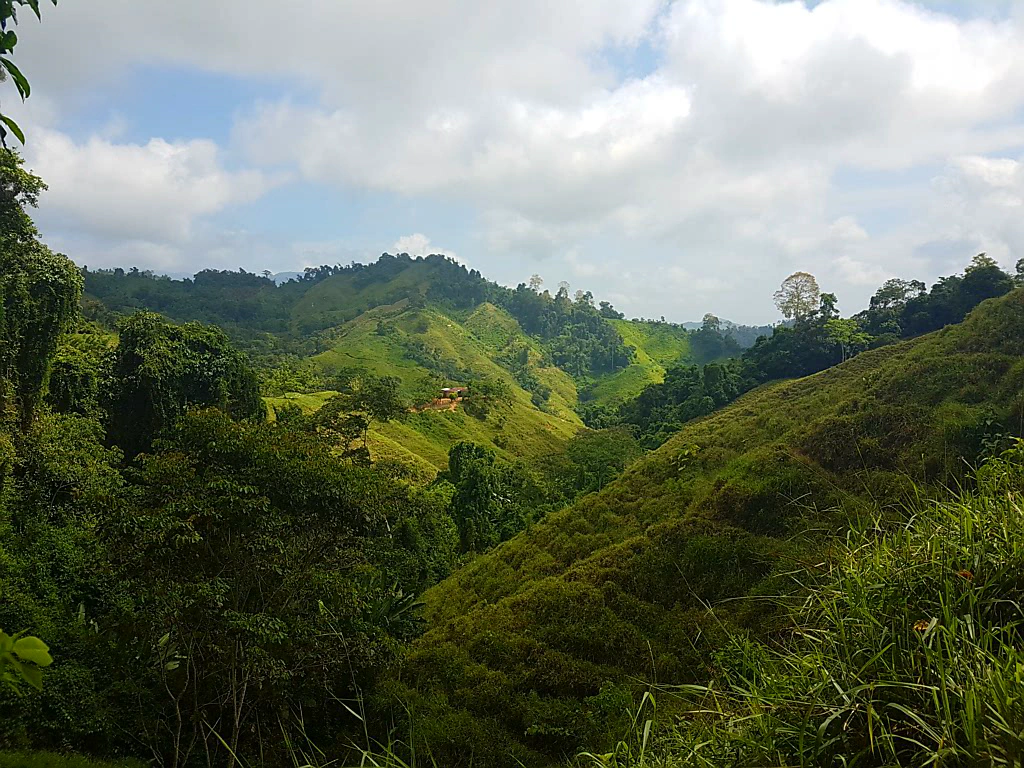
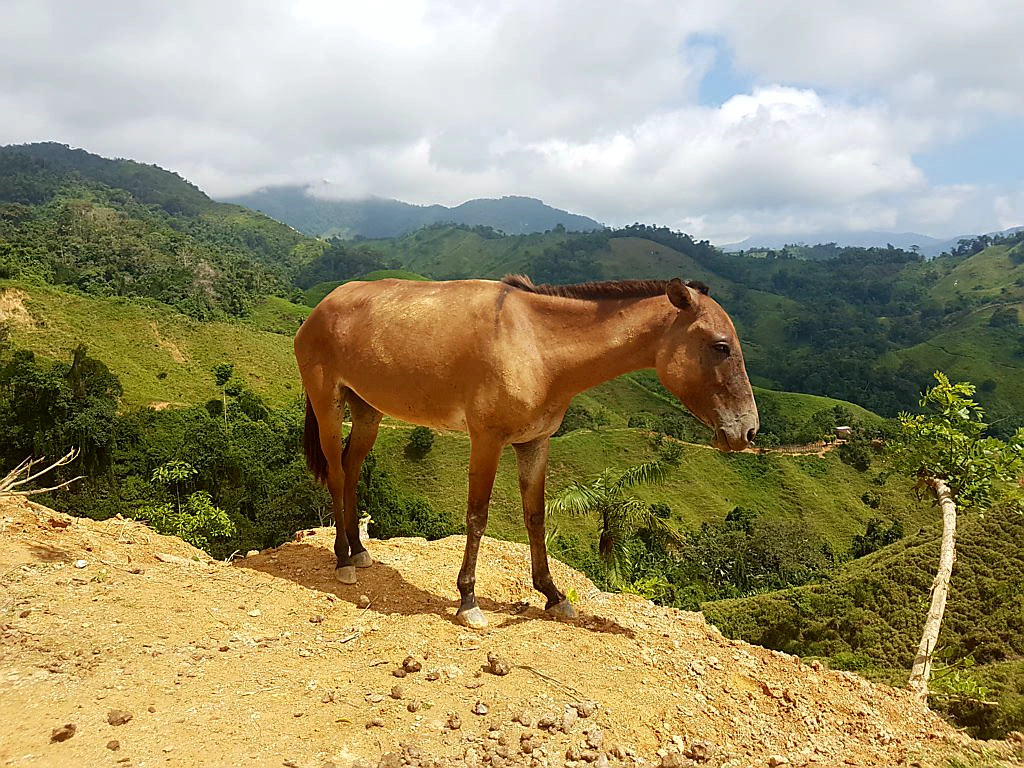
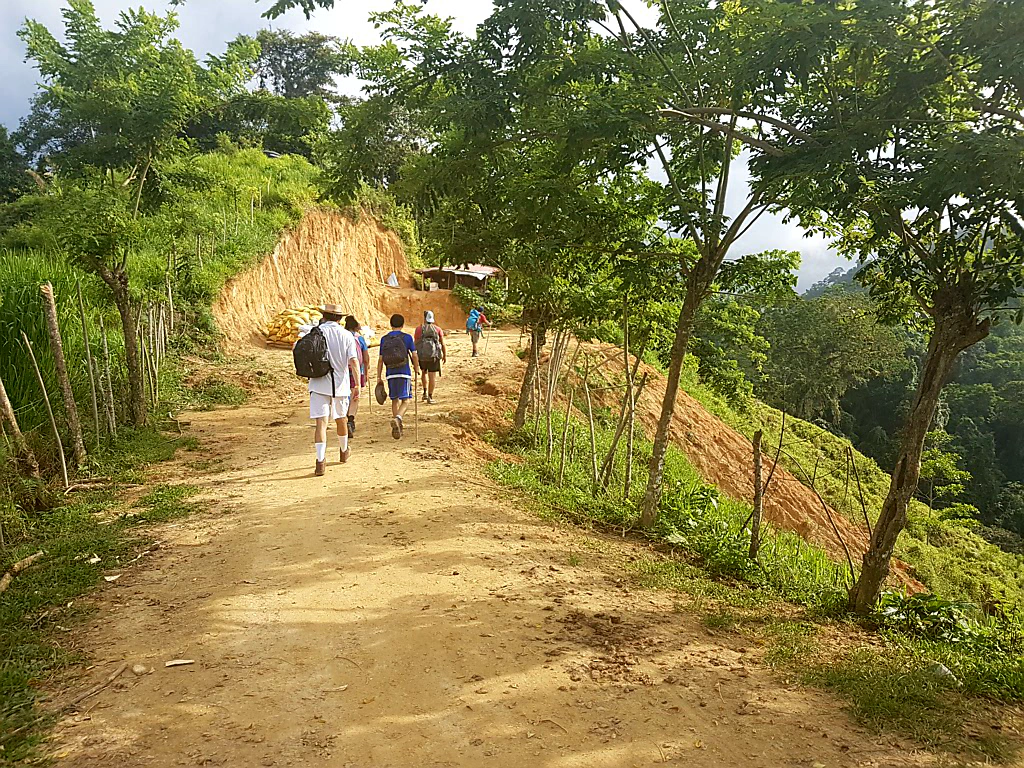
We reach our first accommodation faster than expected, where all the other groups make camp as well. About 30 other people are out here at the same time as us. That feels like a lot somehow, but compared to the visitor numbers in high season it is really very manageable!
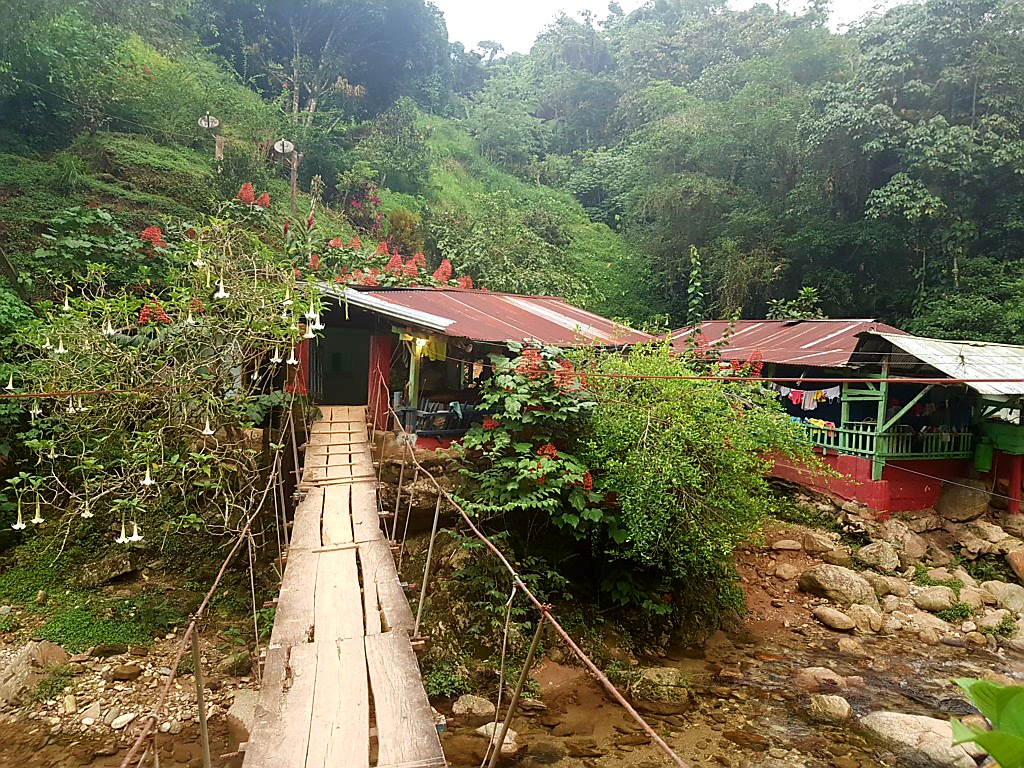
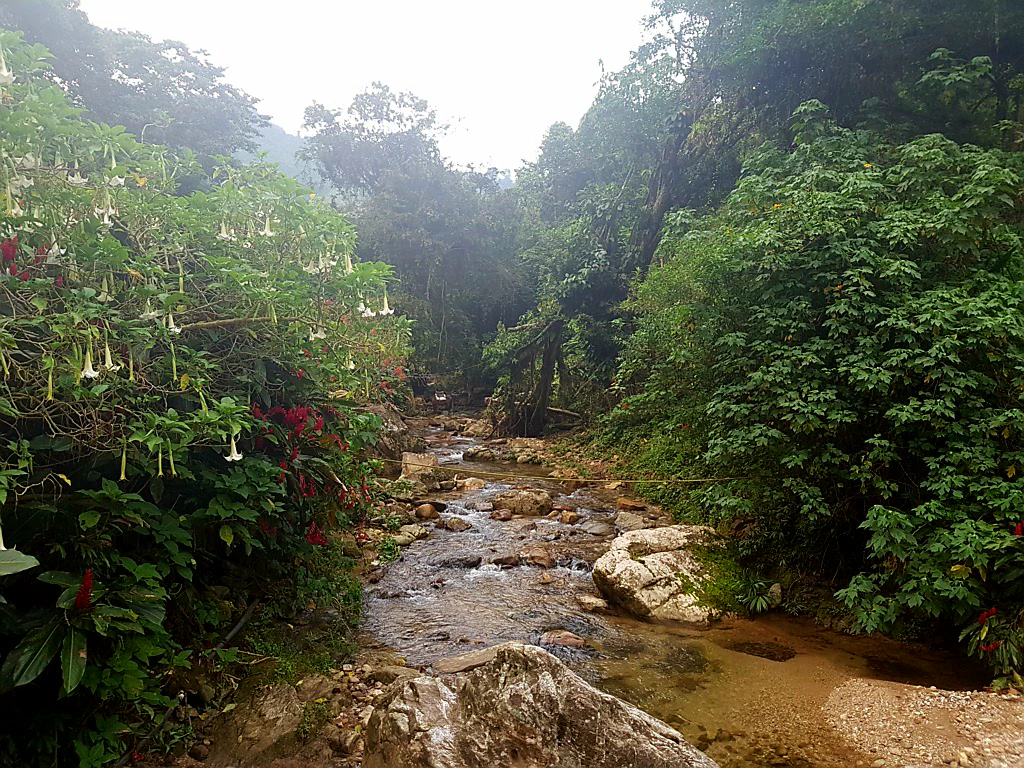
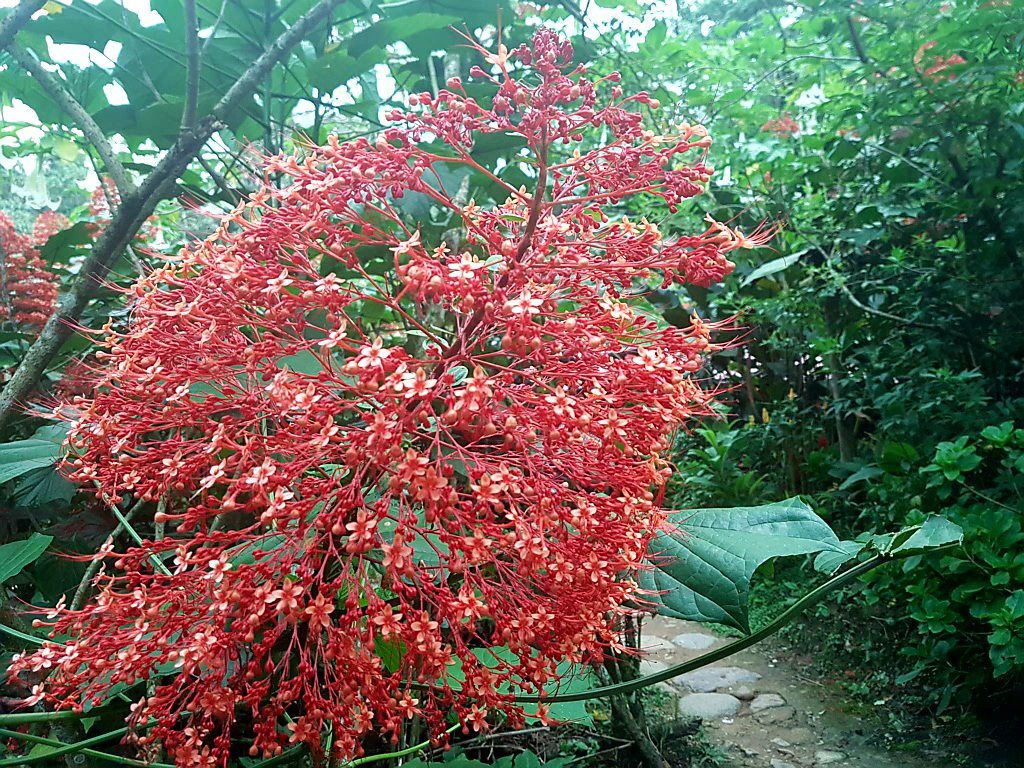
In the camp 20 bunk beds stand in rows, each equipped with a mosquito net and a very sagging mattress. There are three of these rows of beds (each in a separate hut), so that every group has at least a little privacy in this first camp.
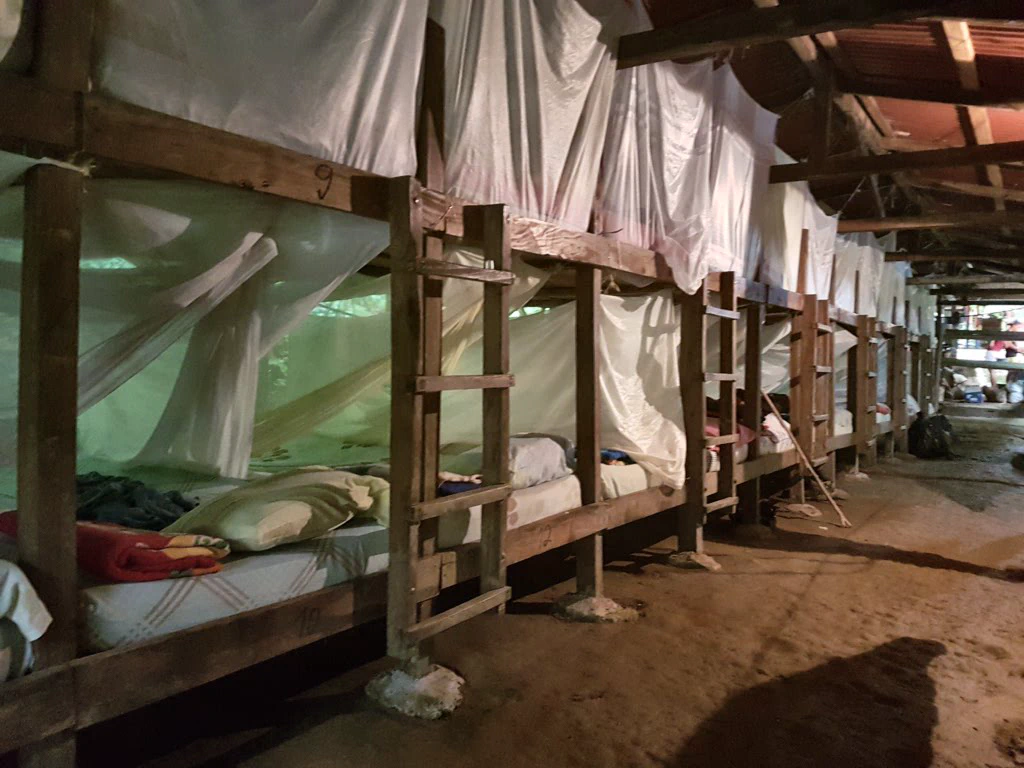
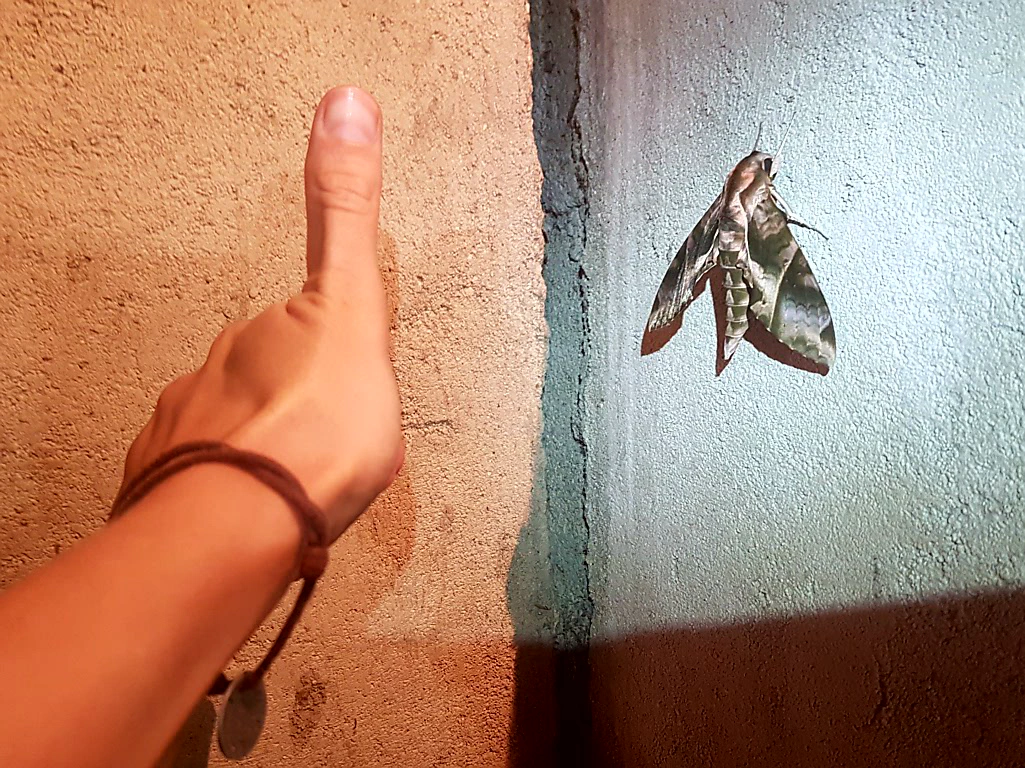
Sadly Jesús does not give us the promised information about coca growing that evening. Instead he shares with us that the first day is always the most exhausting for him, since he had to get up at 5. And so as not to fall out of his rhythm, he announces that he will wake us at 5 the next day.
The next morning it is our translator Tomás who eventually wakes us at 5:20. Jesús overslept…
After a substantial breakfast we hit the trail shortly after 6.
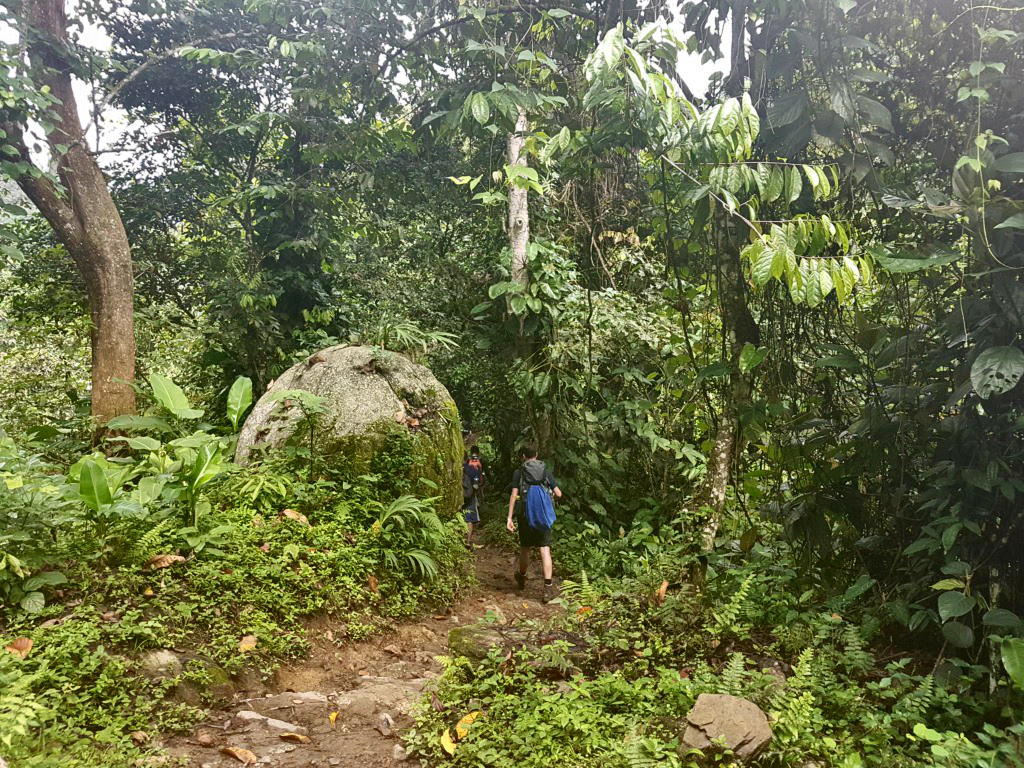
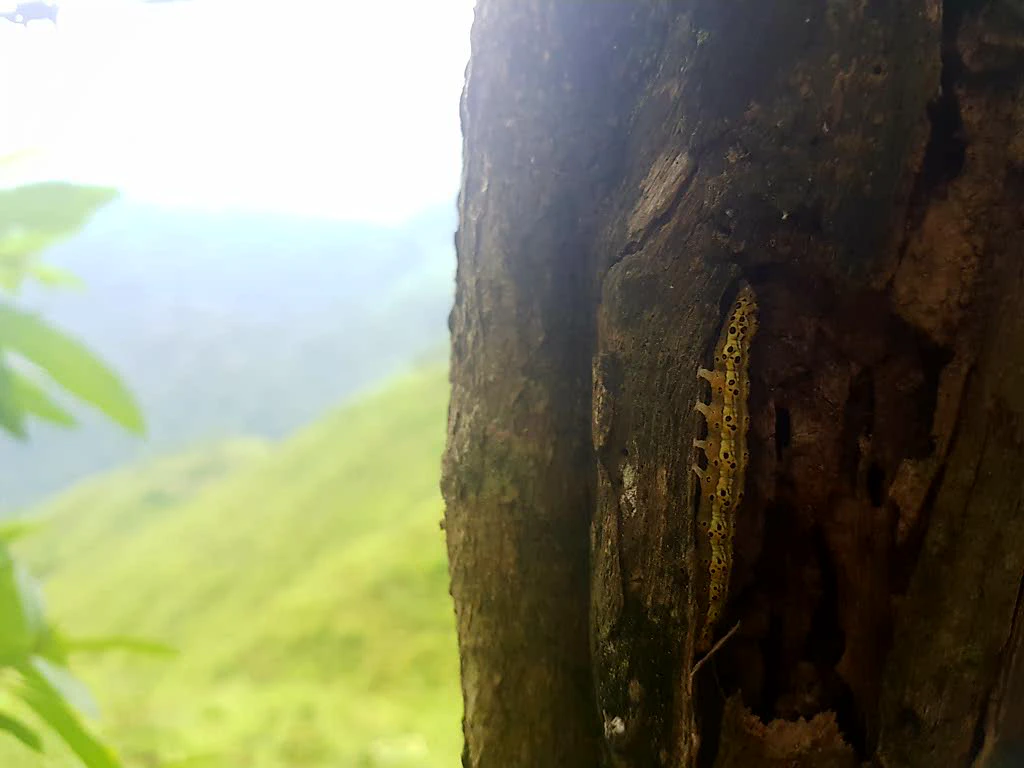
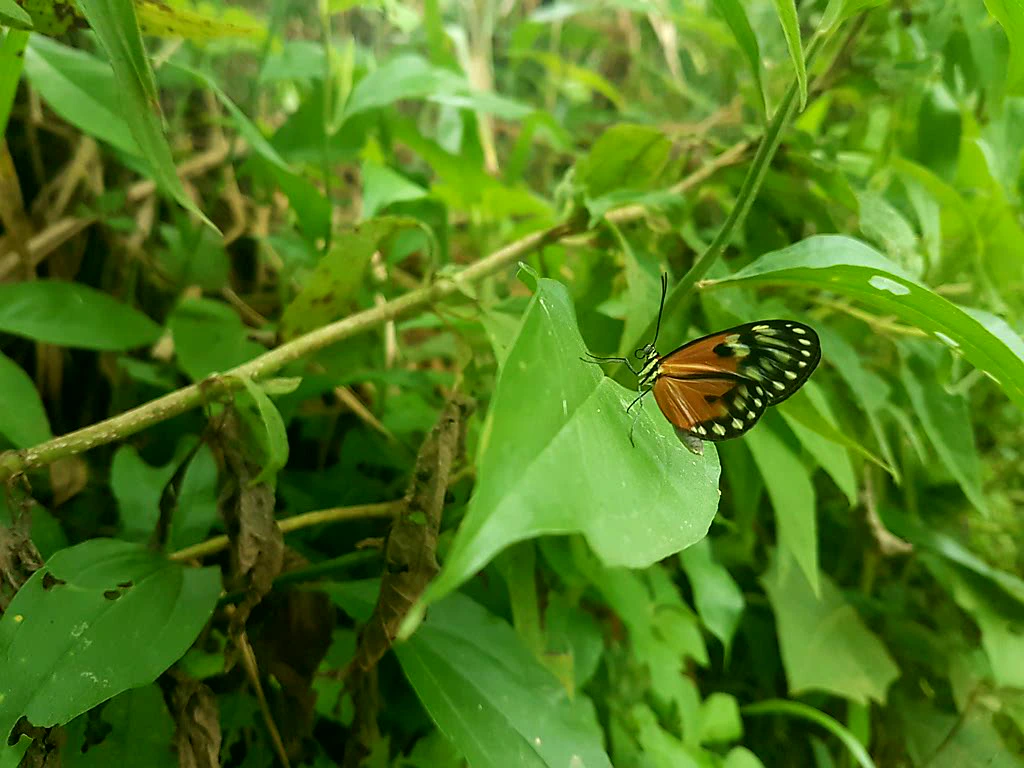
Along the way we keep meeting members of the Kogi and Wiwa tribes. Women are not allowed to wear shoes, incidentally, because the tribes believe that by walking barefoot a woman receives fertility from the earth. As she walks she endlessly crochets shoulder bags in which the tribe members carry coca leaves around. Because unlike the civilised part of Colombia, the indigenous peoples are governed by their own laws, and those permit the cultivation of coca leaves.
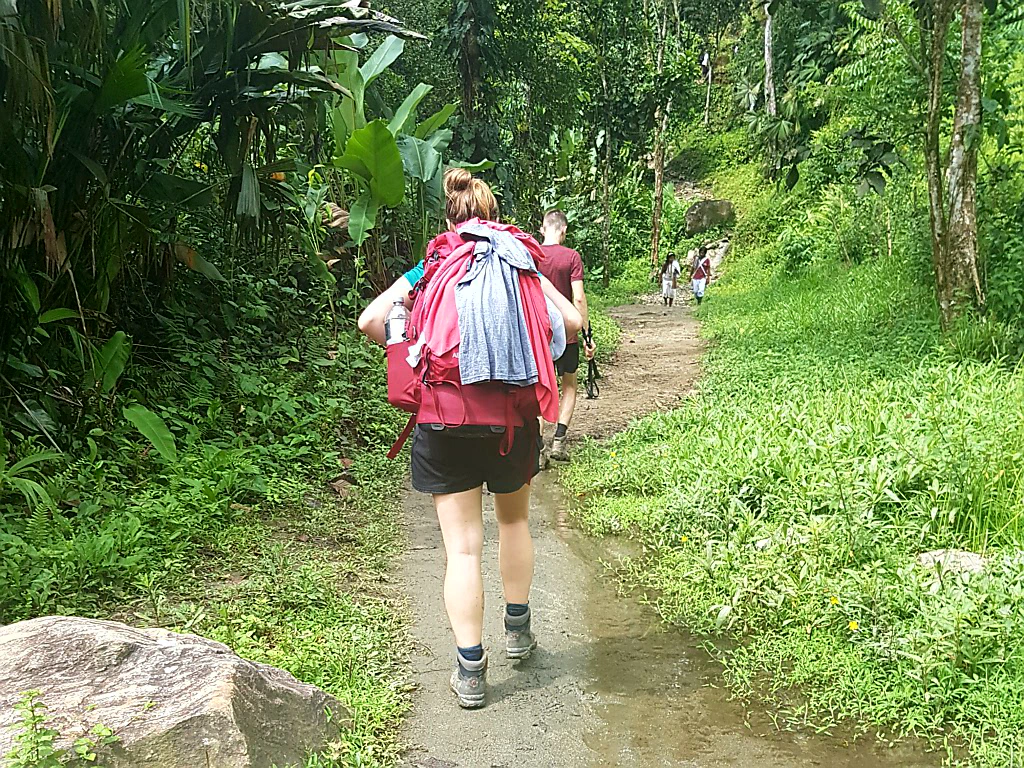
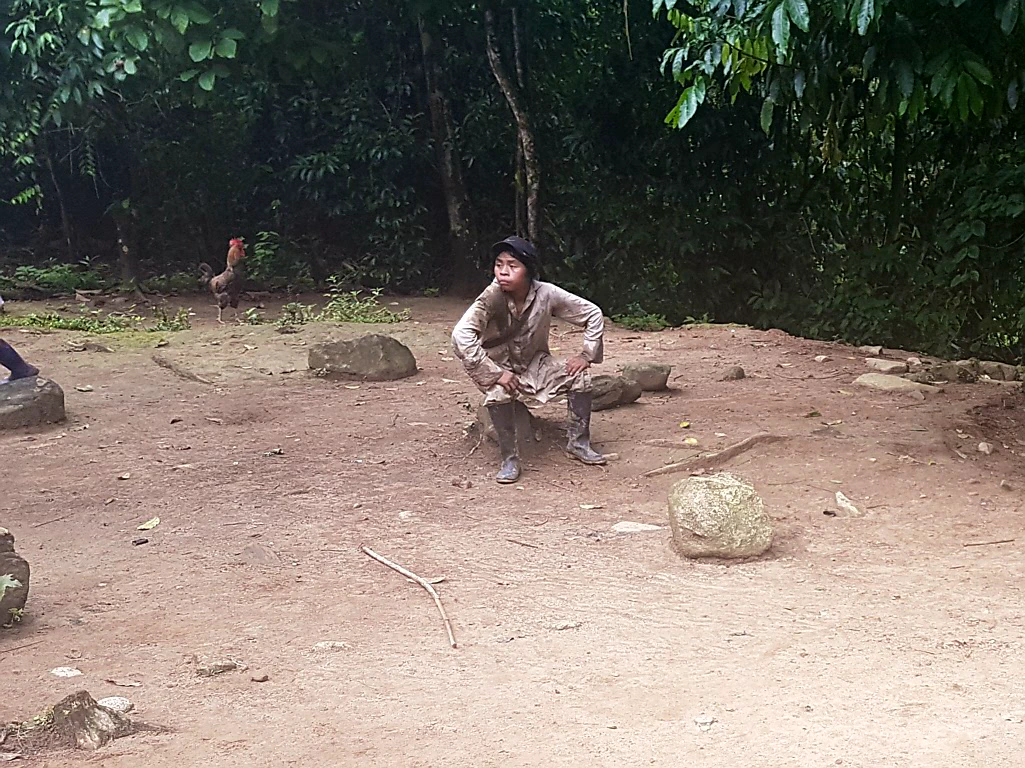
The Kogi and Wiwa are two of four indigenous tribes living in the Sierra Nevada de Santa Marta. The other two tribes (Arhuaco and Kankuamo) want no contact with tourists or the modern world and live secluded from the tourist flows.
You cannot blame them, because you can already see strongly the influences the tour groups have on their way of life. Some Kogi and Wiwa wear colourful caps with their traditional clothing or listen to music on their iPods while walking through the jungle. A far from negligible part is surely also played by the money paid for every tourist: according to Jesús 40,000 Colombian pesos (about 12 euros).
After the lunch break, which lasted over two hours that I would honestly rather have spent in bed in the morning, we pass a Kogi village. The men/boys and women/girls of each family sleep in separate huts. In the women’s hut the fire has to burn around the clock. That is one reason why the women do not live to be particularly old (35-40 years). Another reason is that as soon as they have their first period they are married off and from that day on give birth to a child every year. Once the woman is no longer fertile after 10 to 15 children, the man has the right to look for a new wife.
Jesús gives a brood of children lollipops and in return we are allowed to take a photo of them. He also shows us the poporo, which a Kogi boy receives in his 17th year, on entering adulthood. Jesús will tell us in the evening what it is all about, he promises. Or the next evening. We shall see.
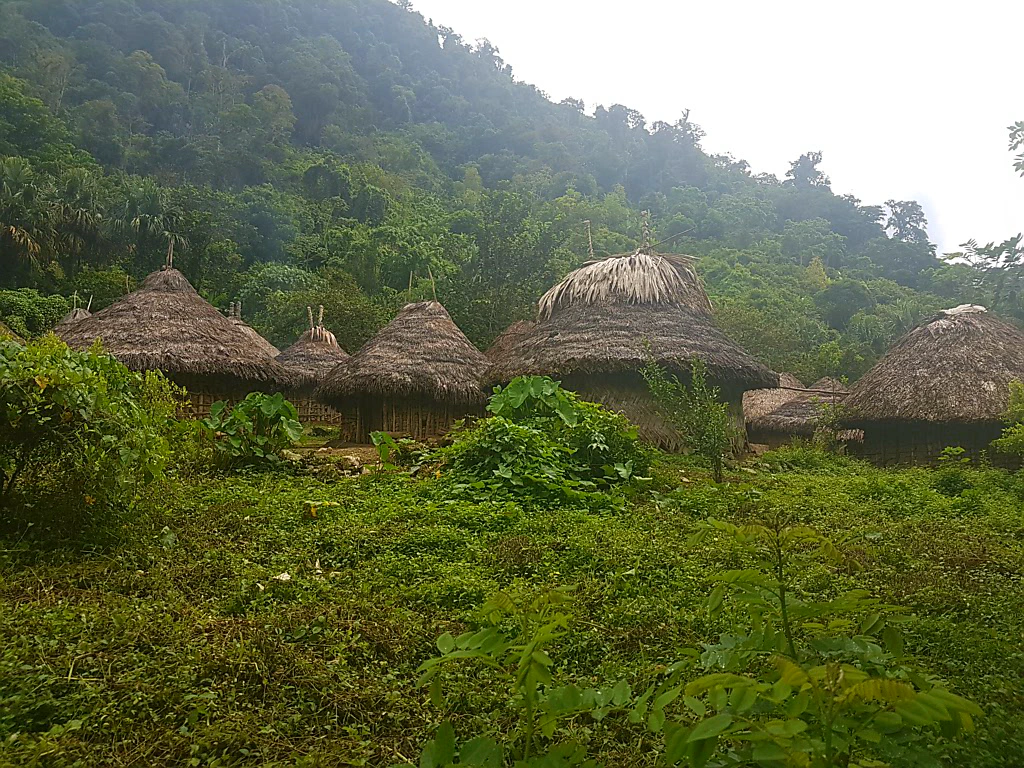
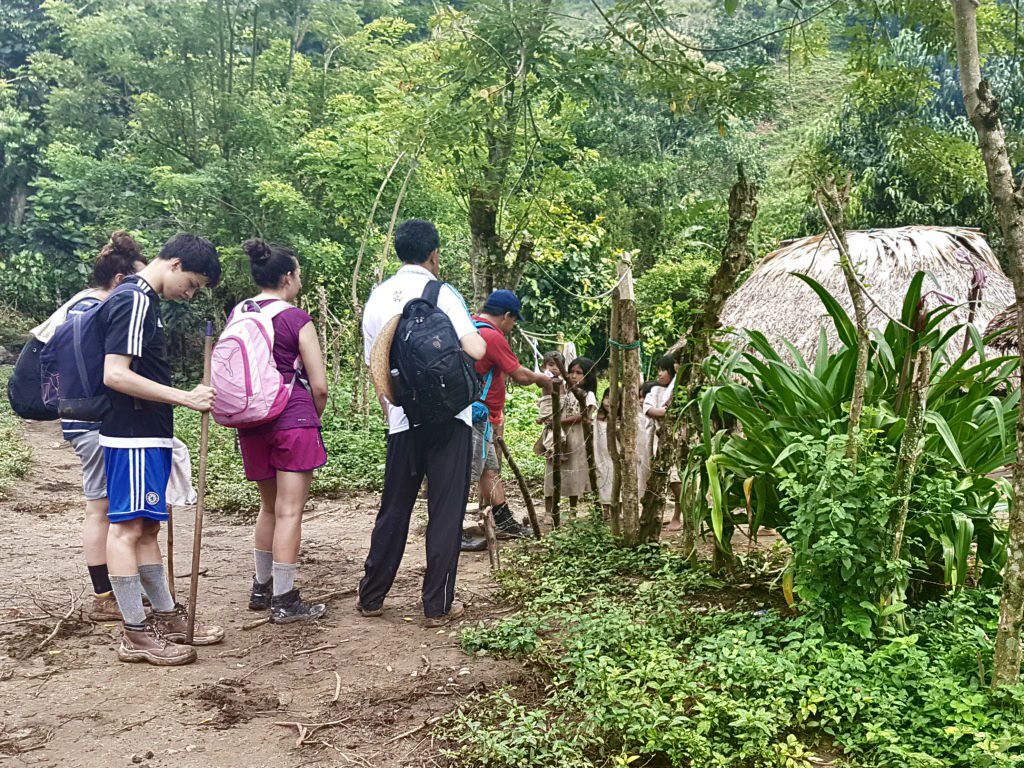
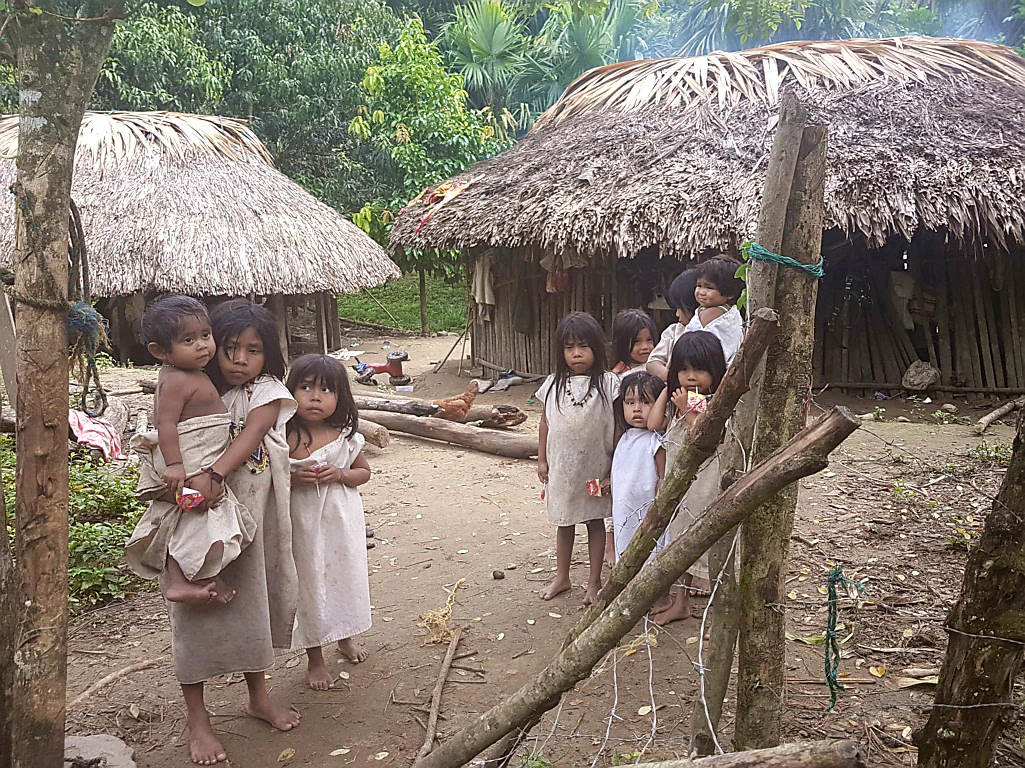
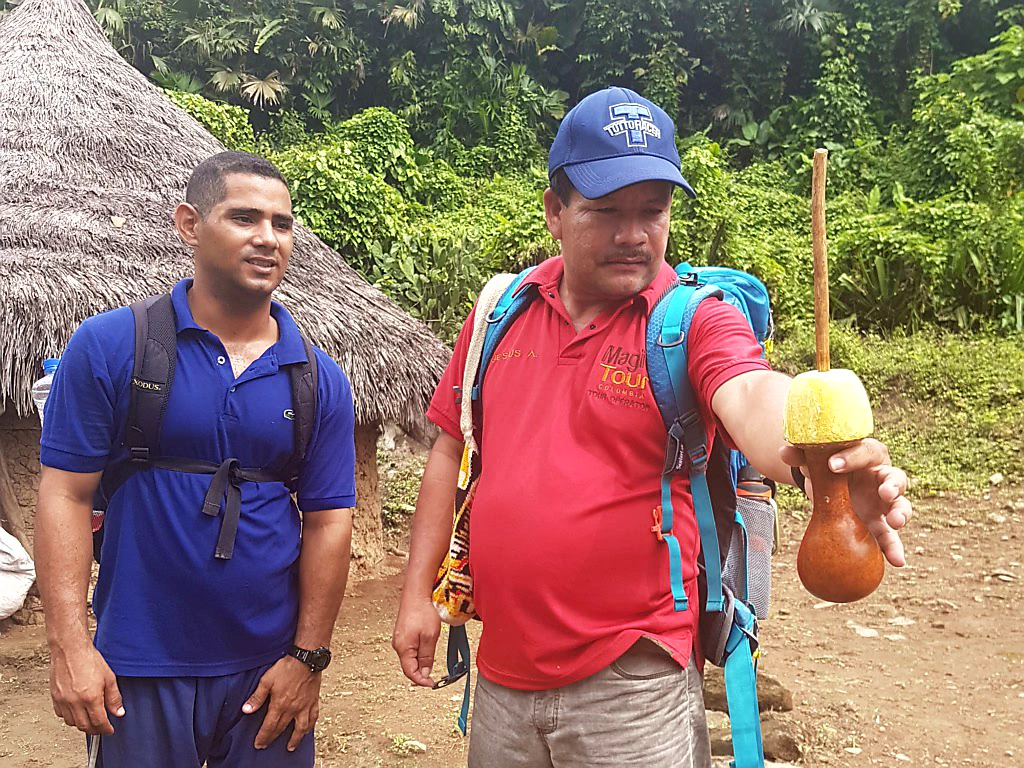
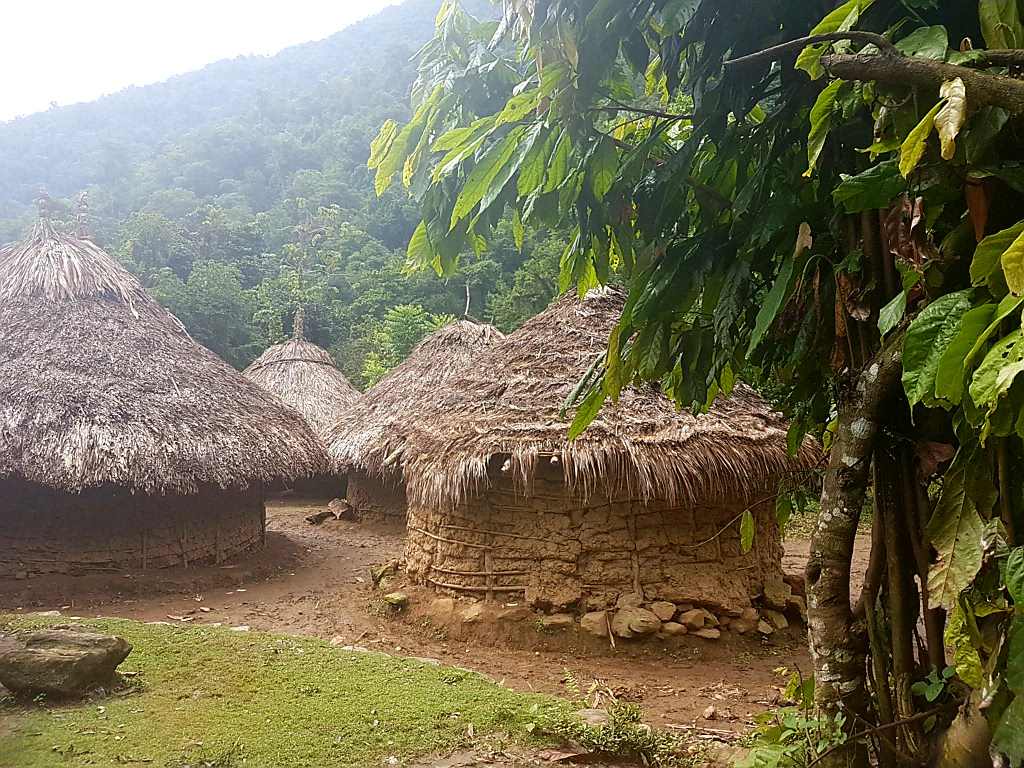
Just in time before the rain set in, we reached our shelter for the break.
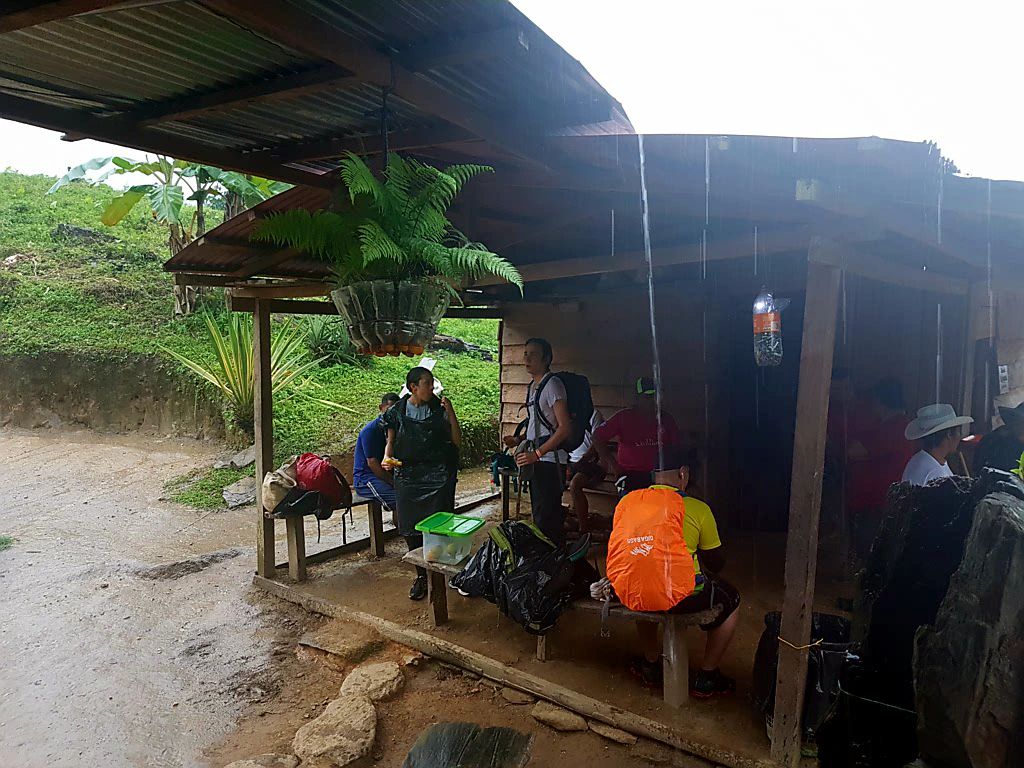
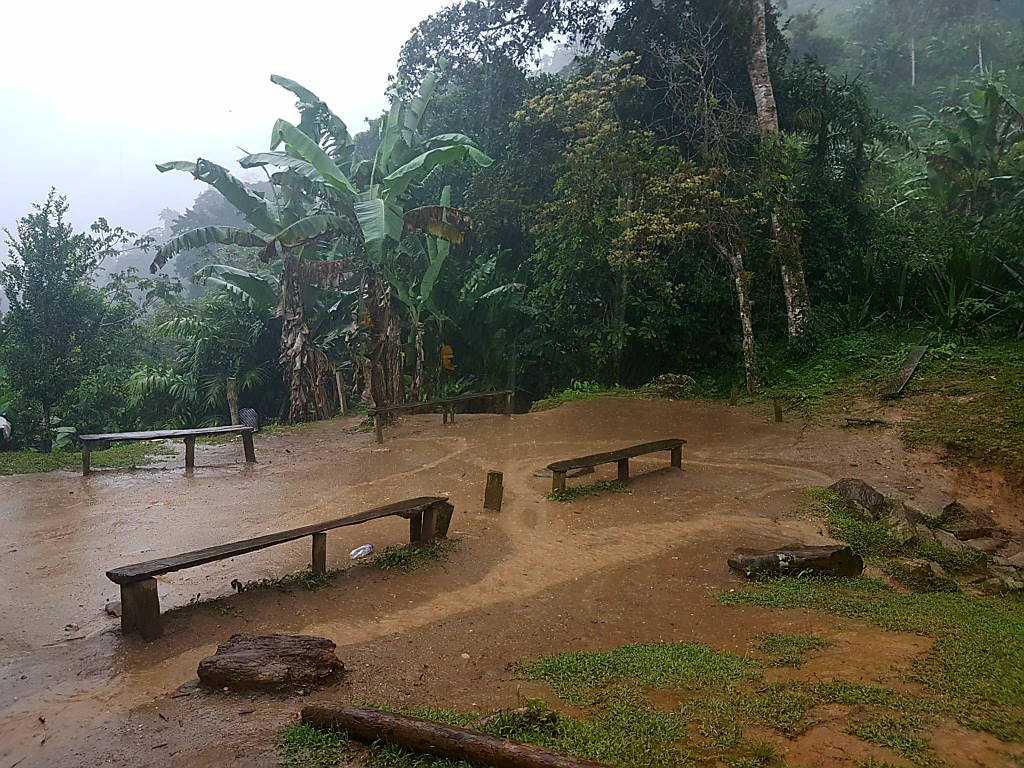
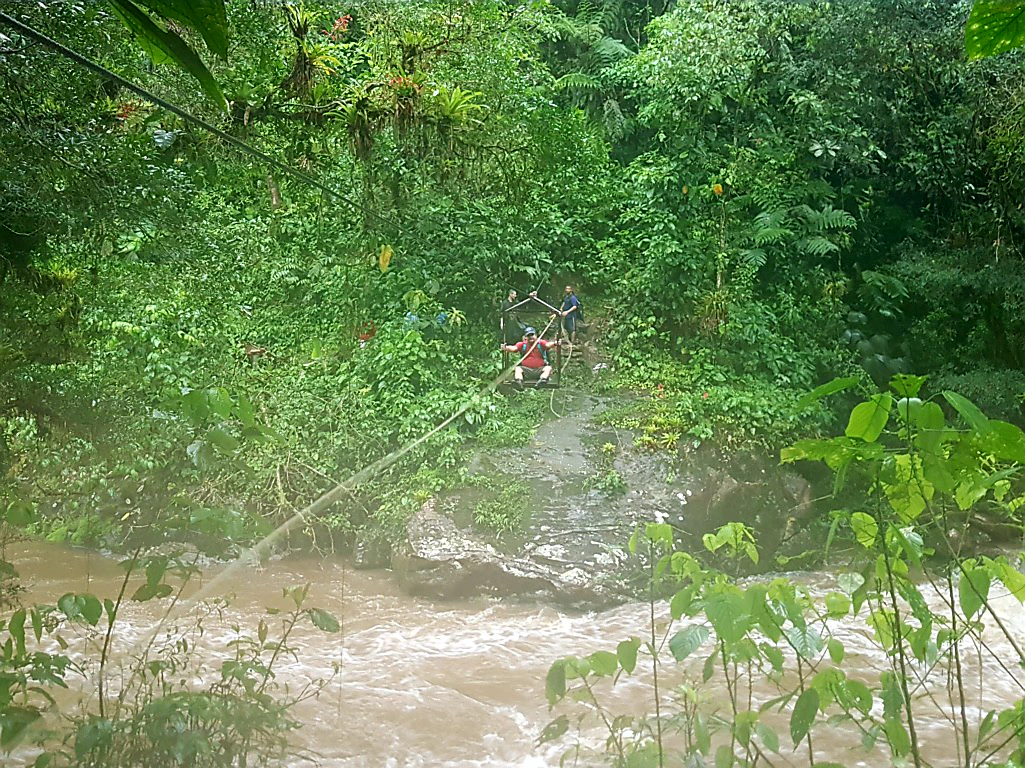
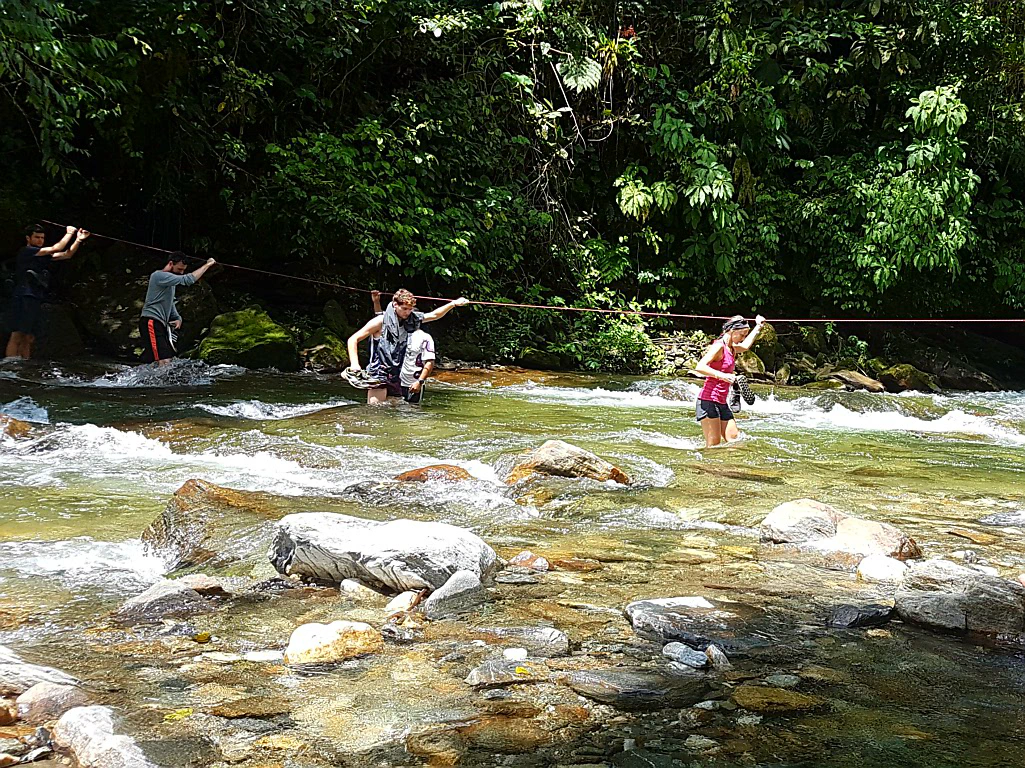
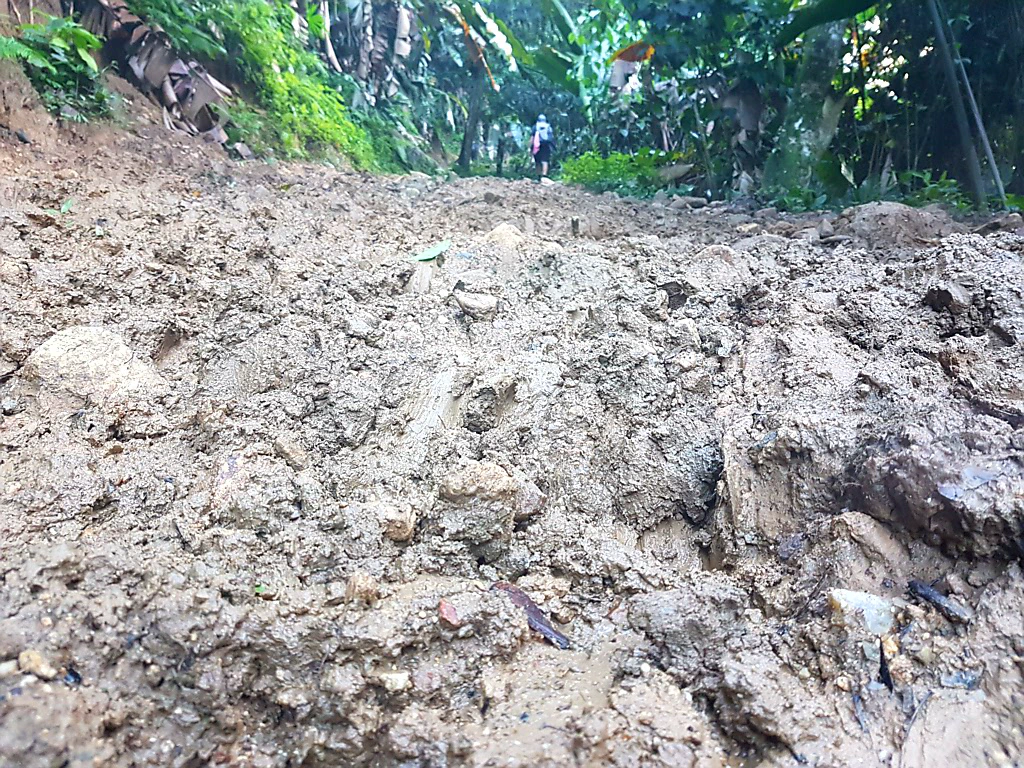
Since the rain had not eased after half an hour either, on we went in ponchos. Even though our T-shirts could not get any wetter anyway… Soon we had to cross the wide Buritaca river, which the rainfall had turned into a raging brown torrent. Good for us, because it meant the manual cable car came into use, in which we were pulled across the river one after another.
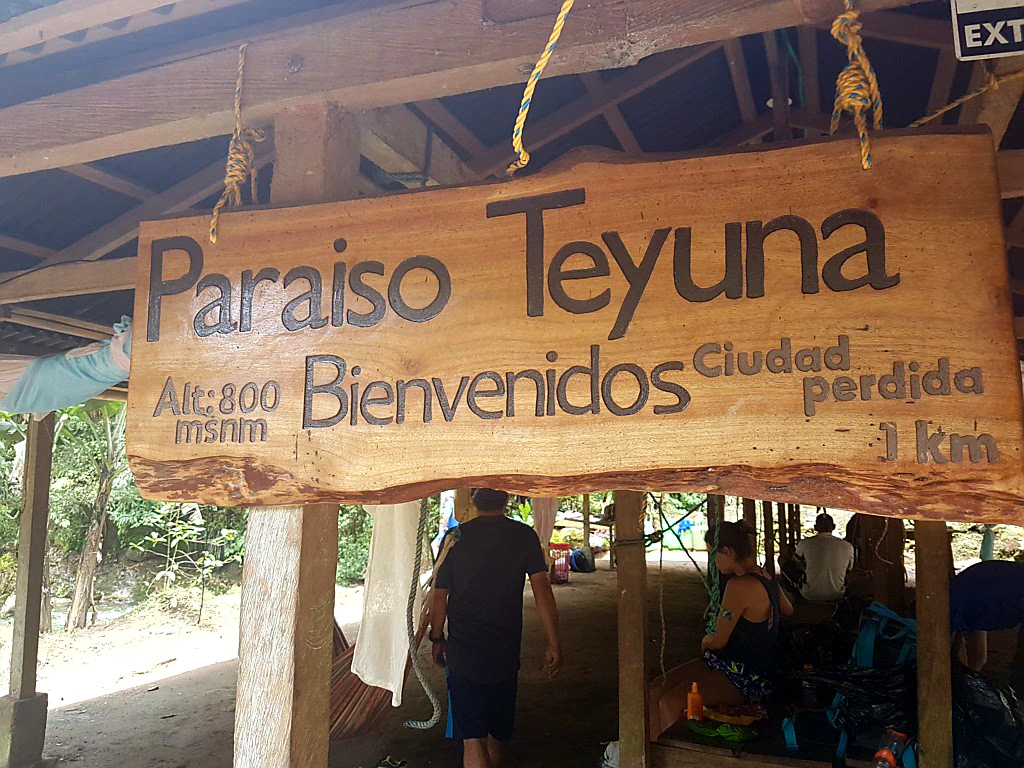
The camp for the second night - Paraiso - lies 1 km before the Ciudad Perdida. Here all visitors sleep under one roof. At 40 people we were a genuinely manageable number and even that felt cramped to me! I do not want to imagine what it is like at peak times! Our translator told us that people then eat in shifts, and that the last to arrive at the camp have to take hammocks without mosquito nets for the night. Unimaginable! Because the mosquito count rises rapidly the closer you get to the Ciudad Perdida!
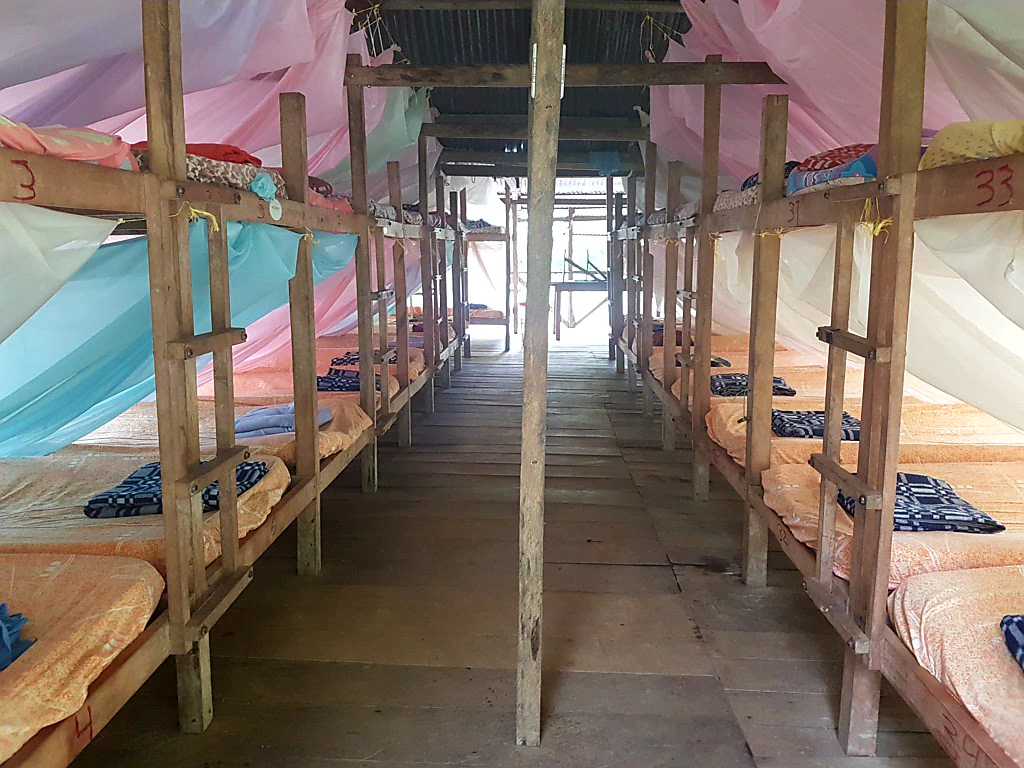
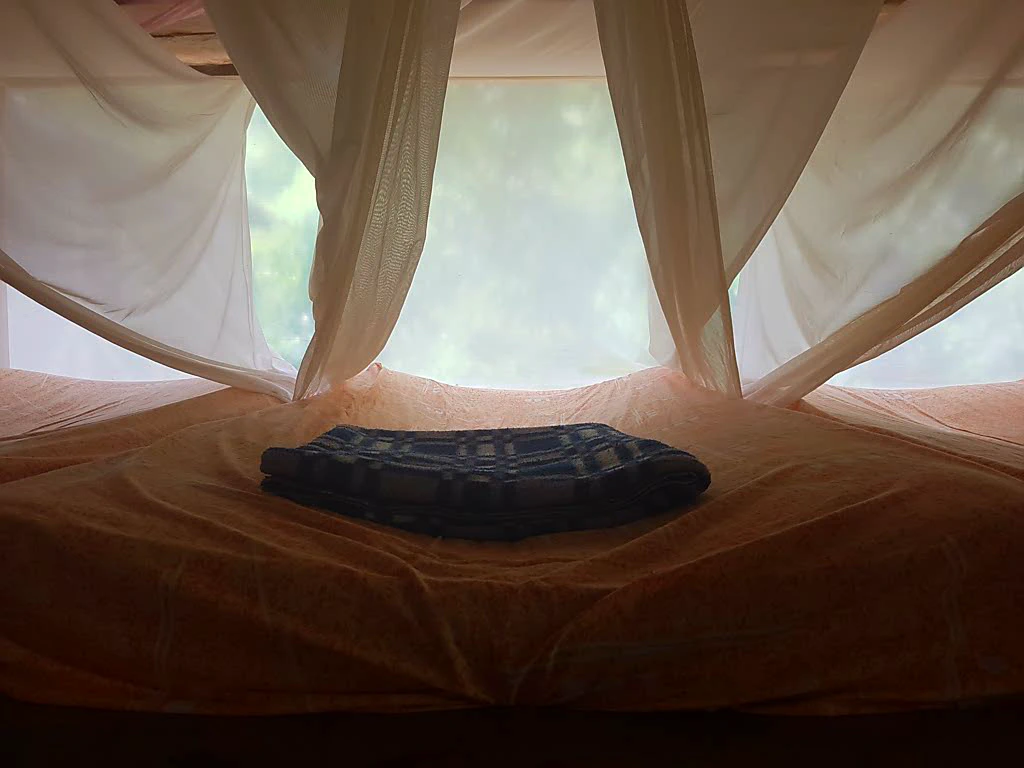
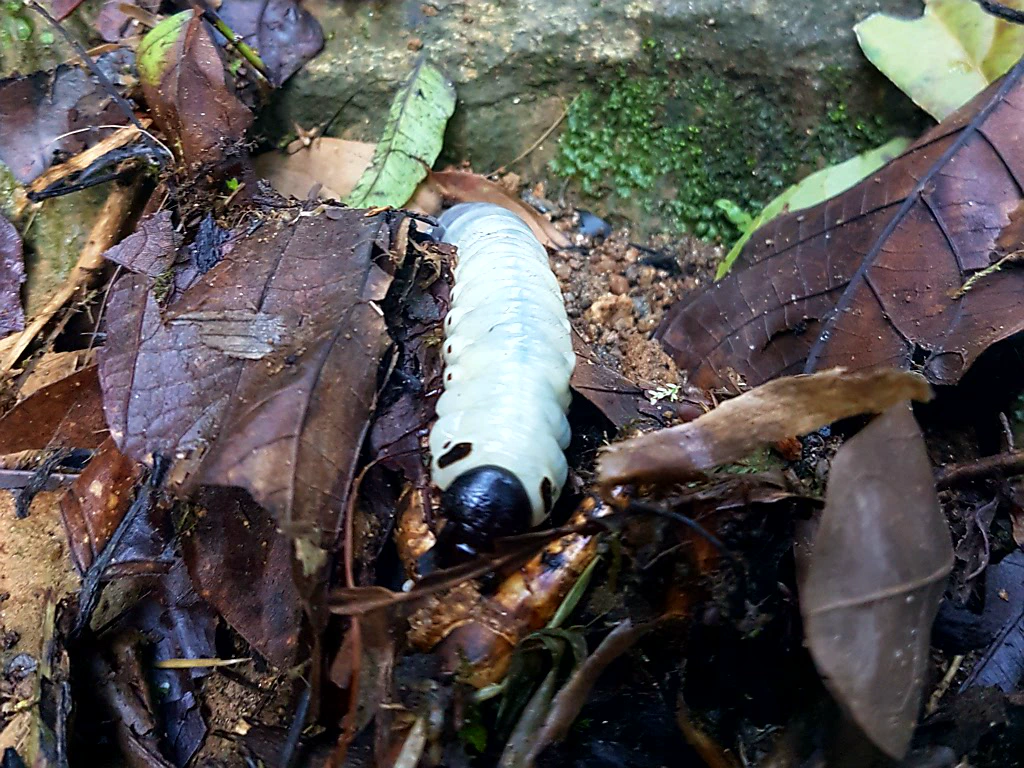
And sadly mosquitoes do not seem to be the only vermin making themselves comfortable there… in the middle of the night my calves started itching like mad… Mosquito bites? Or bed bugs?!? The mother of the Colombian family complained about night-time itching the next morning as well…
But before we could turn our attention to that subject, it was time to get up at 5 again, have breakfast and head for our destination: the Ciudad Perdida. One last river crossing and 1200 steps later we set foot on the ground of the lost city. After sacrificing a few coca leaves to the ancestors of the Tayrona, climbing another 300 steps and laying down a stone in the name of fertility, we finally enjoyed the view familiar from countless postcards.
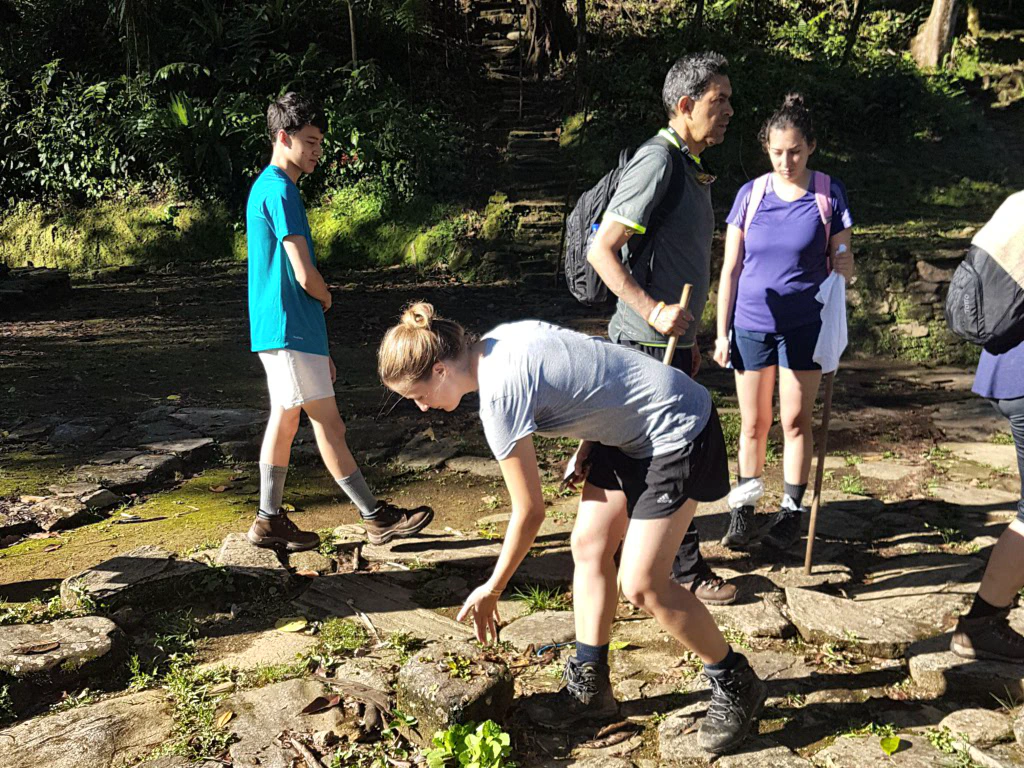
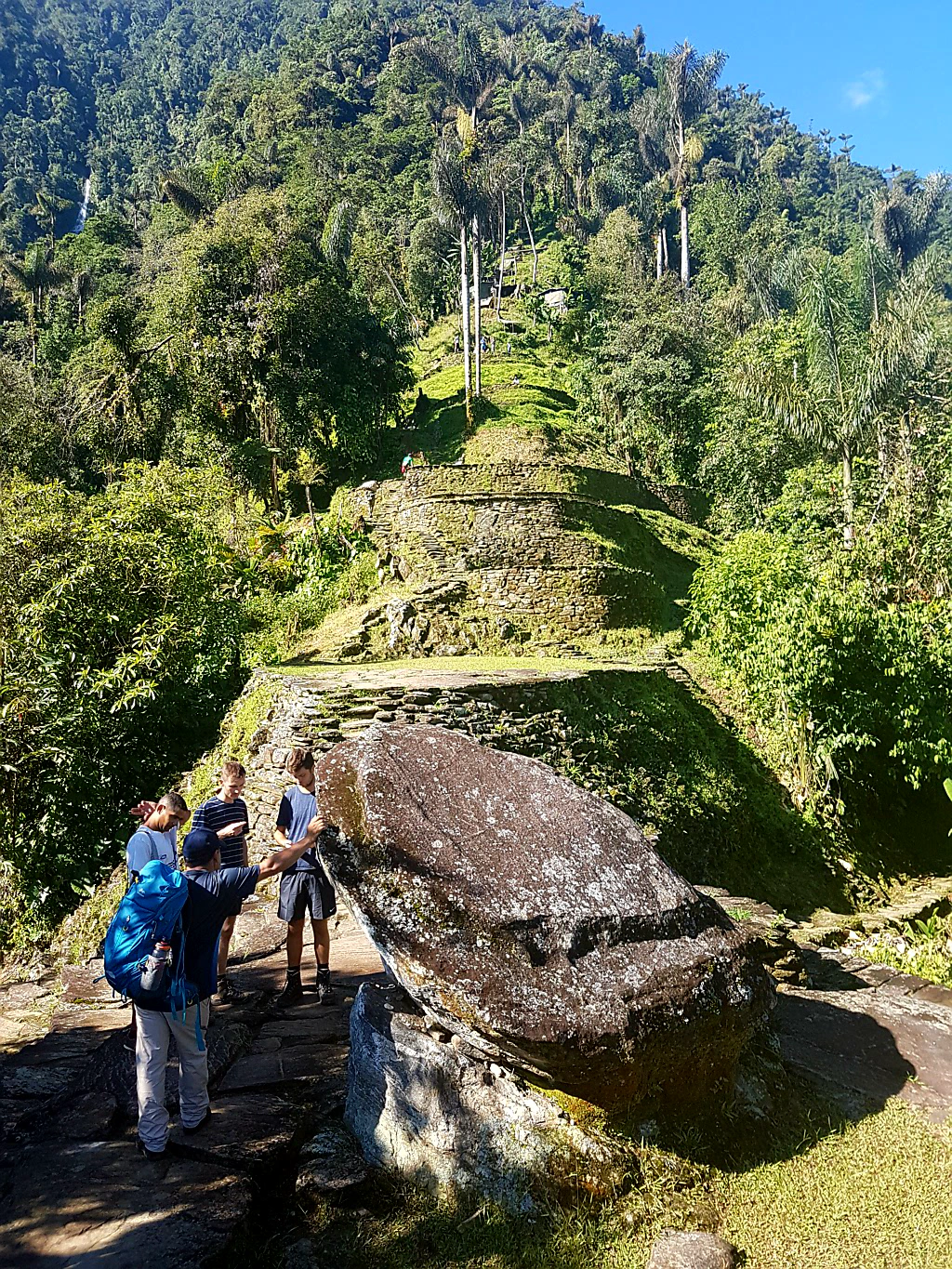
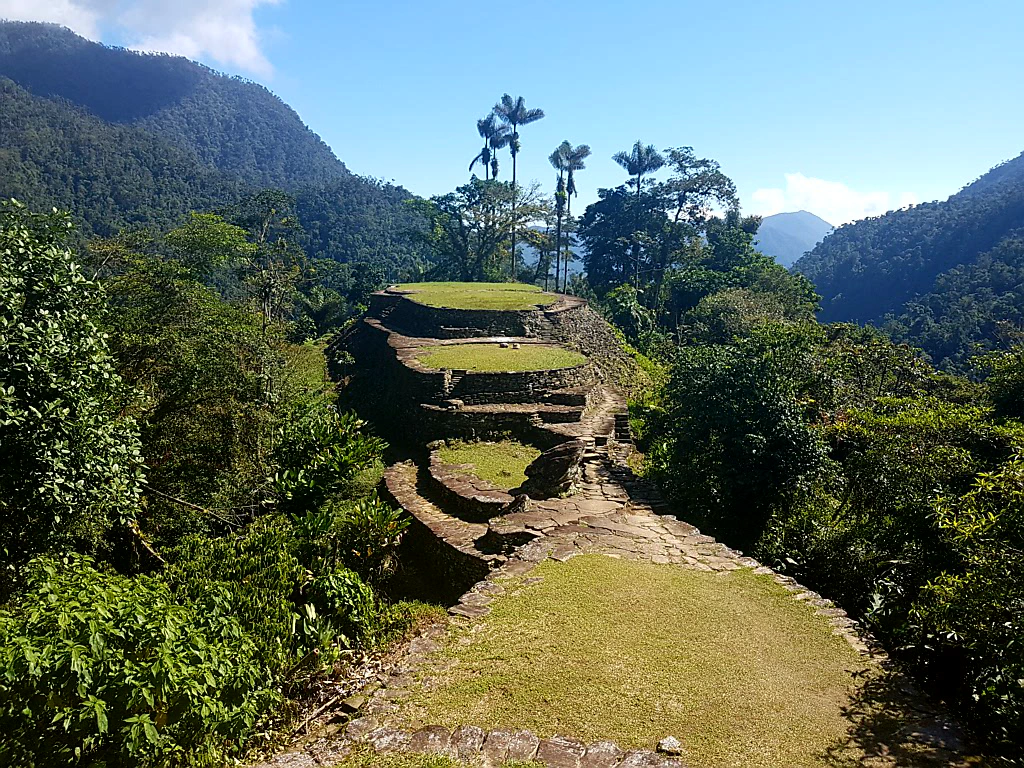
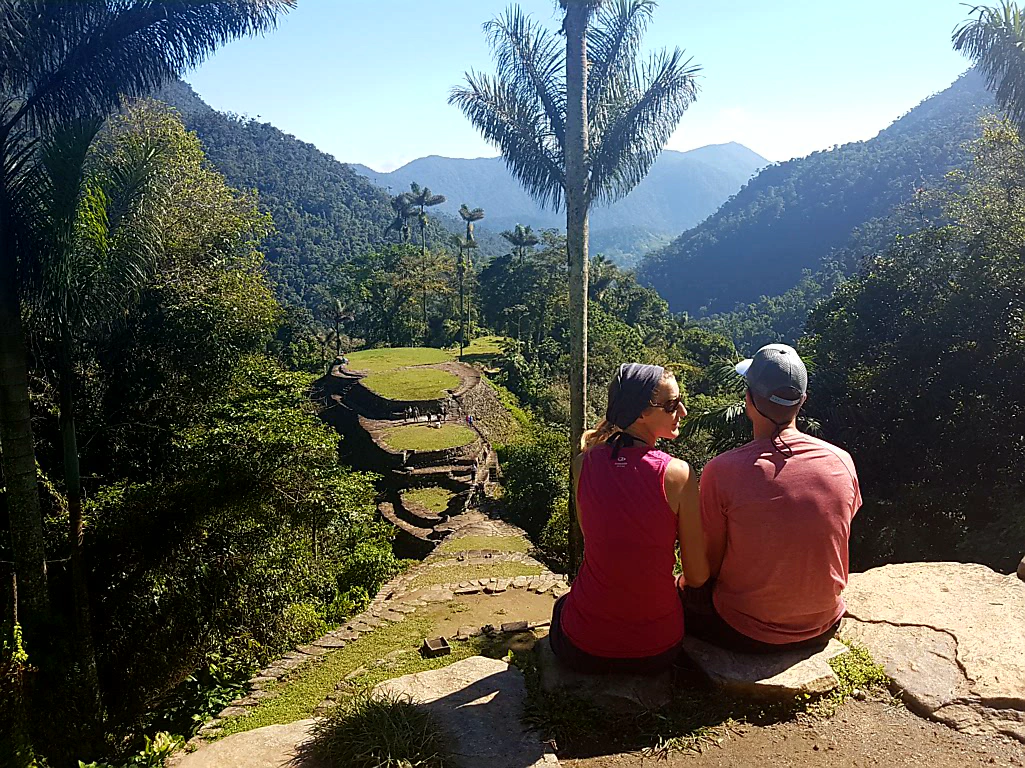
Here Jesús finally came into his own and shared some background information with us, illustrated with photos printed off the internet. The information does not always match Wikipedia, but I think we should give more credence to a guide trained for over two years. So I am using his information.
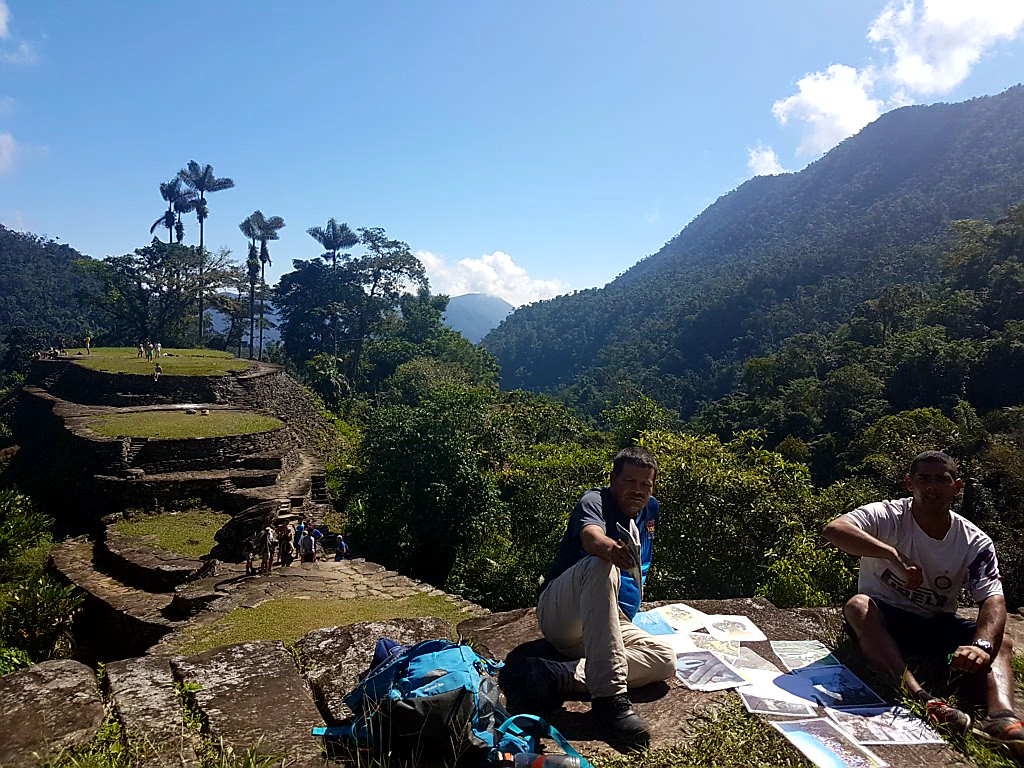
Built by the Tayrona tribe between 700 and 900 AD, the city was home to around 2000 tribe members. The city has 260 of the famous round terraces, on each of which one family lived in two huts (one for the male part of the family, one for the female). Around 1600 the city was abandoned. Partly because the Tayrona tribe was fleeing the diseases brought in by the Spanish, and partly because the Spanish were waging war on and enslaving the indigenous peoples in other parts of the Sierra Nevada, and the Tayrona living in the Ciudad Perdida wanted to escape that fate.
In the 1970s the site was rediscovered and initially fell victim to looters, since the Tayrona had left their gold treasures behind. Between 1976 and 1980 the city was restored and it has been accessible to tourists since 1980.
After eight tourists were kidnapped in 2003 and held for up to 100 days, the site is also a permanent military post.
After the Ciudad Perdida was restored, the indigenous Kogi, who are descended from the Tayrona, also claimed part of the site. Sadly the shaman, the chief of the Kogi so to speak, was not present during our visit.
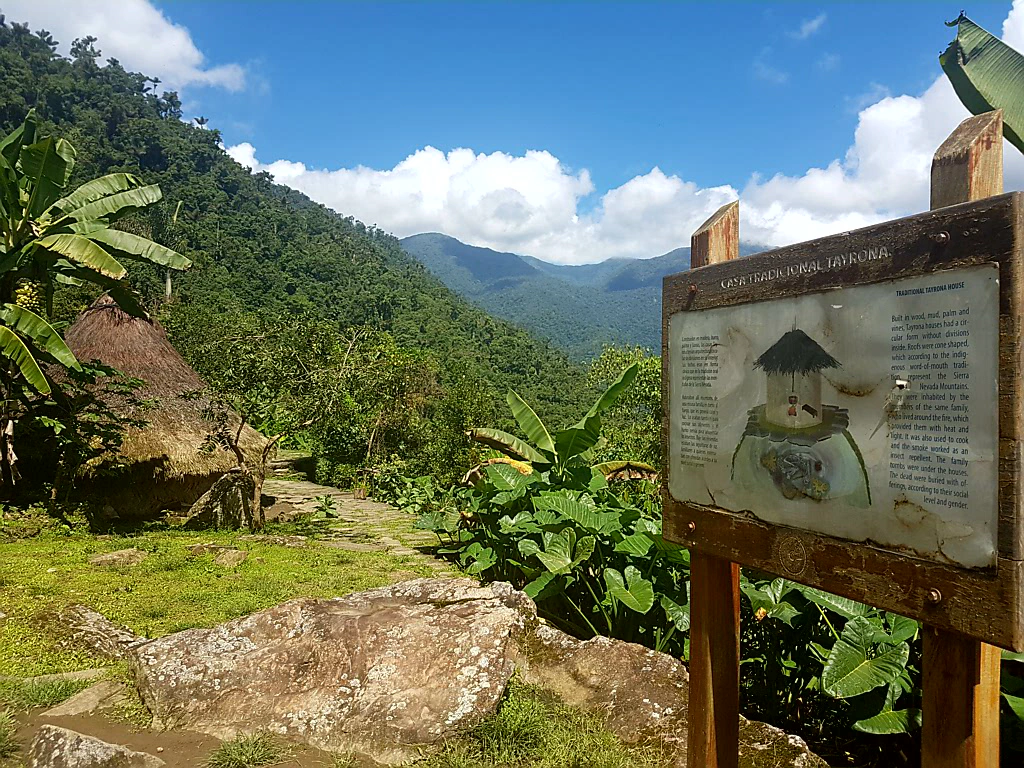
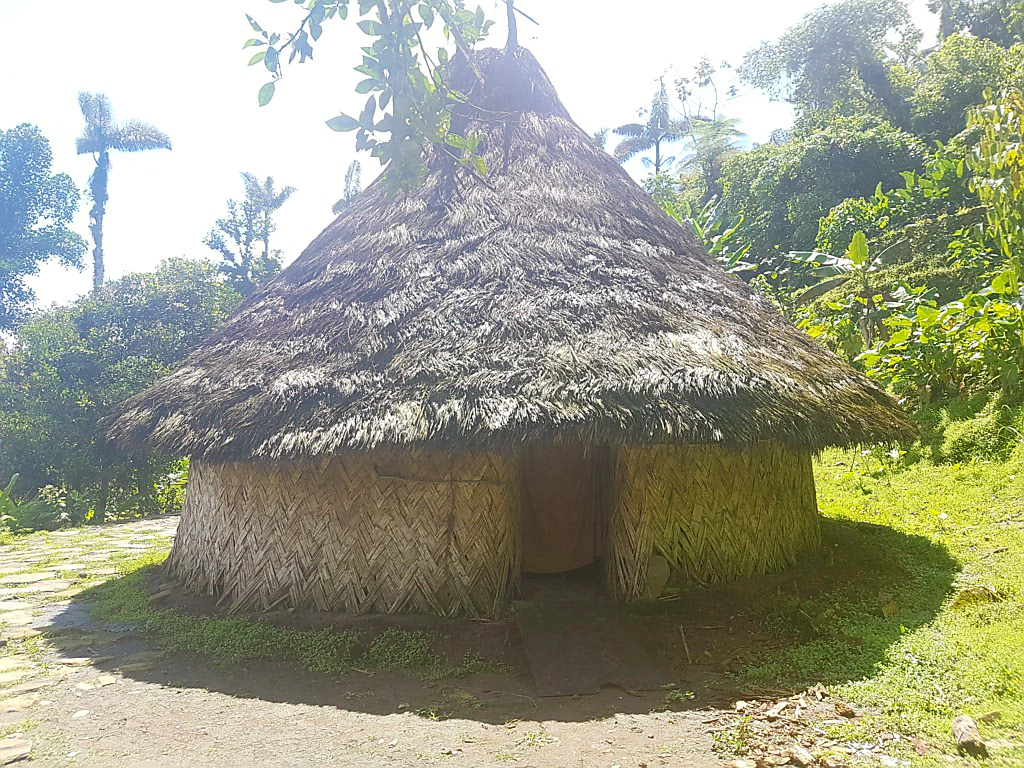
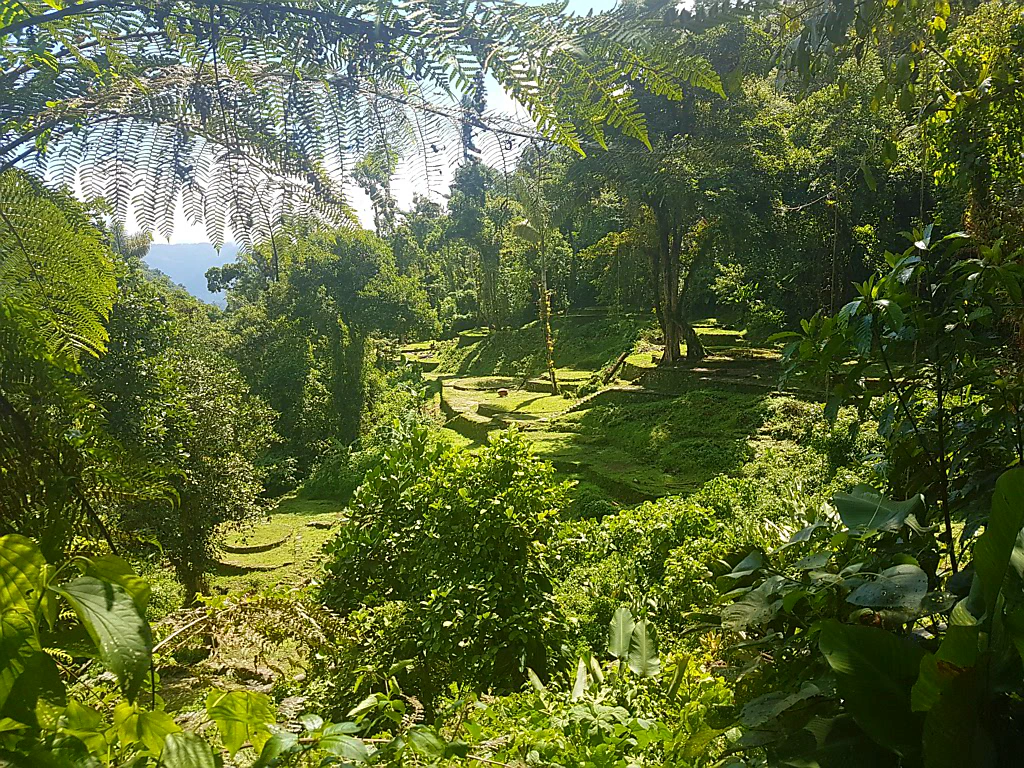
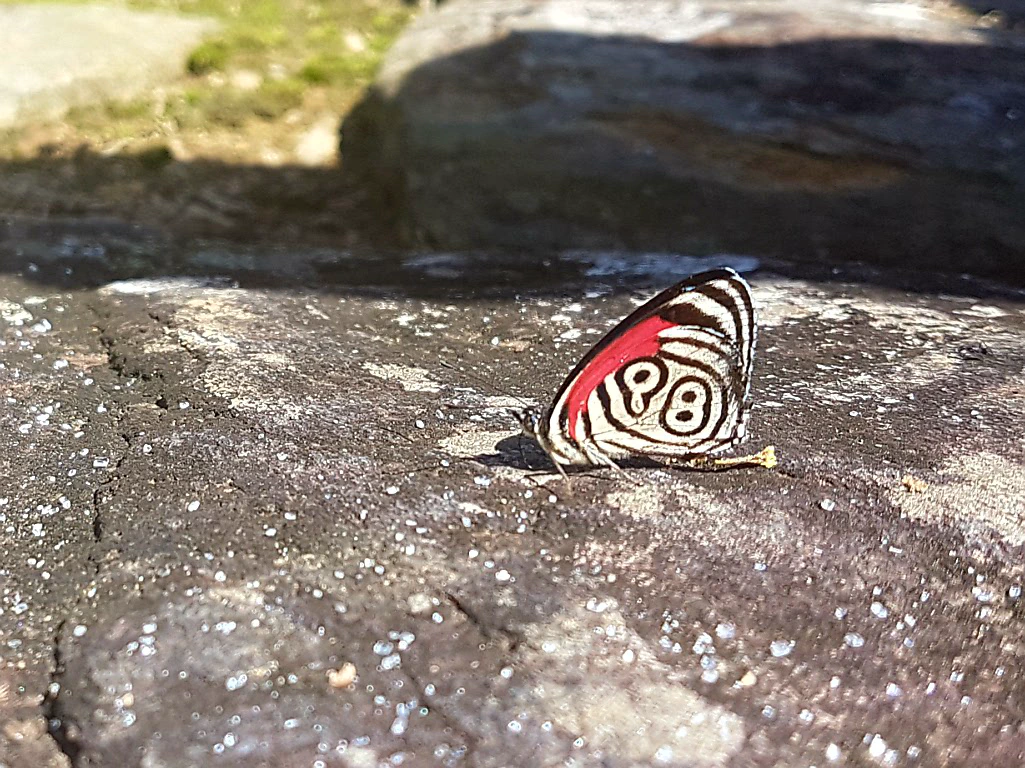
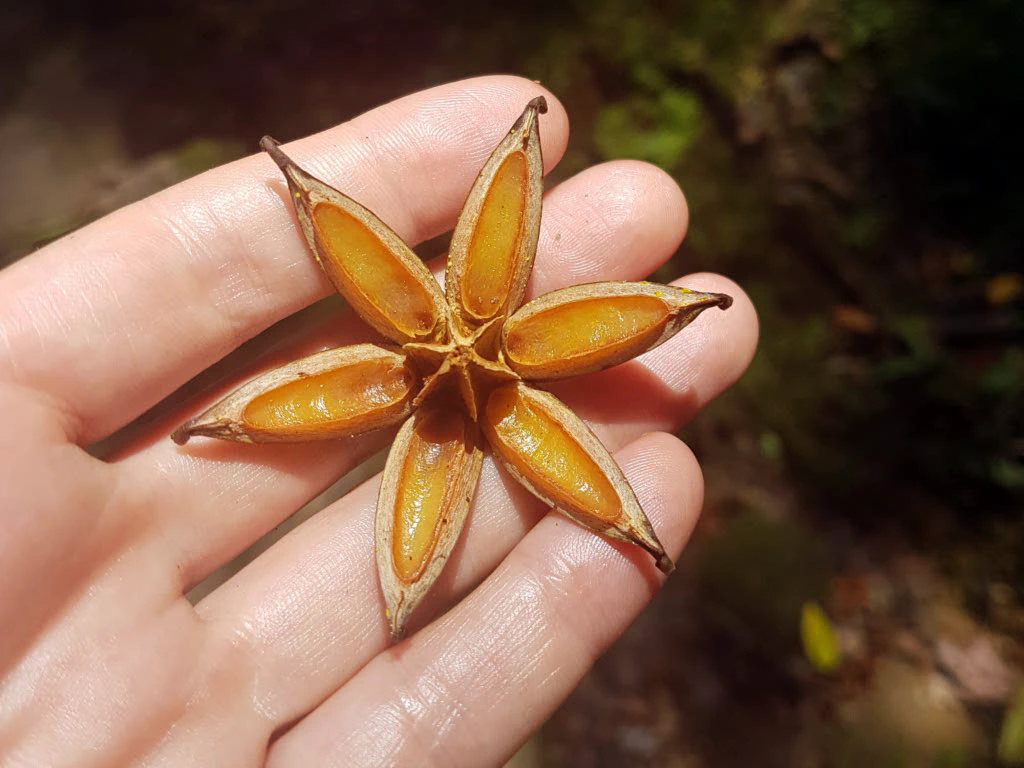
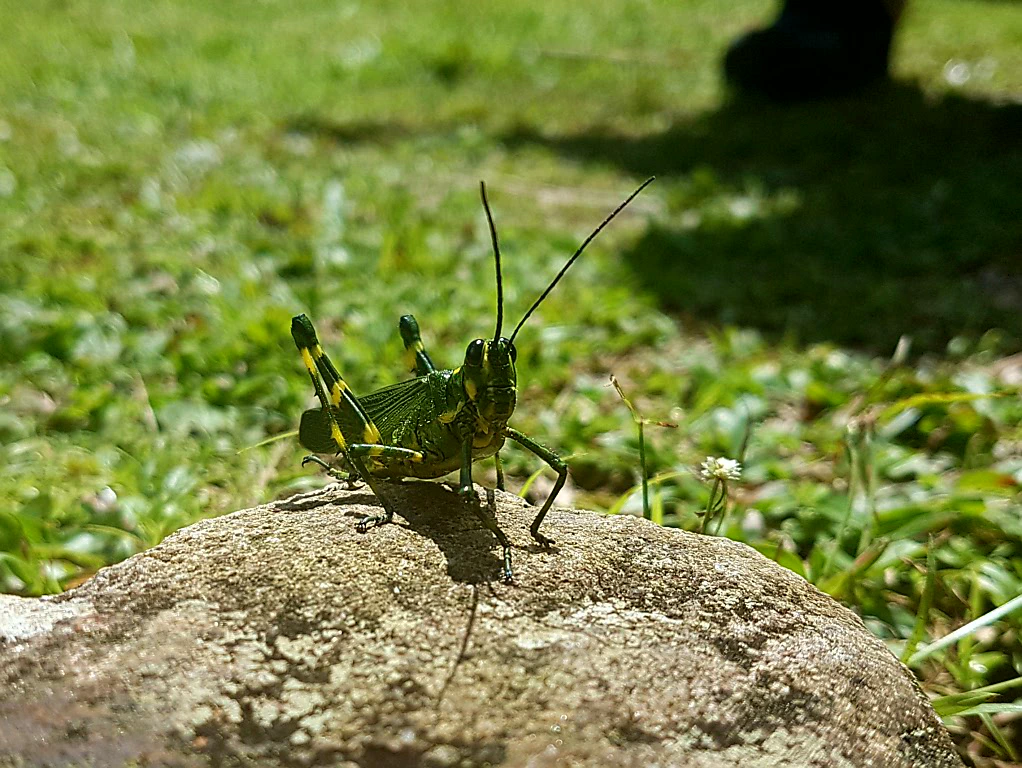
After a thorough tour of the ruined city we set off on the 1.5-day walk back. As is always the way, the identical route is less exciting the second time. You have seen it all already…
In the evening Jesús finally told us what the poporo is all about, the object the Kogi men carry around with them constantly. It is a little complicated. In short, a hardened gourd holds powdered lime made from snail shells. The Kogi mix this in their mouths with saliva soaked in coca leaf and smear the substance in circles along the head of the gourd, creating a solid yellow mass. They say that this is how they write down their thoughts (they have no written language), and that the shaman can also foresee natural disasters in it, as well as the state of health of his men. Above all I wonder who first came up with the idea…
It turned into a very interesting evening and we could finally ask all the questions that had been weighing on us. And Jesús salvaged his tip.
Back in Santa Marta we had one single, very, very urgent wish: out of our clothes and everything into the washing machine! In true New Zealand fashion we had brought one T-shirt for walking and one for the evenings. And the walking shirt was simply, constantly, sweat-soaked for four days.
Many accounts describe the walk as ultra-strenuous, which I really cannot agree with. What I found strenuous was more the conditions you endure: the mattresses in two of three camps sagged right to the floor, you battle non-stop with every conceivable insect repellent against the swarms of mosquitoes and somehow feel constantly wet and grim, because it is jungle-warm and nothing dries. Poor us.