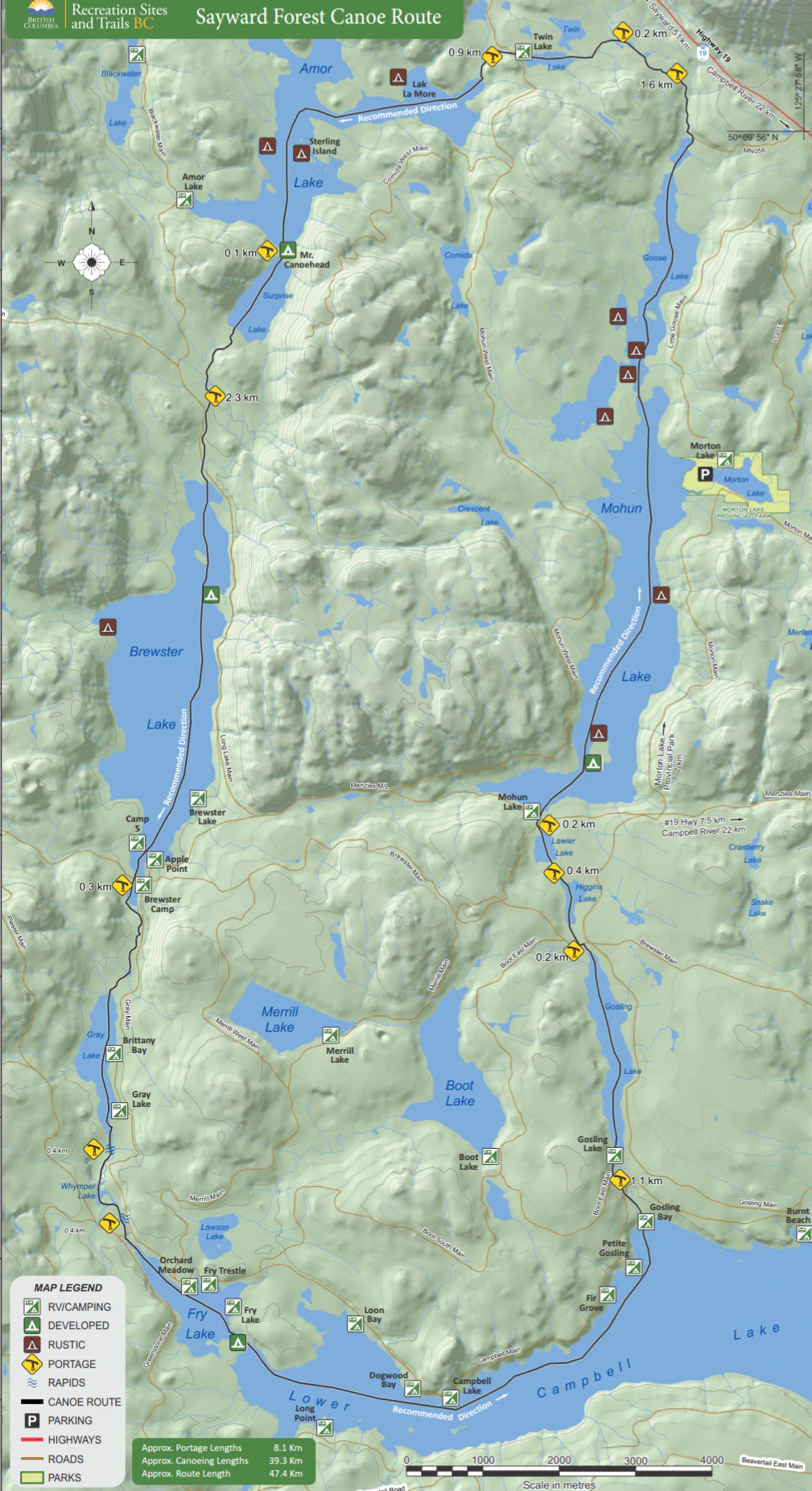
After many small adventures on Vancouver Island we set off on a bigger trip: for four days Dan, Jan and I paddled along the Sayward Forest Canoe Route. The route runs across twelve lakes, connected to one another partly by small channels and partly by walking trails.
It is a good four hours’ drive from Victoria to the start of the route. Since we only set off around ten in the morning and also stopped twice for a few treats, it was already after 5 pm when we finally arrived at Gosling Lake.
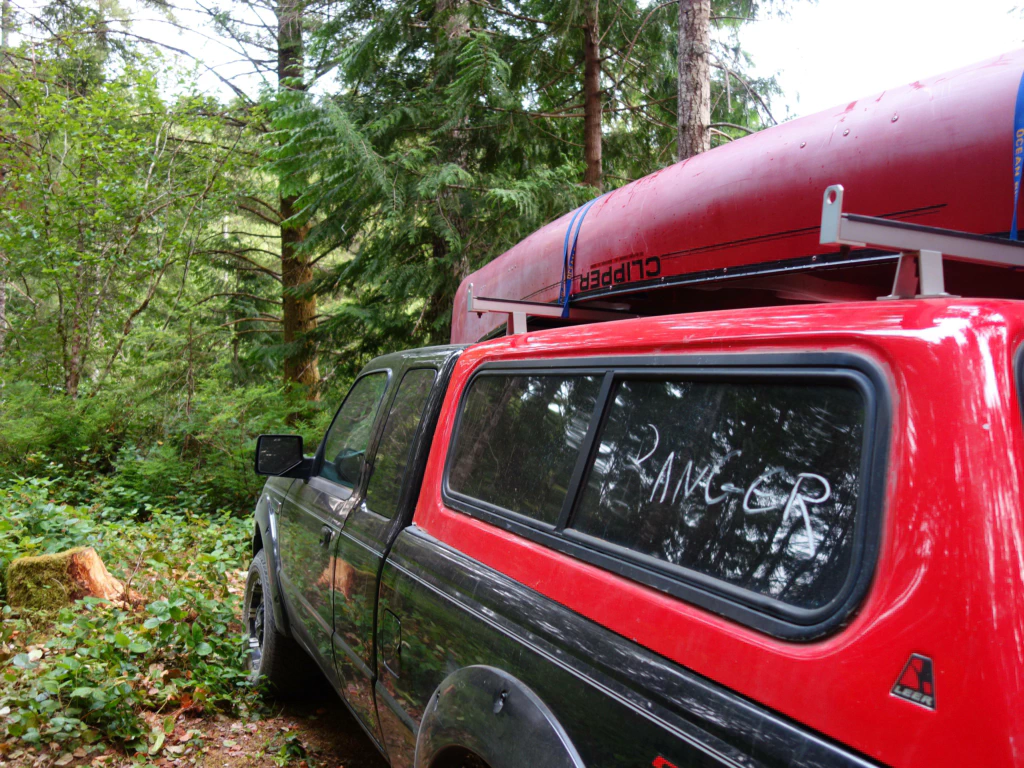
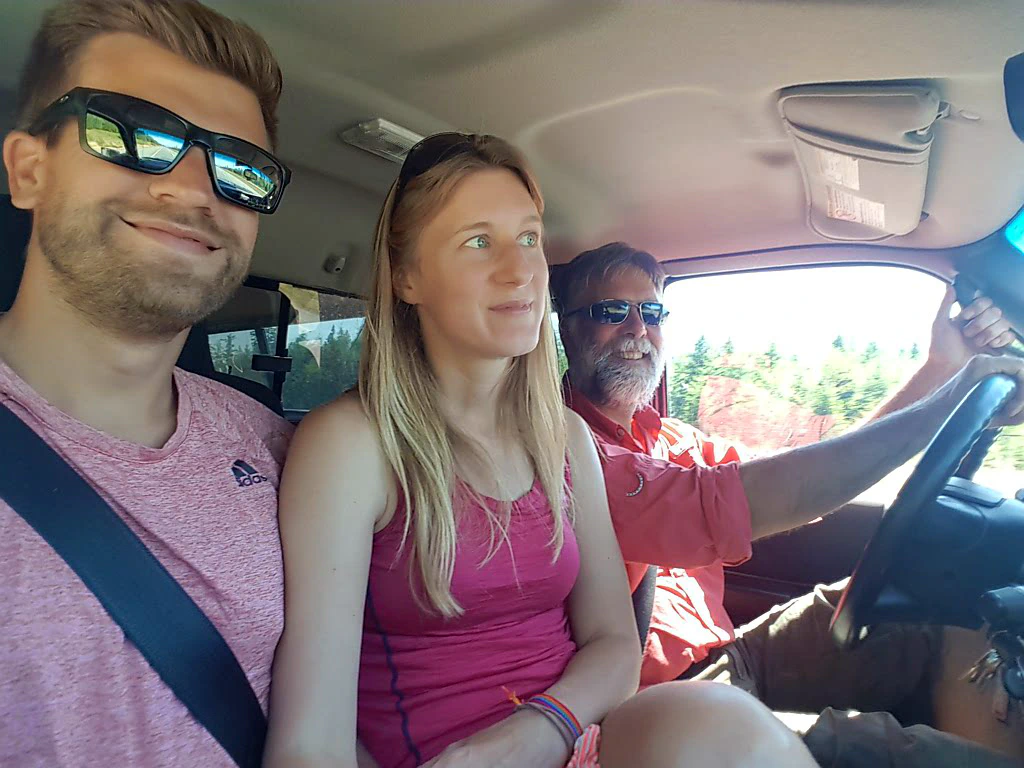
We quickly stowed our belongings in the canoe and off we went! Time to see how far we would get before dusk!
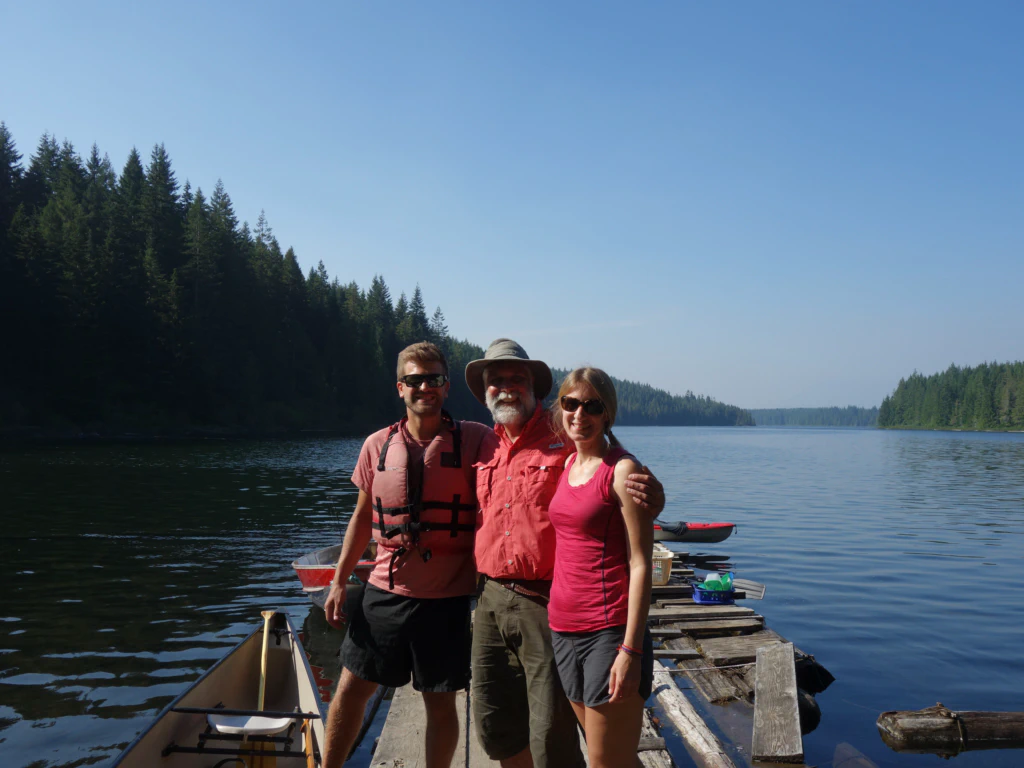
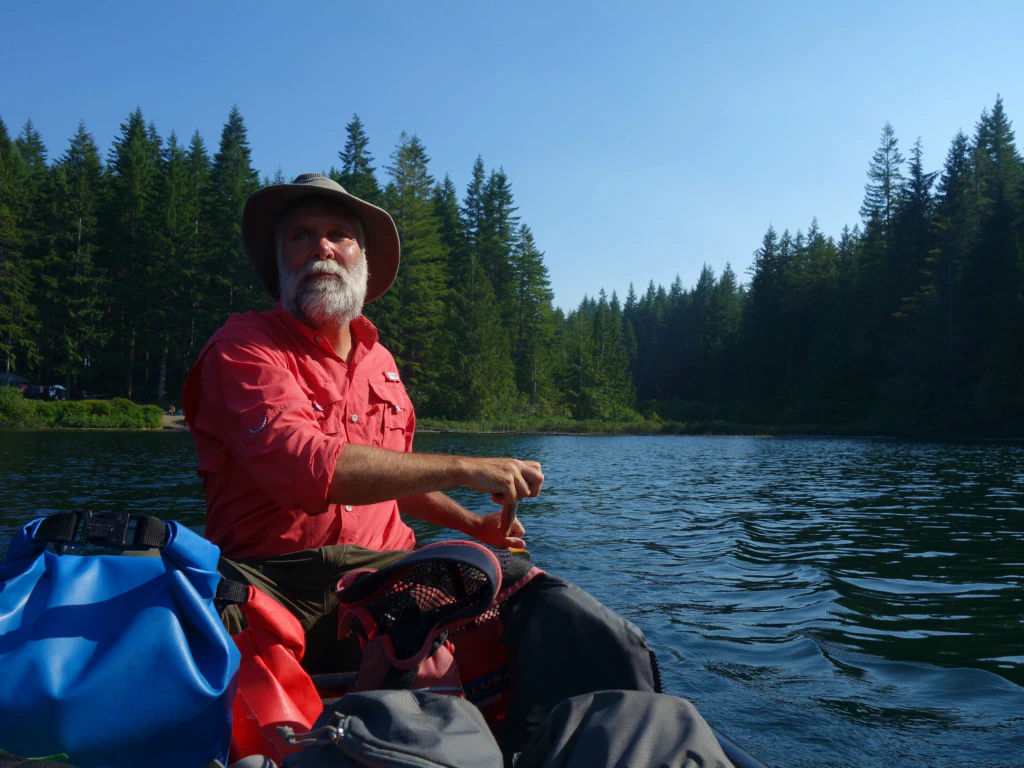
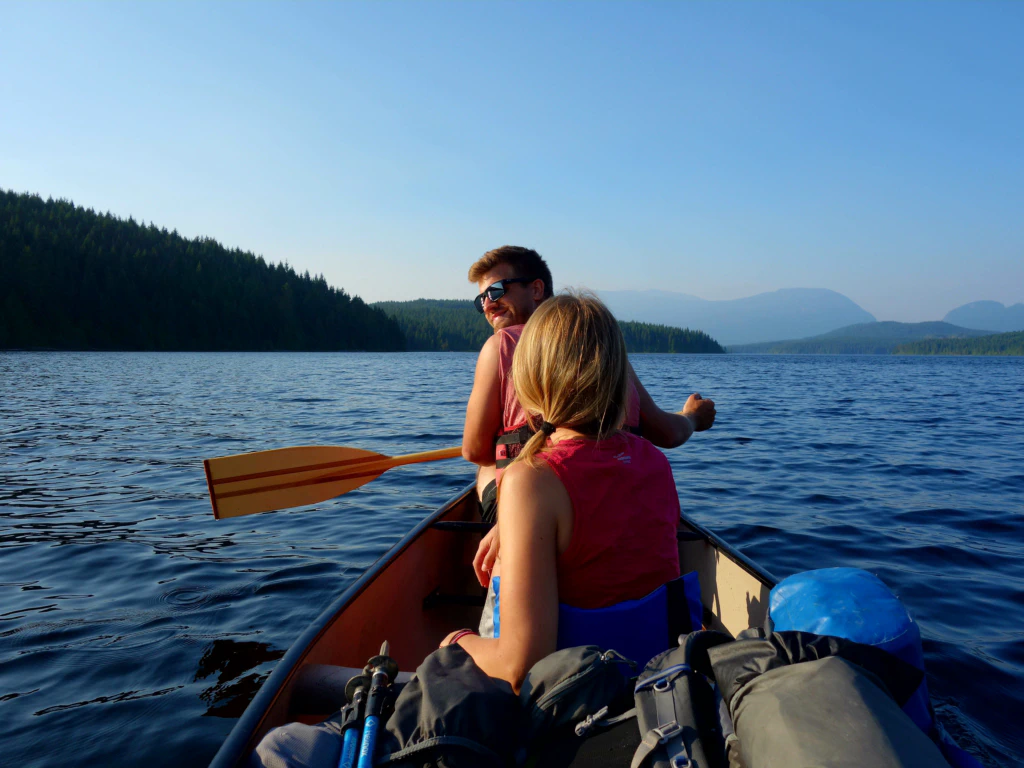
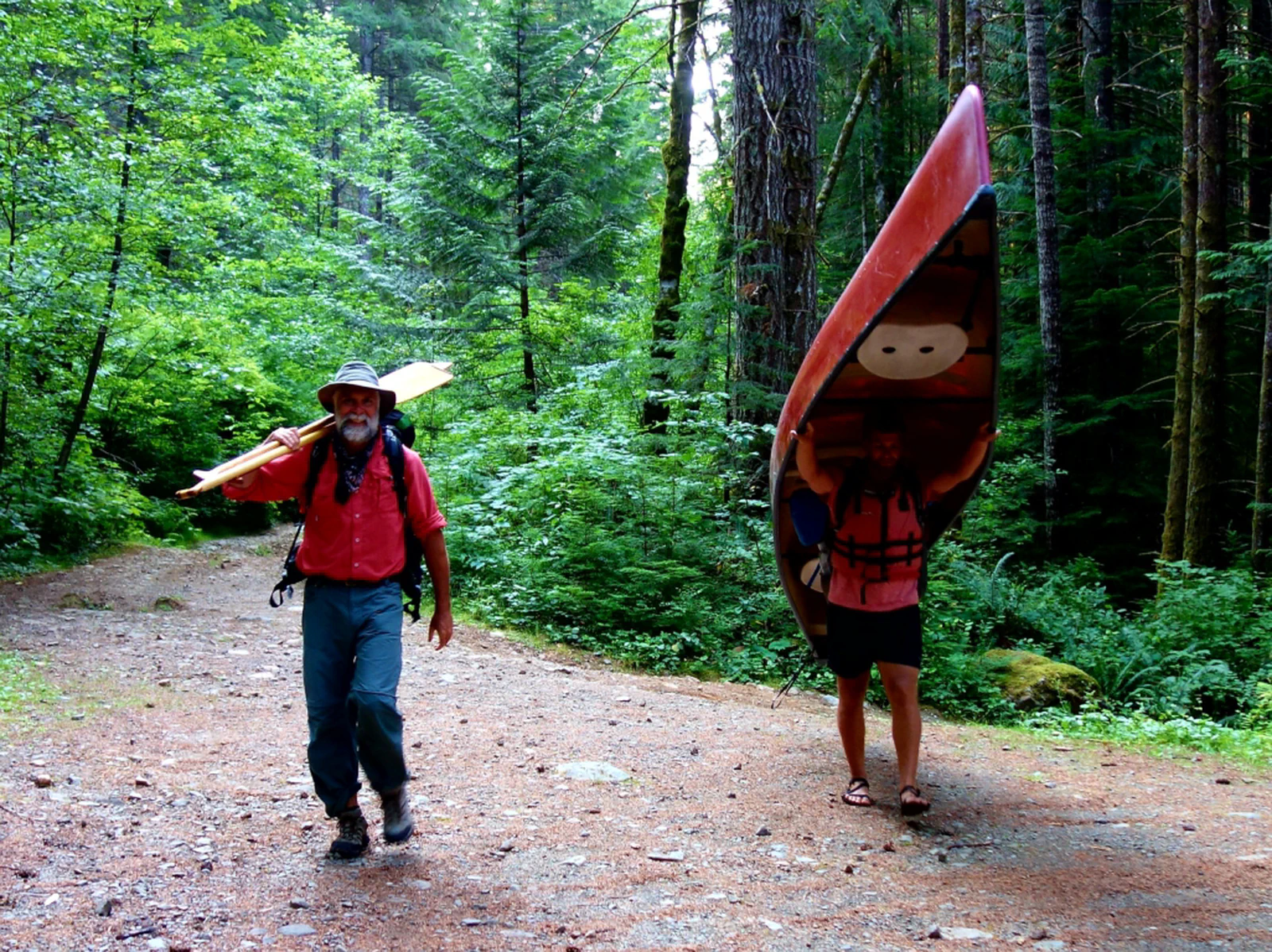
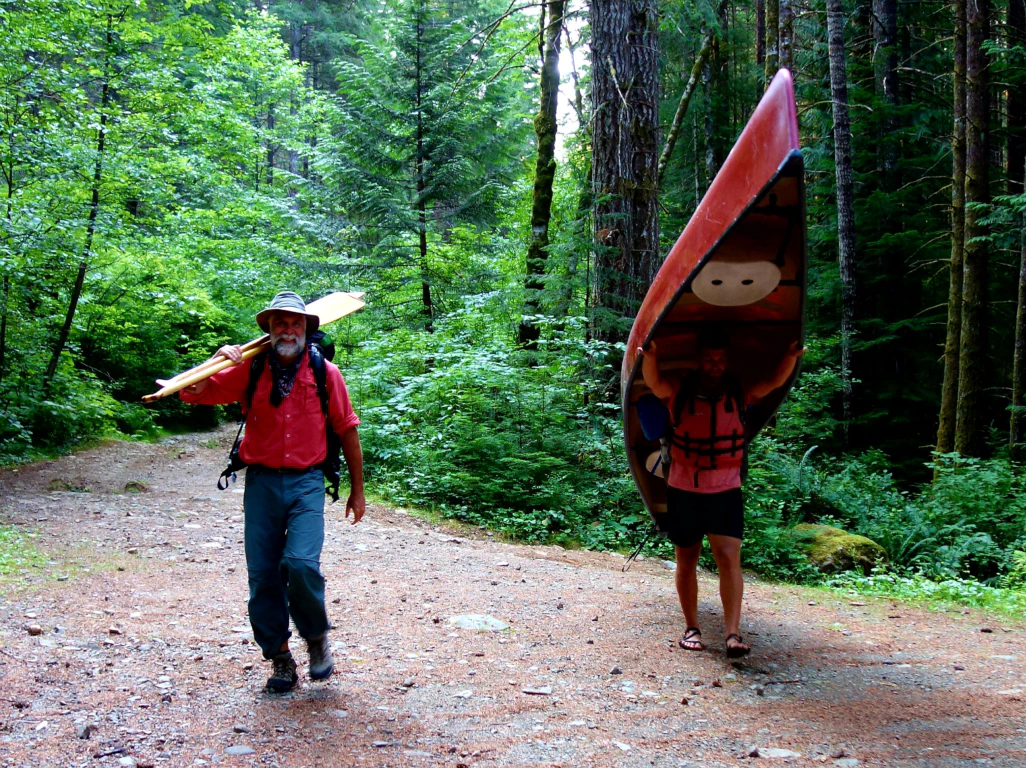
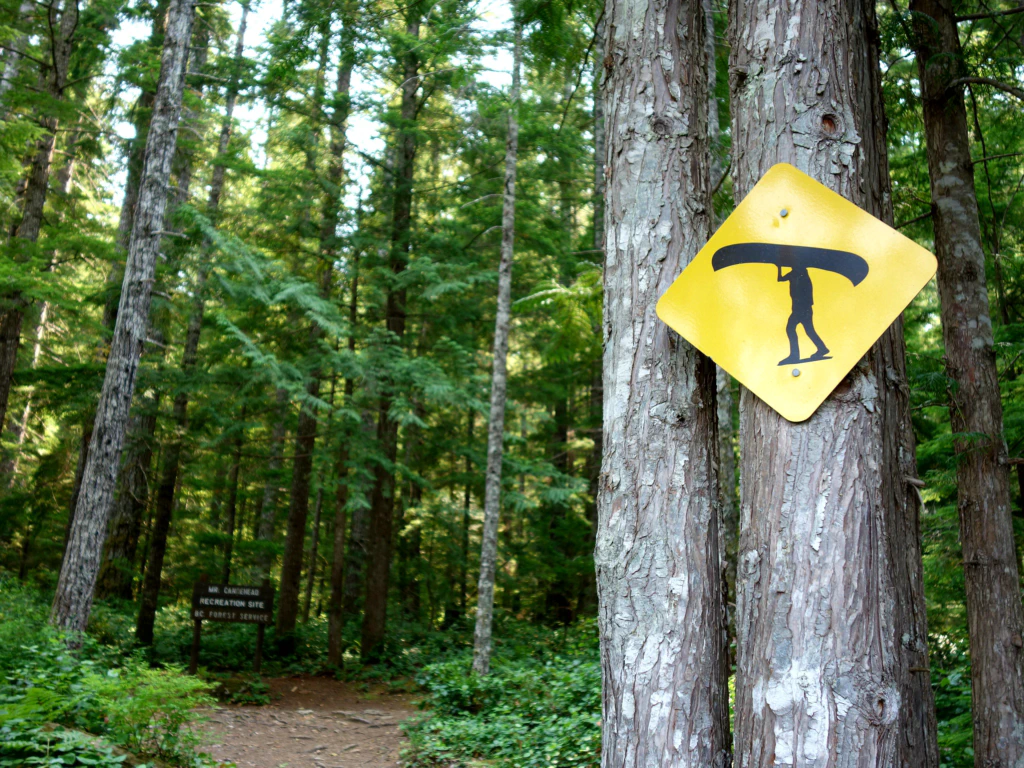
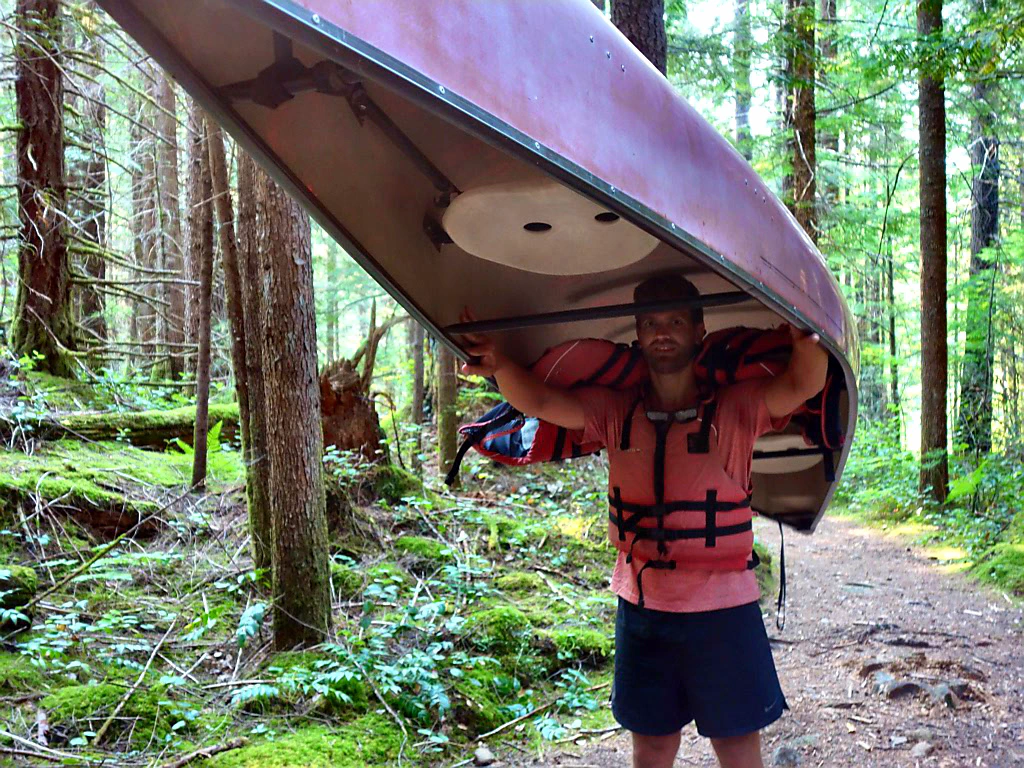
With a good wind behind us we crossed Gosling Lake faster than expected and started our first portage trail, as the connecting paths between the lakes are called. That means you carry not only all your luggage and food along the connecting path, but the canoe as well. Since carrying everything at once is generally too heavy, you normally walk the path twice. Or rather three times: heavily loaded out, empty-handed back and heavily loaded again, before continuing with the next stretch of lake. As you can imagine, that is not only laborious but also takes a great deal of time.
Personally I have always preferred to risk dropping everything rather than walk twice. Though it was clear that this only works in this case if one of the lads can carry the canoe on his own. Or if they take turns at it.
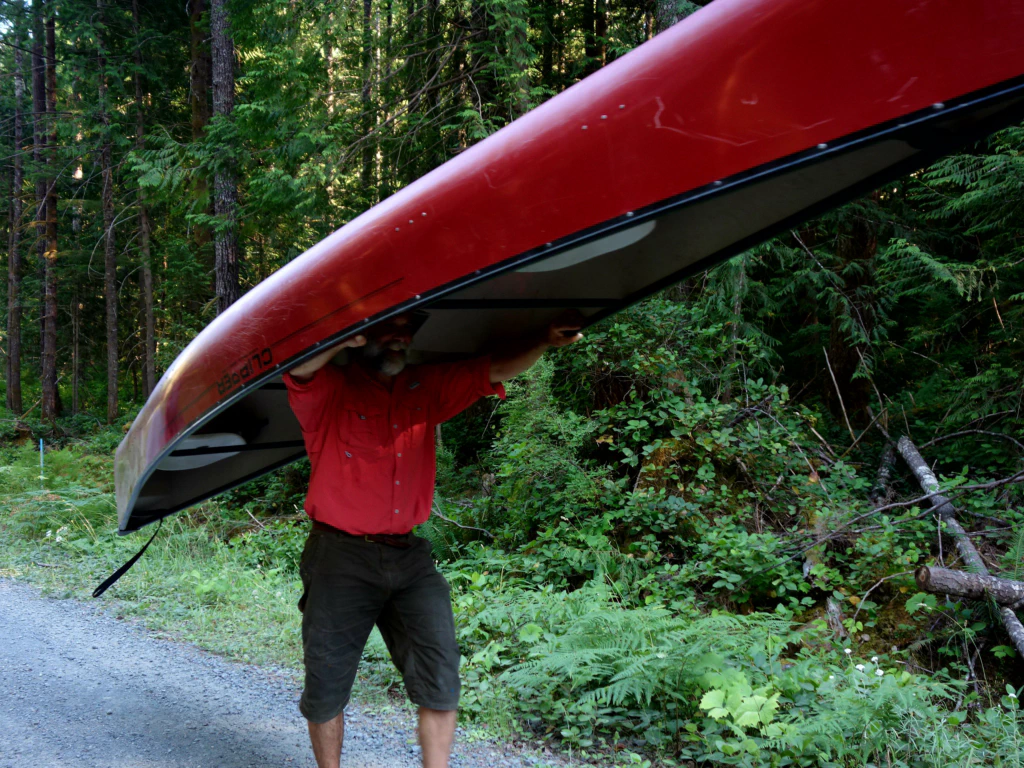
After only a few hundred metres a small lake shore came into view. Was that already the first portage? But Jan was certain that the first walking section is a good kilometre long. So on we lugged. And lugged and lugged and lugged.
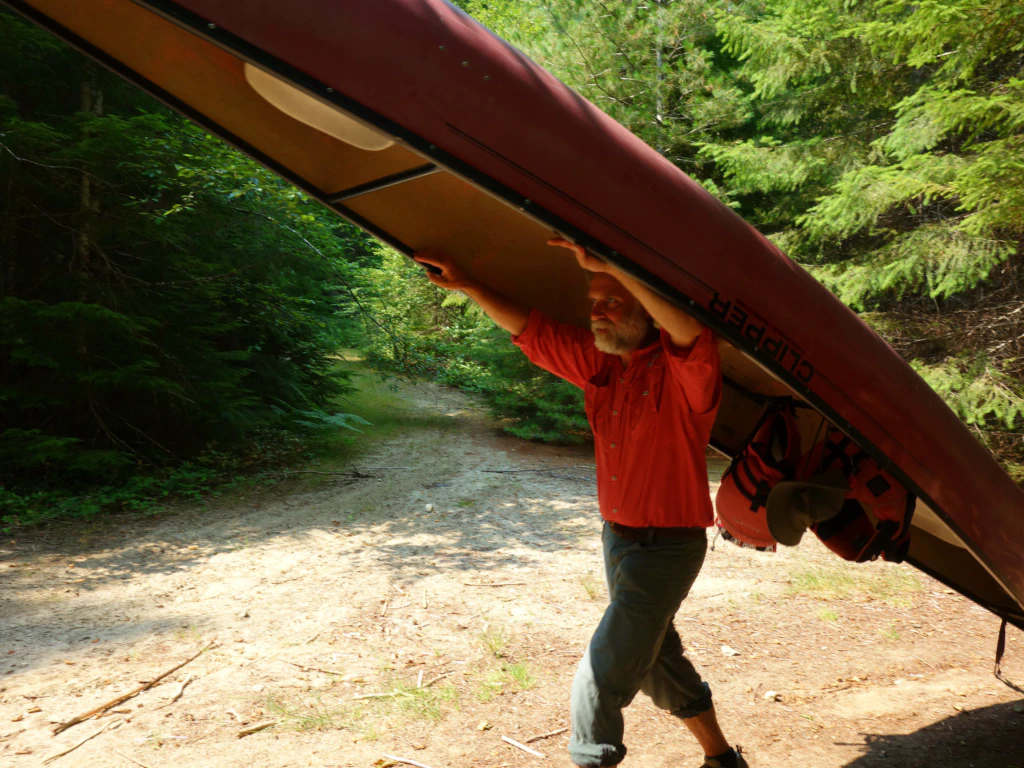
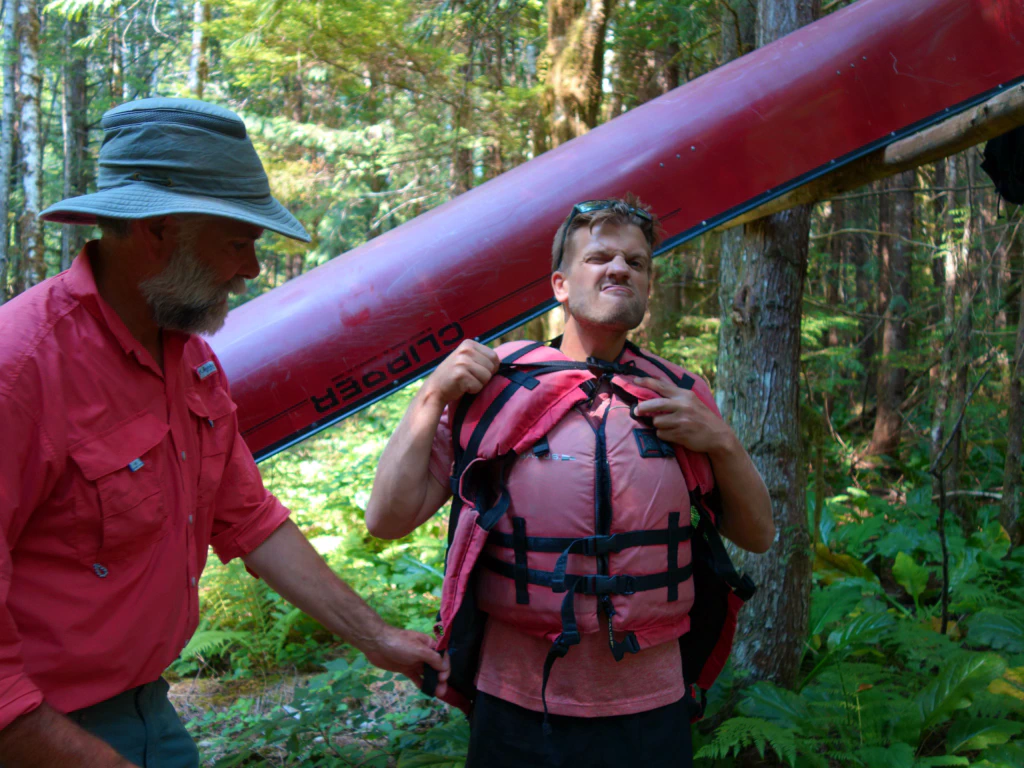
After two kilometres we checked the map. Oh no, after Gosling Lake there were actually two smaller lakes connected by only short portage stretches. We were walking around both of those lakes! And since we had reached exactly the halfway point by the time we checked the map, there was no sense in going back either. So it was up to Dan to load the canoe back onto his head. Rather funny: in English, somebody carrying the canoe on their head is called a canoehead! In fact you carry it on your shoulders.
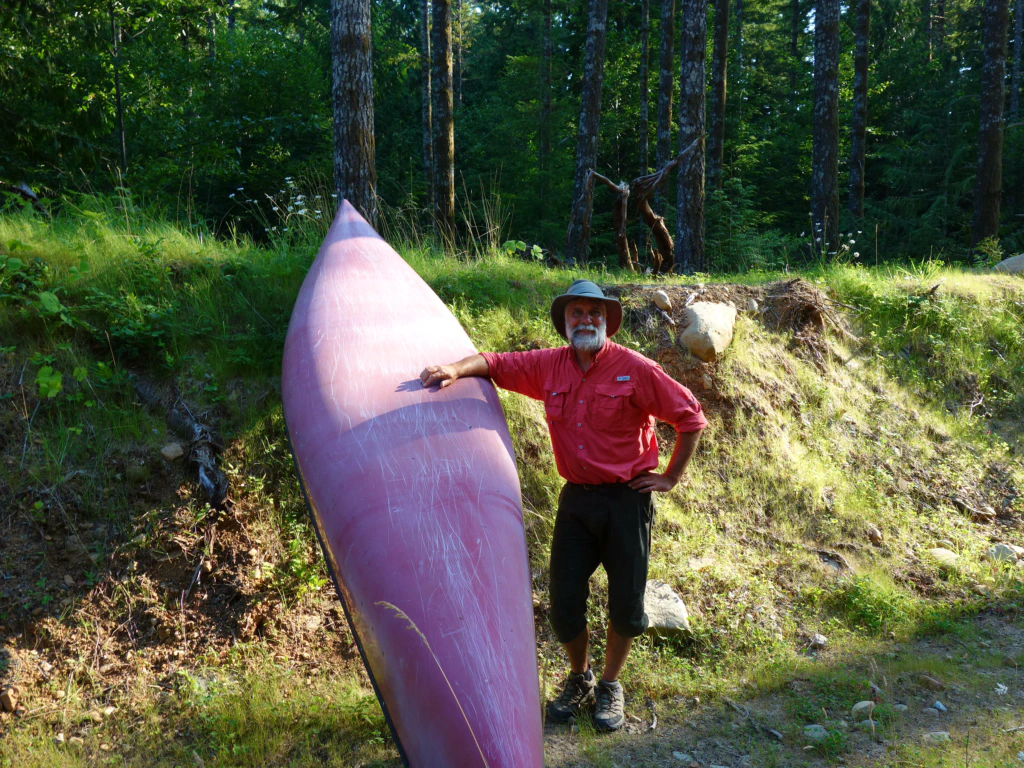
Eventually we had survived the involuntary and, above all, involuntarily longest portage of the entire route and glided across Mohan Lake in the canoe. By now the sun was hovering low over the water and it was more than time to look for somewhere to spend the night.
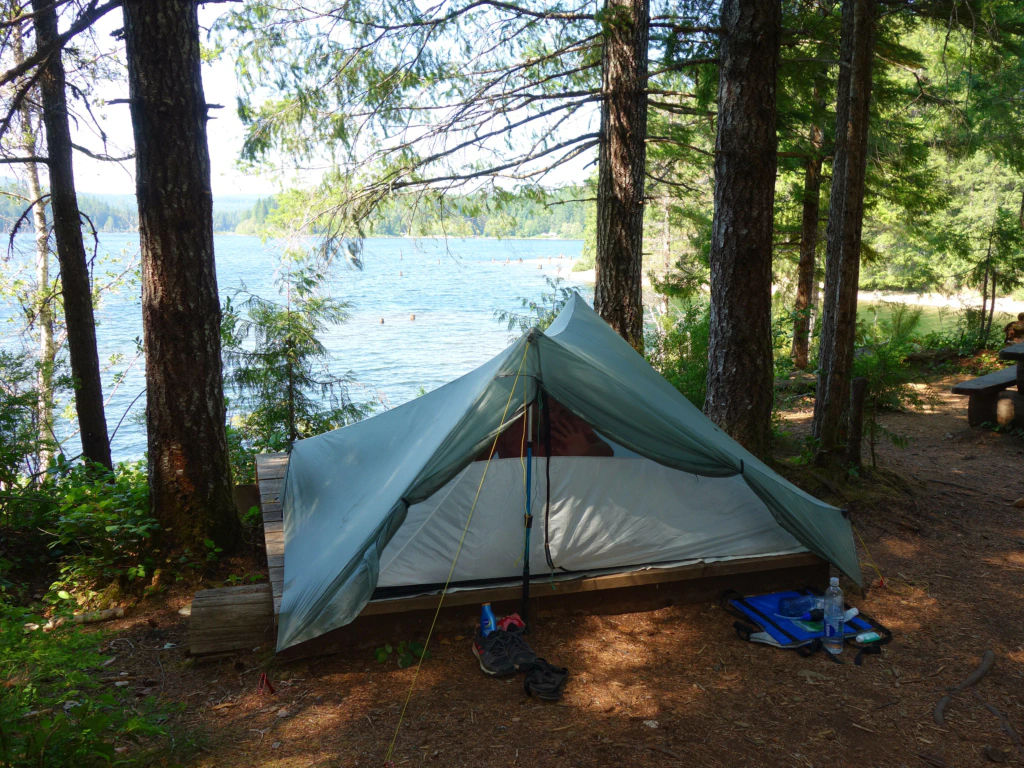
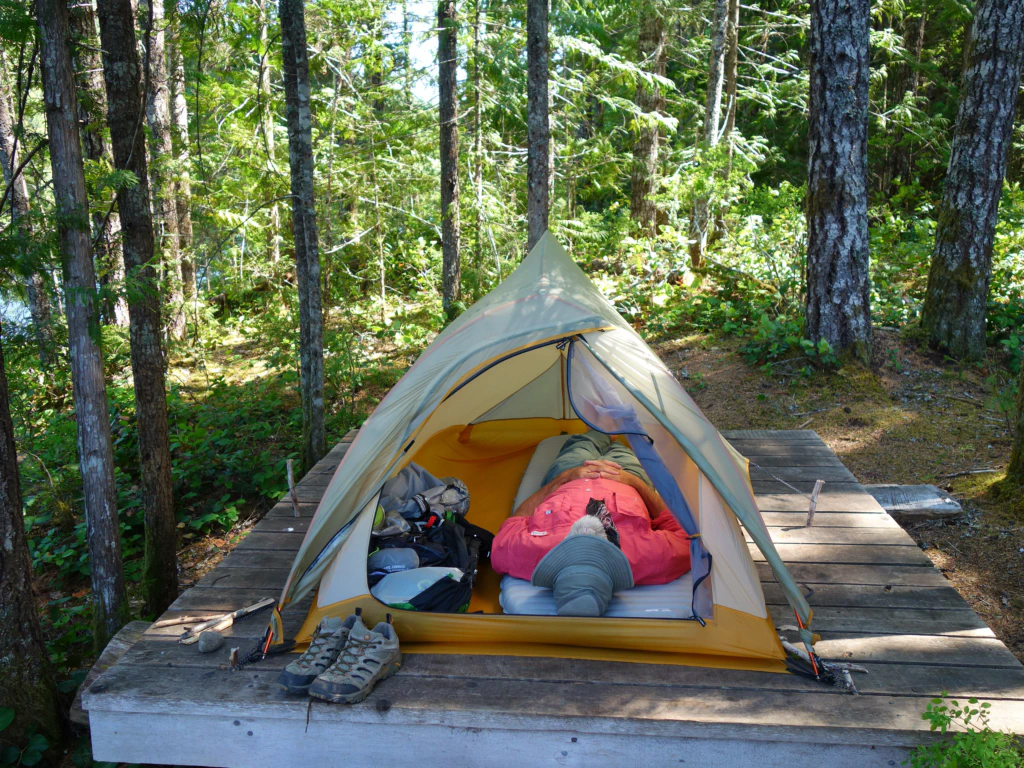
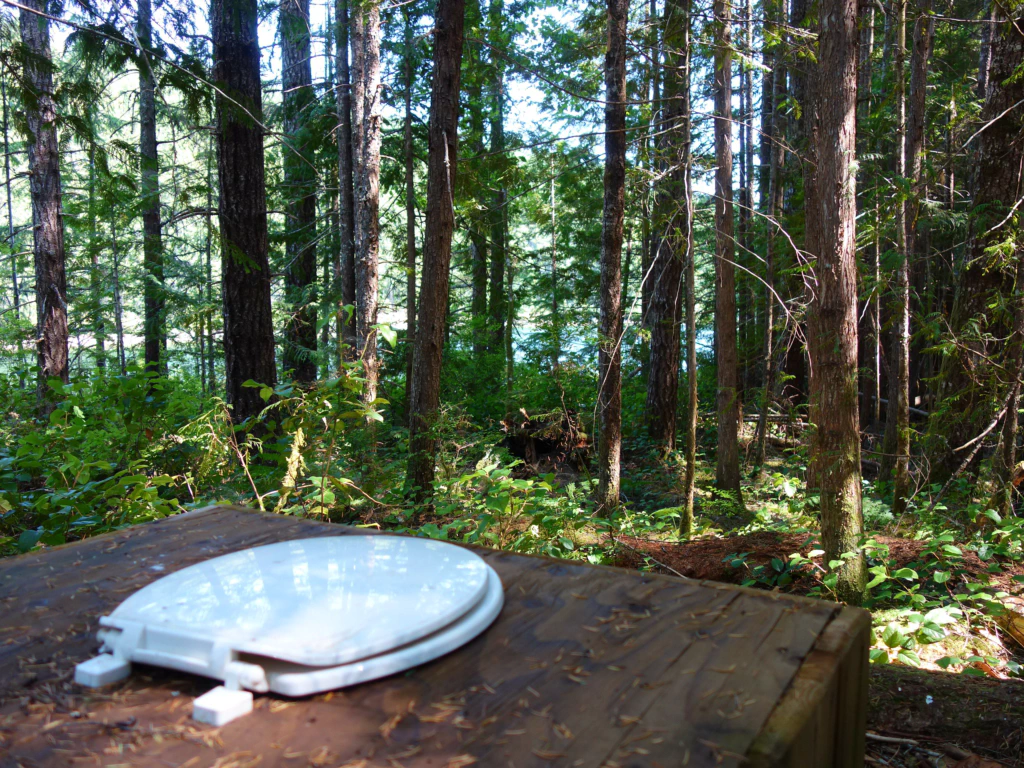
The lovely thing about this route is that there are many prettily laid out, secluded little campsites, some of which can only be reached from the water. Some of the campsites are entirely basic, equipped with nothing but a fire pit, others have wooden platforms for tents and even a pit toilet.
We headed for a small island, which was already occupied by a family. So we paddled on into a bay. But there too we could see the beached canoes and pitched tents from a long way off. As we approached, loud music blared out at us. We were not sure whether the music was deliberately meant to put us off - but if so, it definitely served that purpose.
What was going on? Dan had predicted we would not meet a soul on the canoe trip?!
Since we had spotted another unoccupied campsite on the way out, we paddled back. Shortly before sunset we pitched our tents and cooked ourselves a spartan dinner.
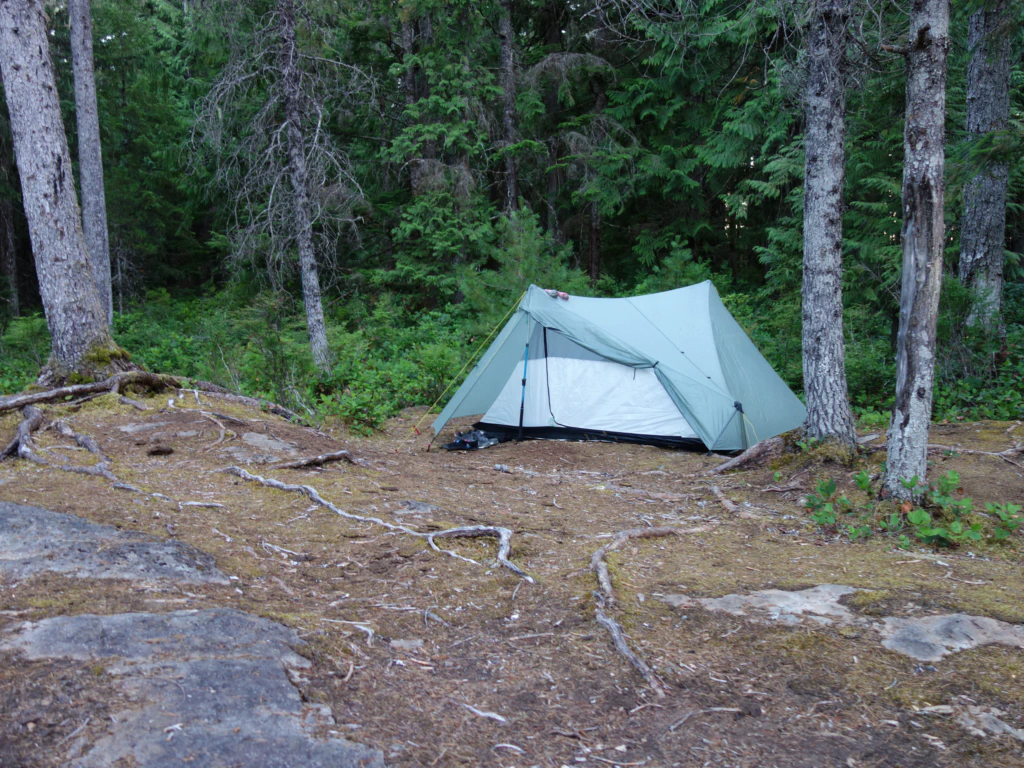
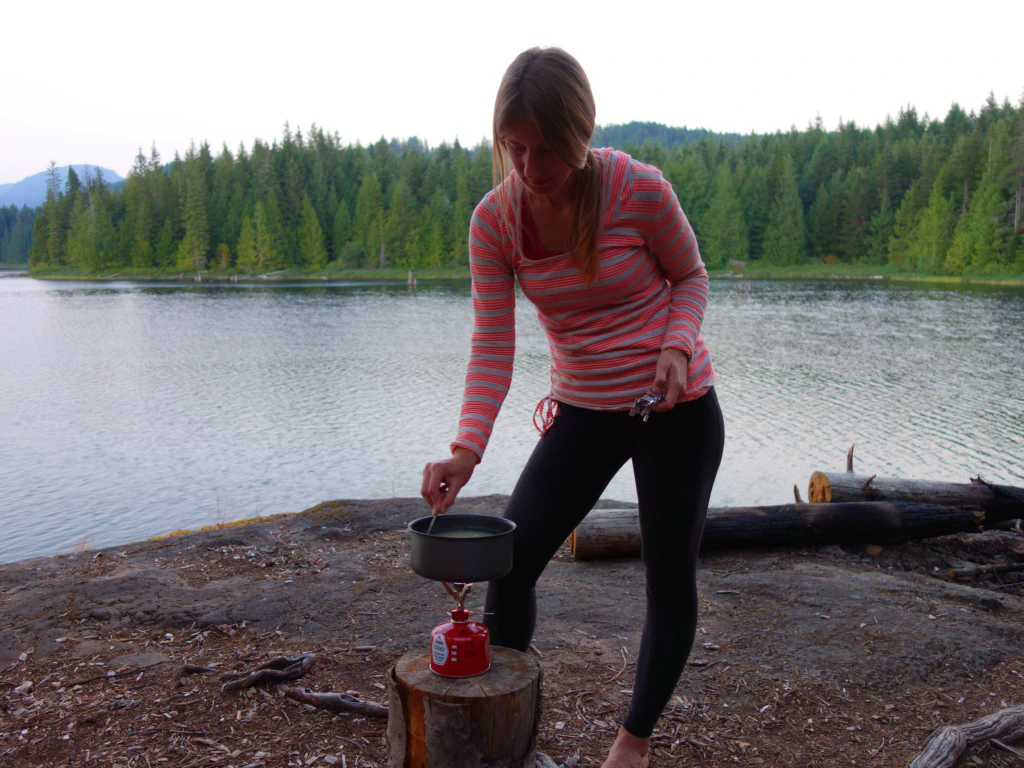
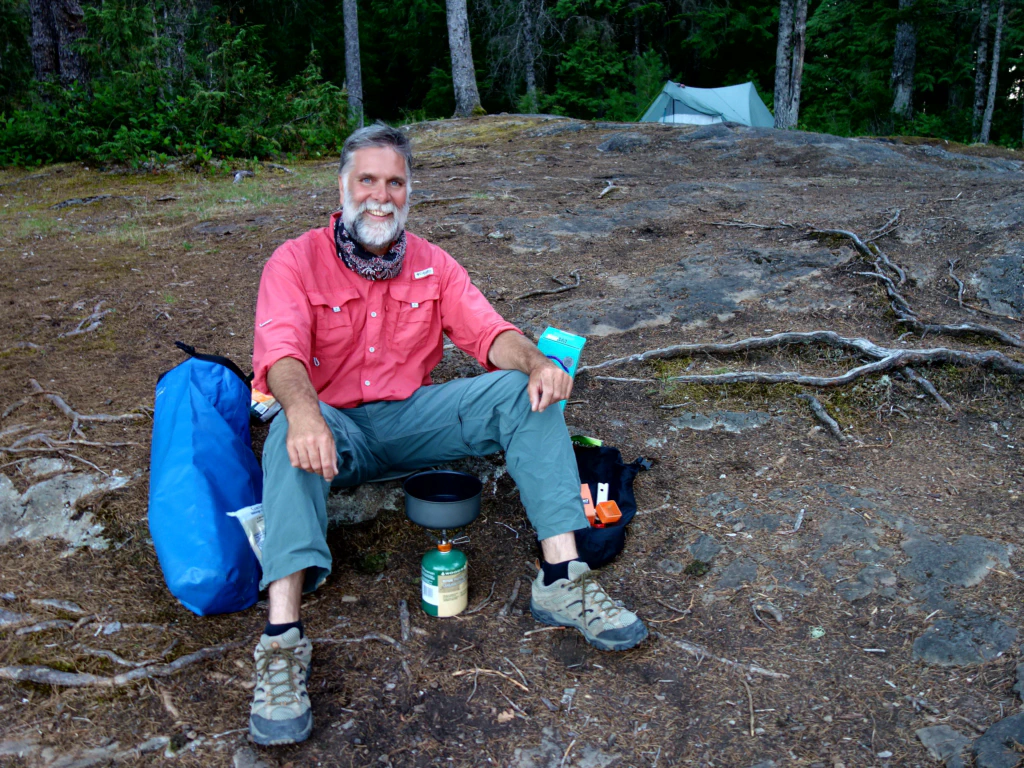
My great wish during our trip was to see a bear. But when we were lying in our tents in the evening, I found the possibility of being visited by bears rather less desirable. Even if a bear encounter is a rare stroke of luck. It did nothing to reassure me either that a) we had bear spray with us, b) we hung our food from a tree bear-safely, and c) on leaving the last lake we had spotted a bear paw print in the ground…
Apart from a few mice sniffing around our tent, happily we had no nocturnal visitors. And the next day everything usually looks far more harmless anyway.
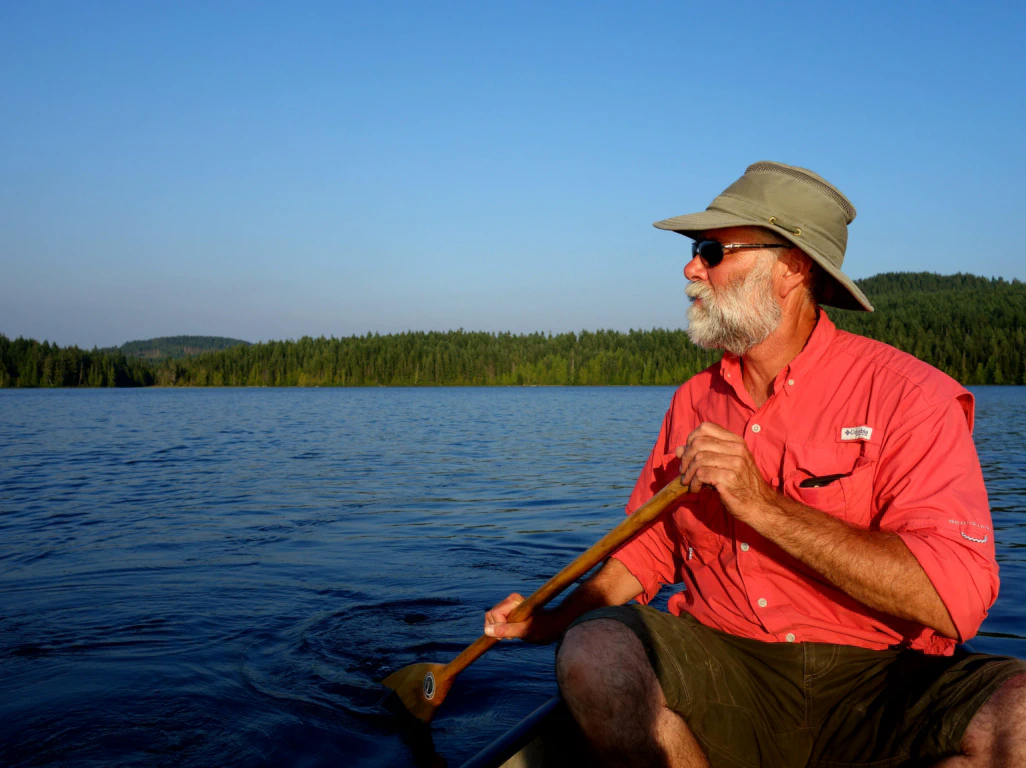
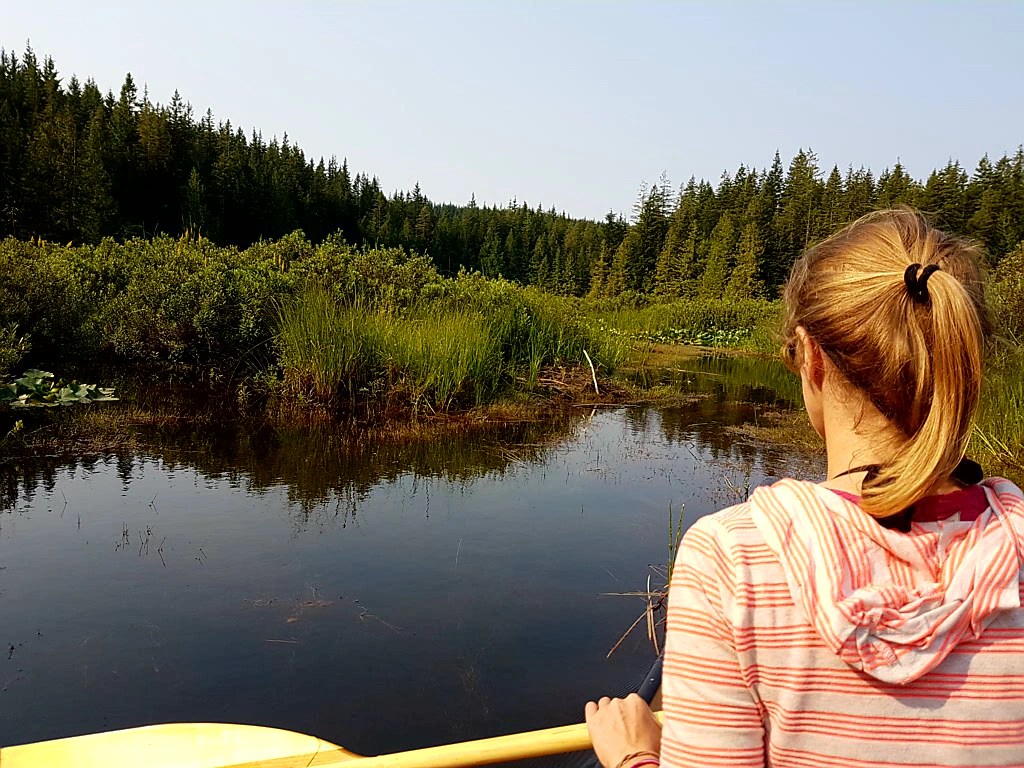
That day two long portages were on the cards: a 1.6 km and a 2.3 km walk with the canoe on your head. That does not sound long, but for the respective Mr Canoehead in particular it is strenuous and uncomfortable!
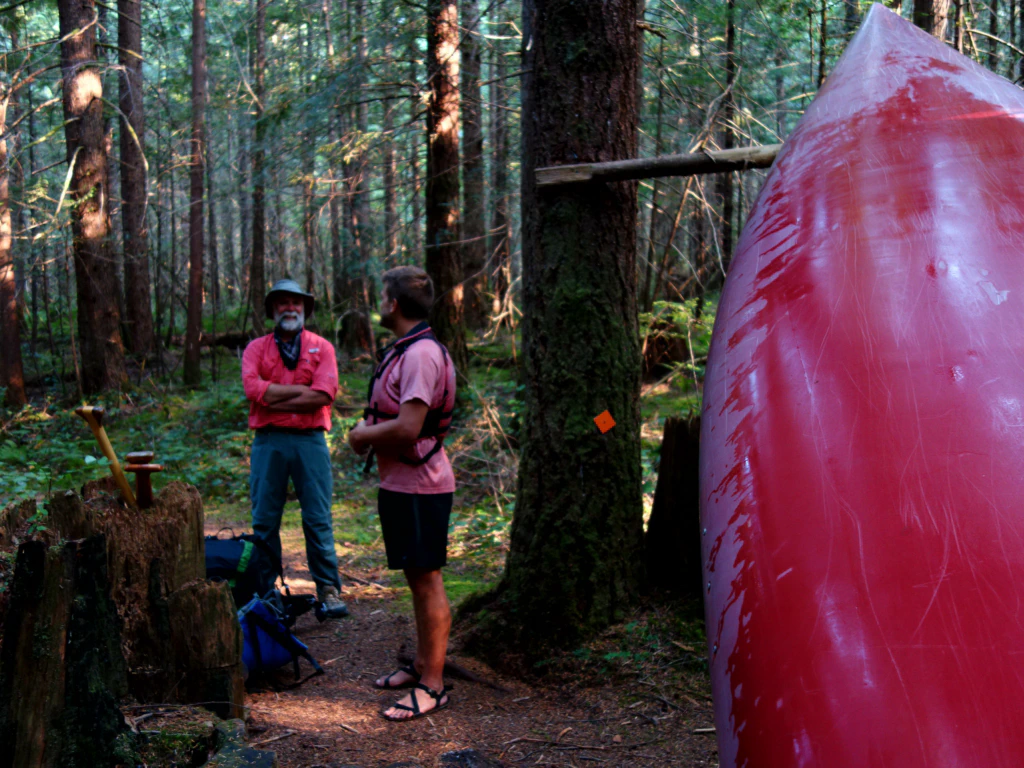
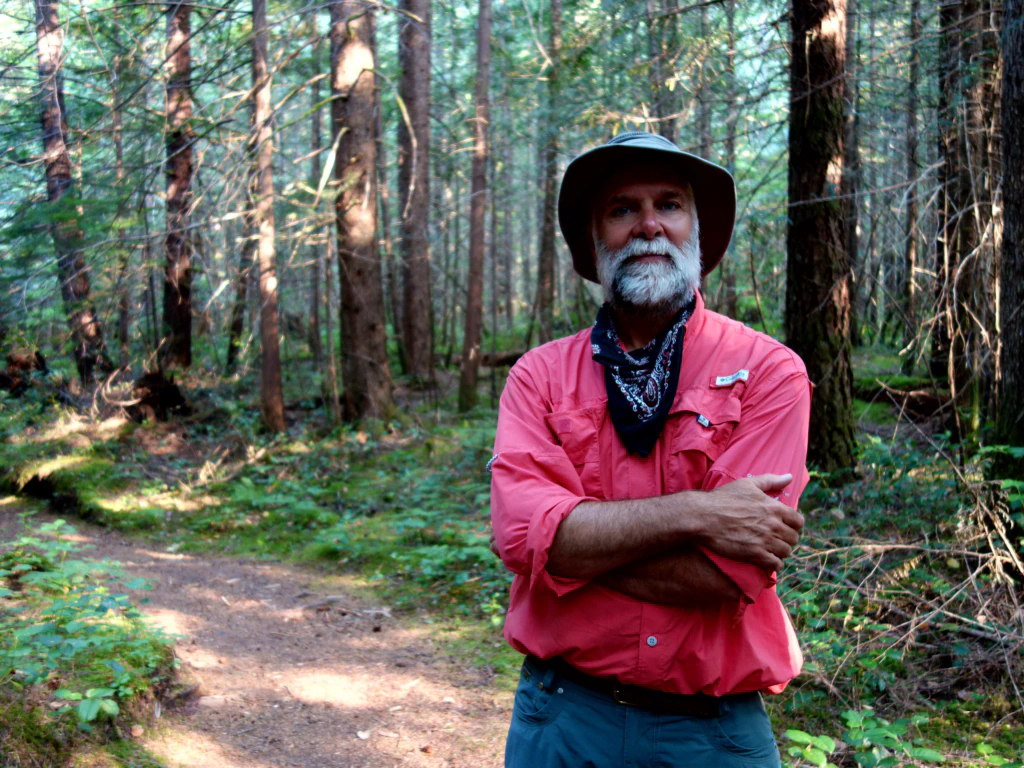
At the end of the first long portage we came across a group of English people who had also taken on the Sayward Canoe Route but were still sitting comfortably over their breakfast. The things they had with them! An enormous tent you can stand upright in, and crates of provisions - in addition to a canoe and two kayaks. It dawned on me that they saw the trip more as a boot camp than as a rest and might genuinely be out here for a week…
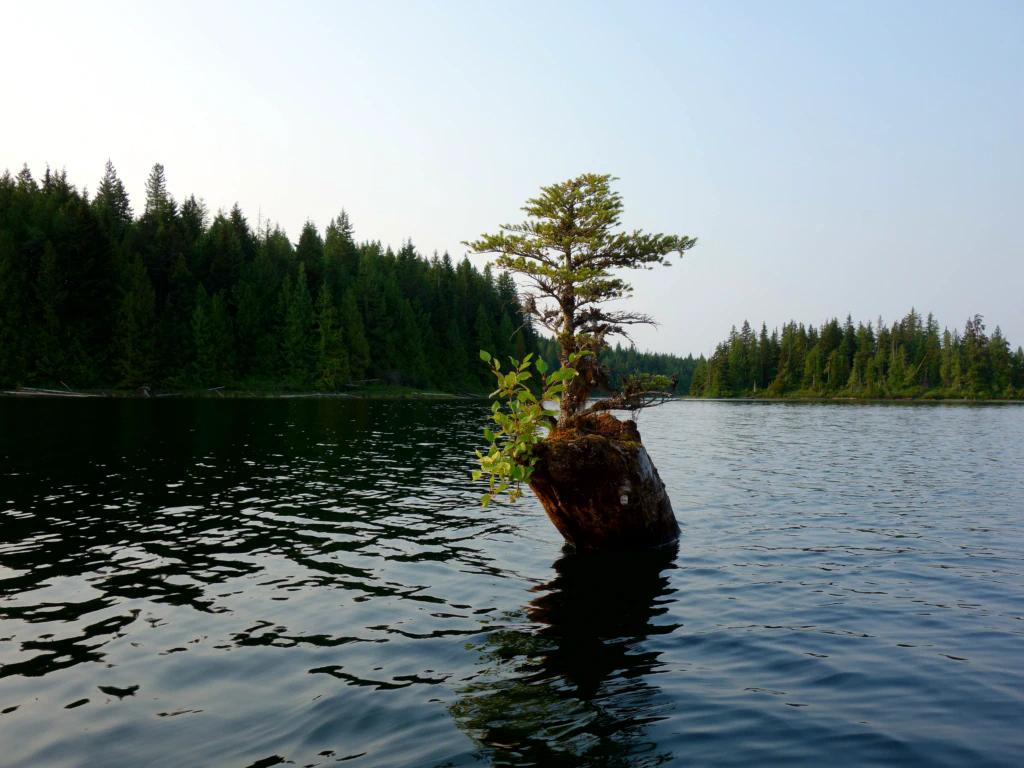
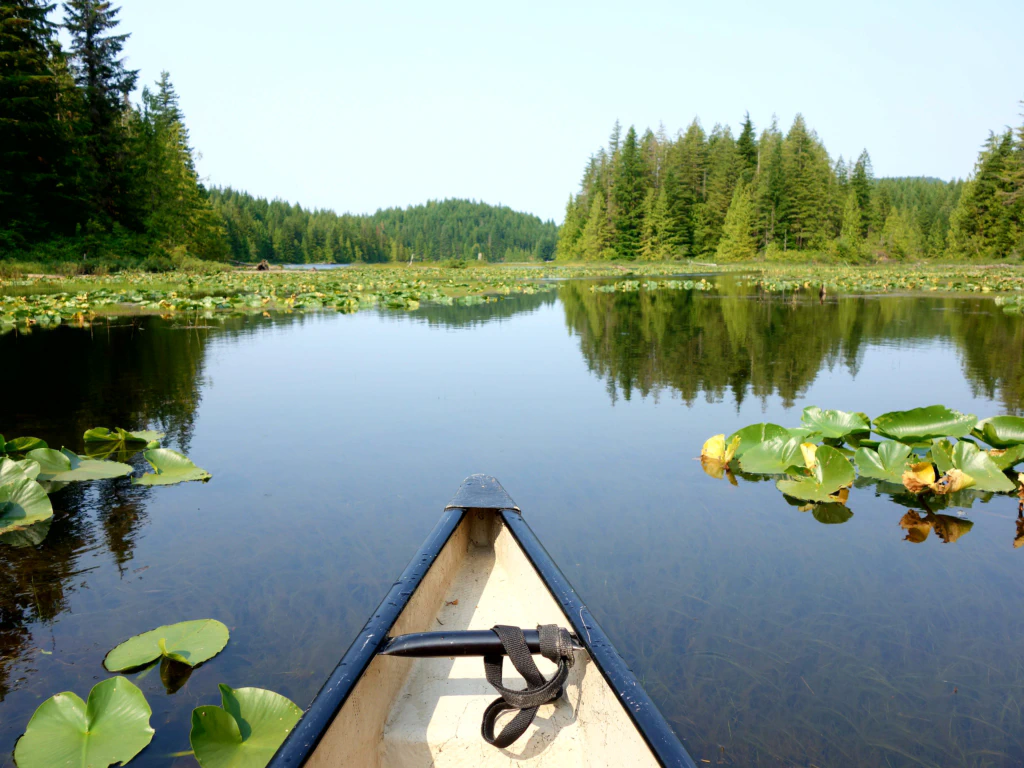
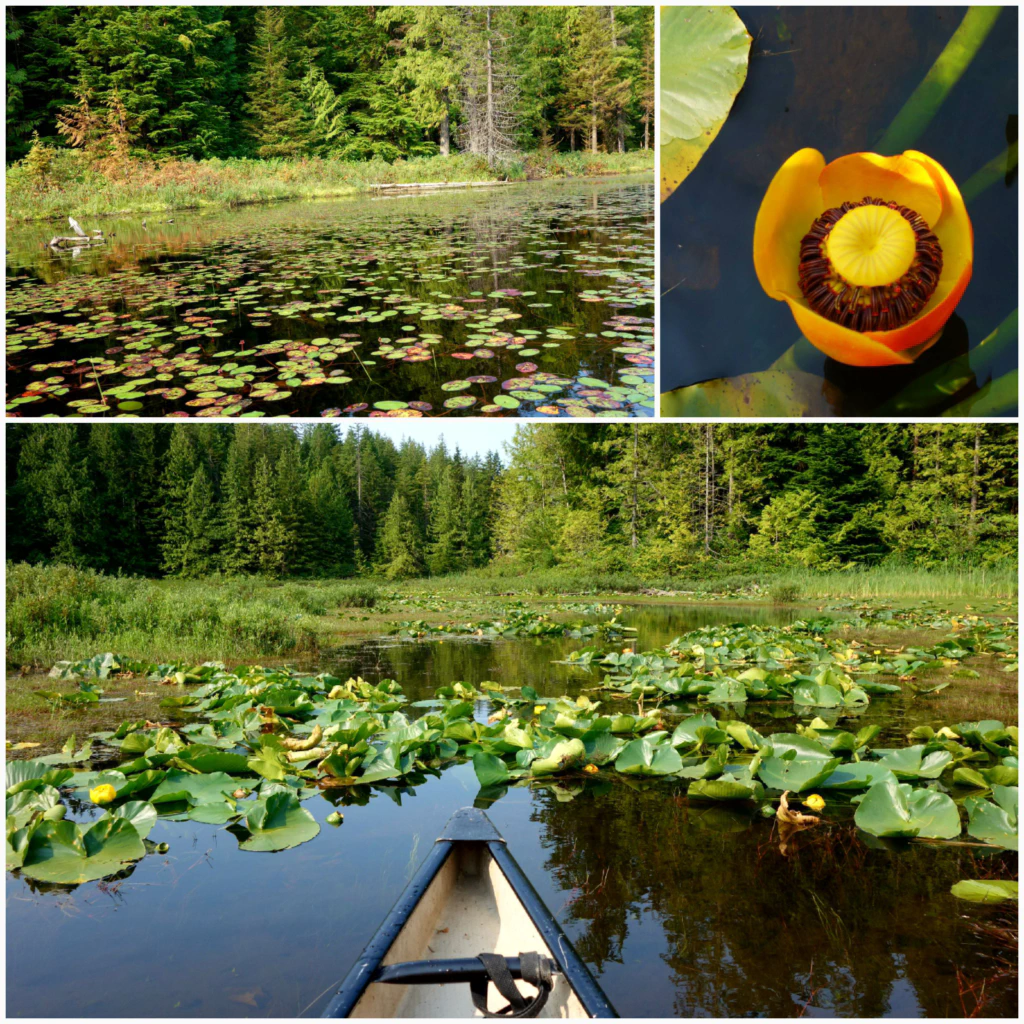
For us, though, it was on through Twin Lake along endless fields of water lilies.
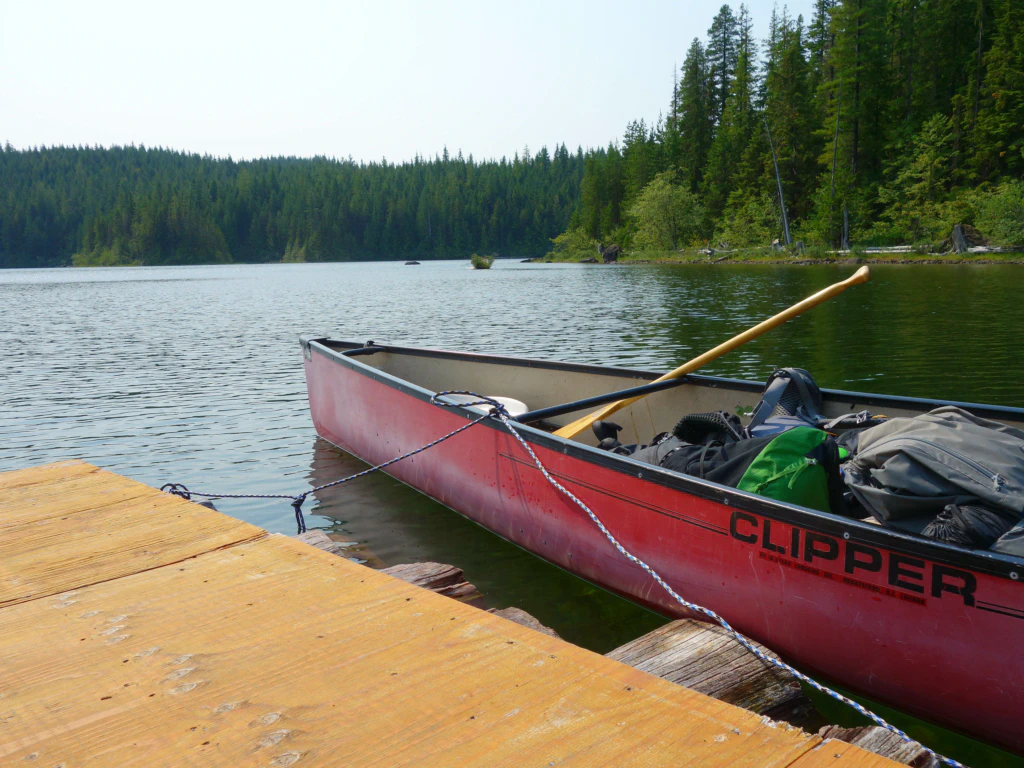
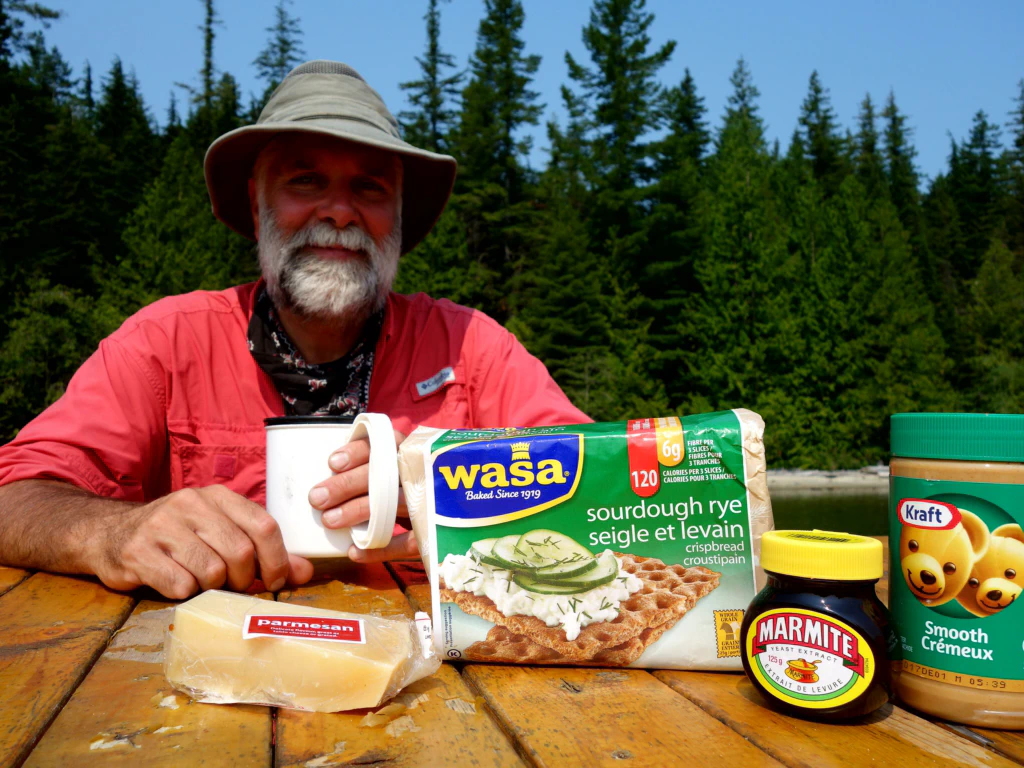
As we cruised across Amor Lake, right on lunchtime we discovered a floating jetty fitted out with a picnic table and benches. What a wonderful idea! We accepted that invitation gratefully!
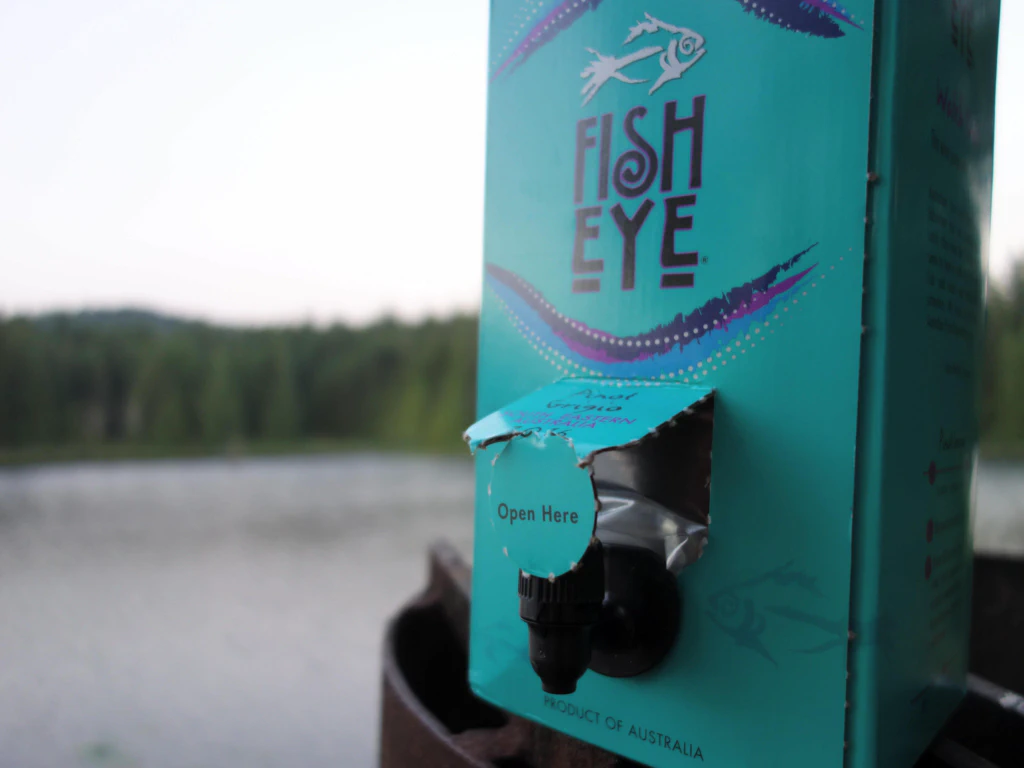
After this wonderfully surprising rest stop it soon meant: portage! And the officially longest stretch at that, 2.3 km to Brewster Lake. Dan and Jan took turns with the canoe while I played camel and shuffled along behind with one rucksack on my back and one on my front. One thing was clear: our wine supply urgently needs drastic reduction!!!
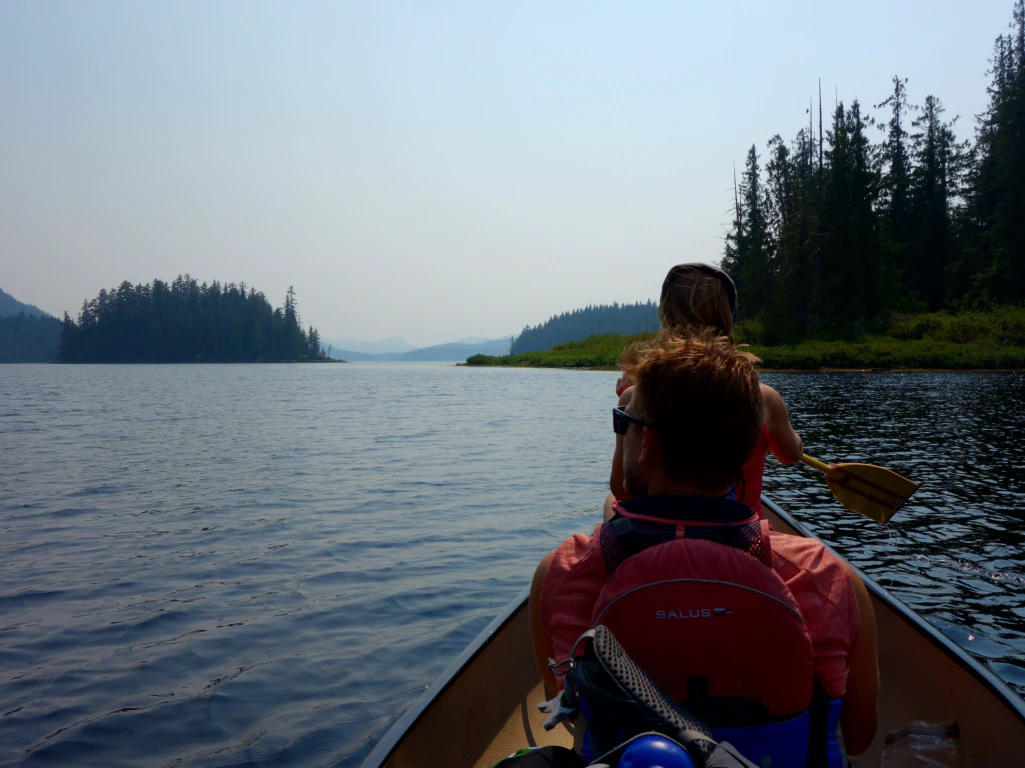
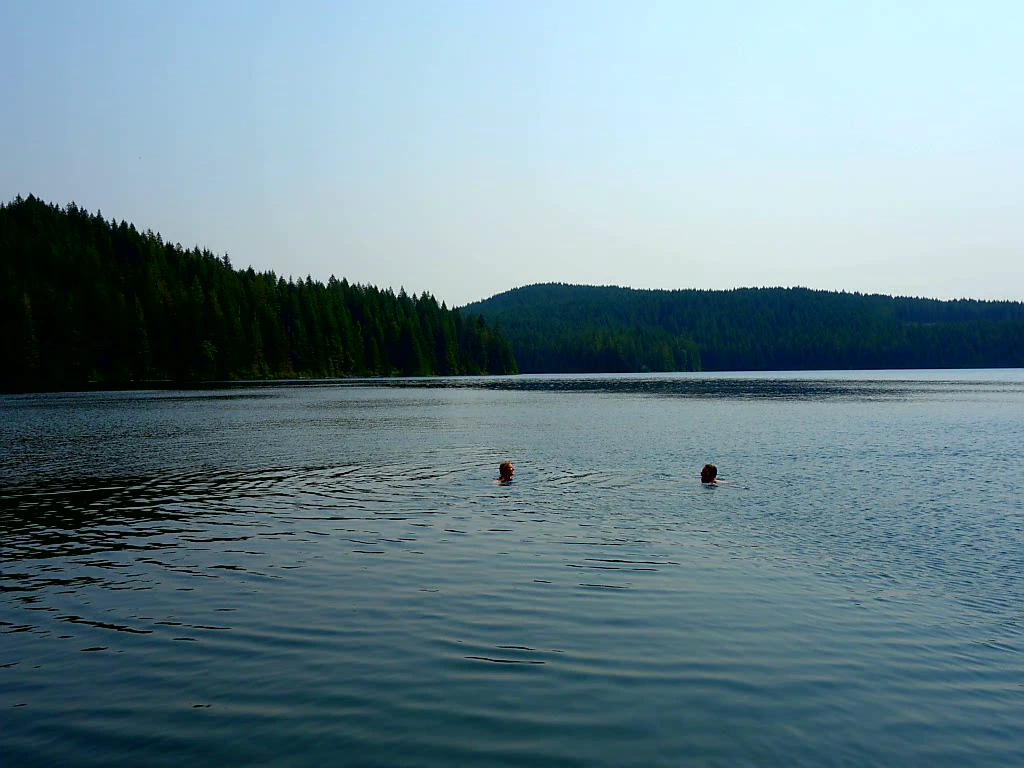
In the afternoon the Brewster Point campsite on Brewster Lake beckoned to us, with not a soul yet settled in for the coming night. Time to swim and to minimise our wine weight. Ideally at the same time.
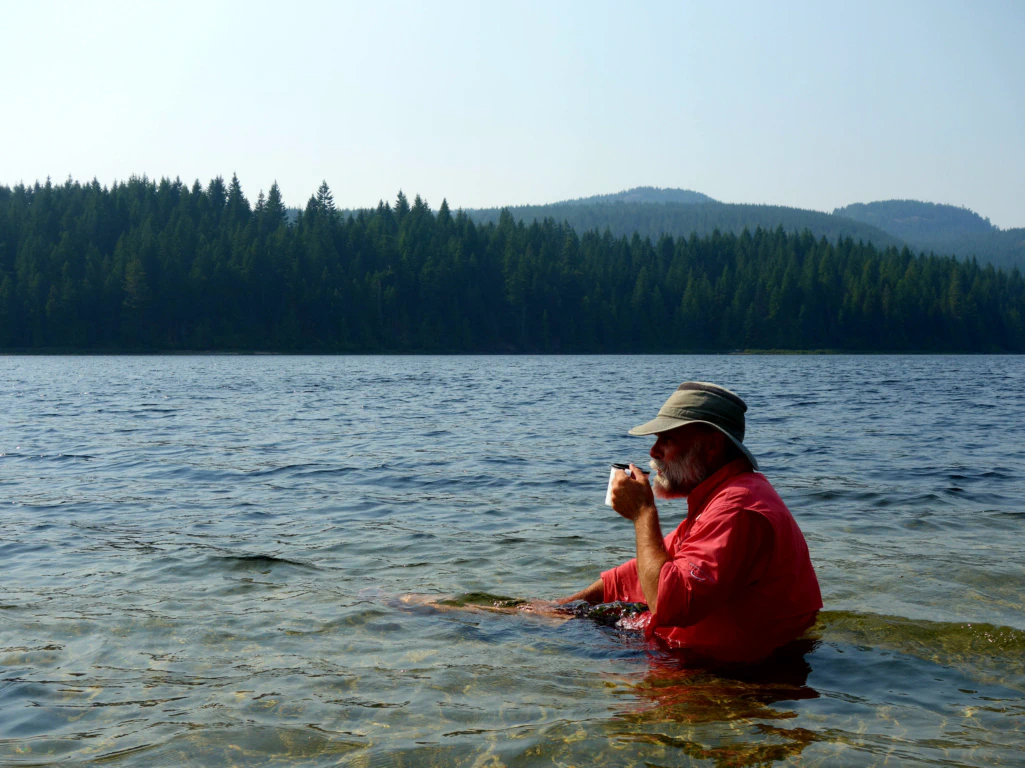
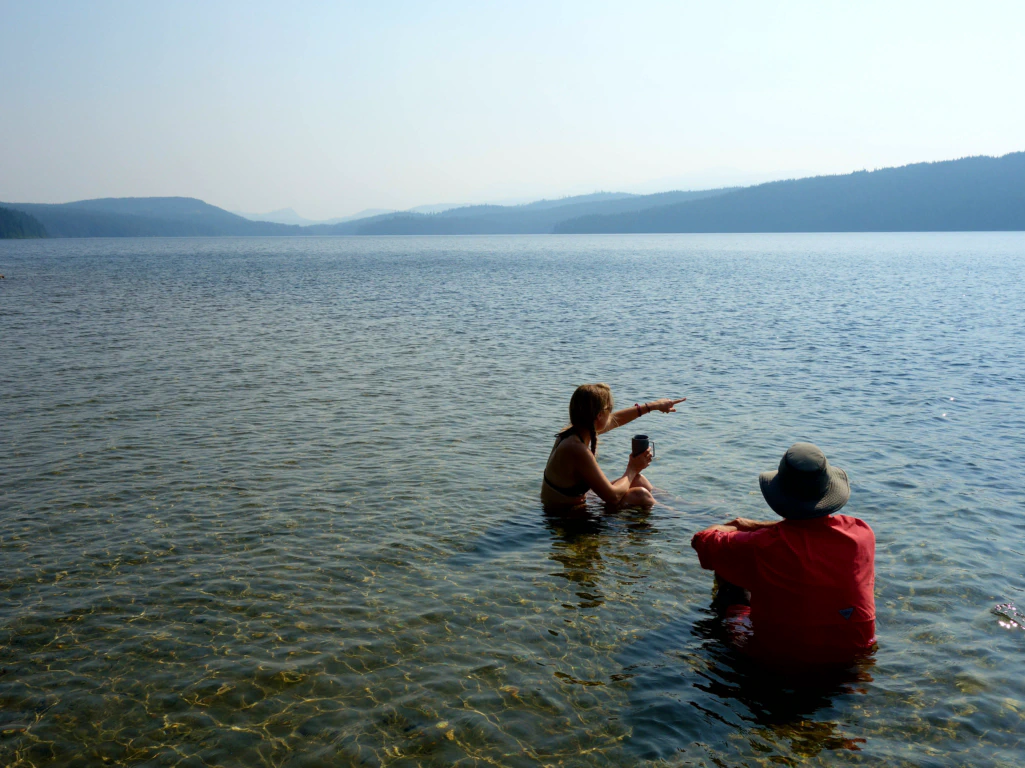
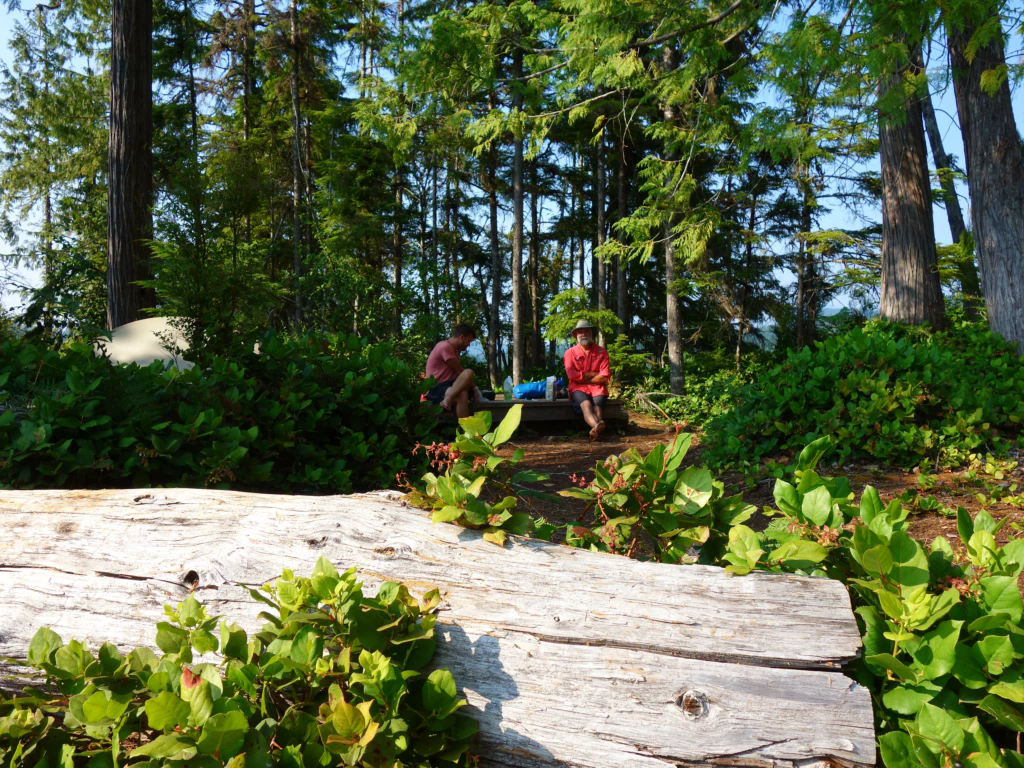
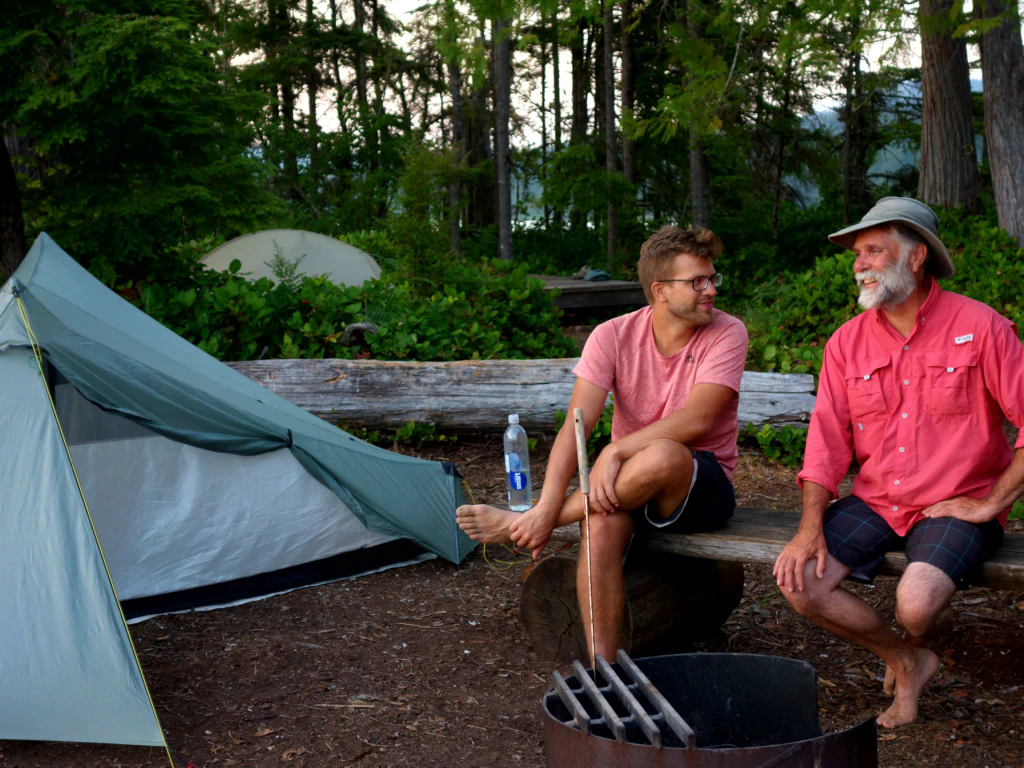
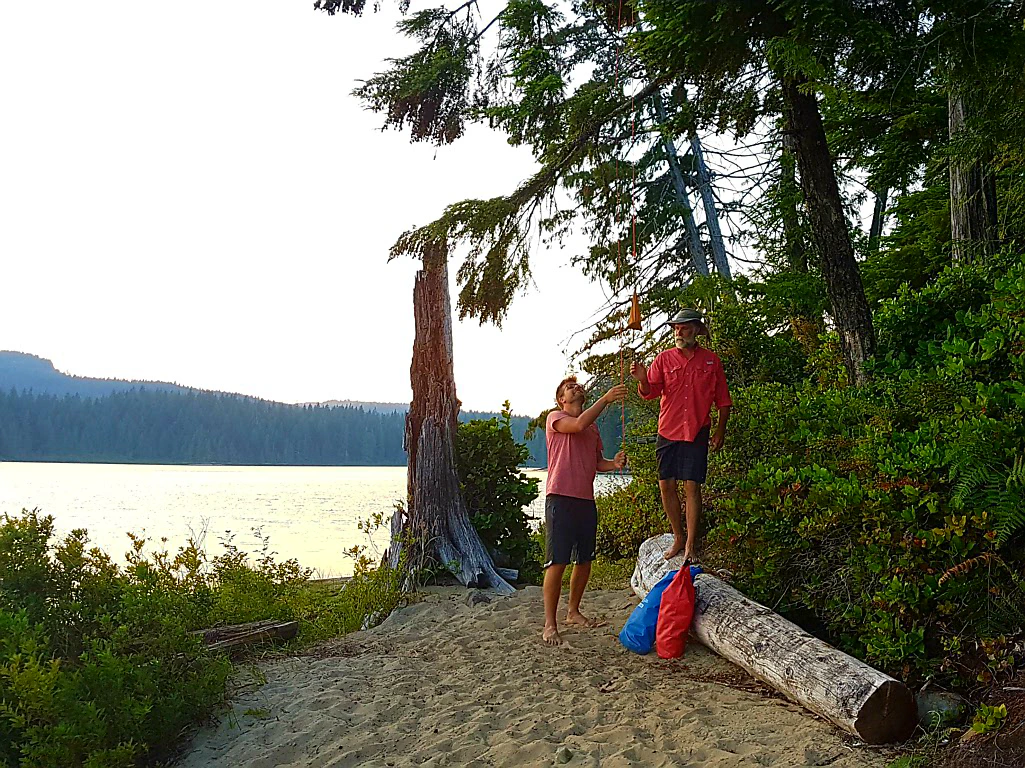
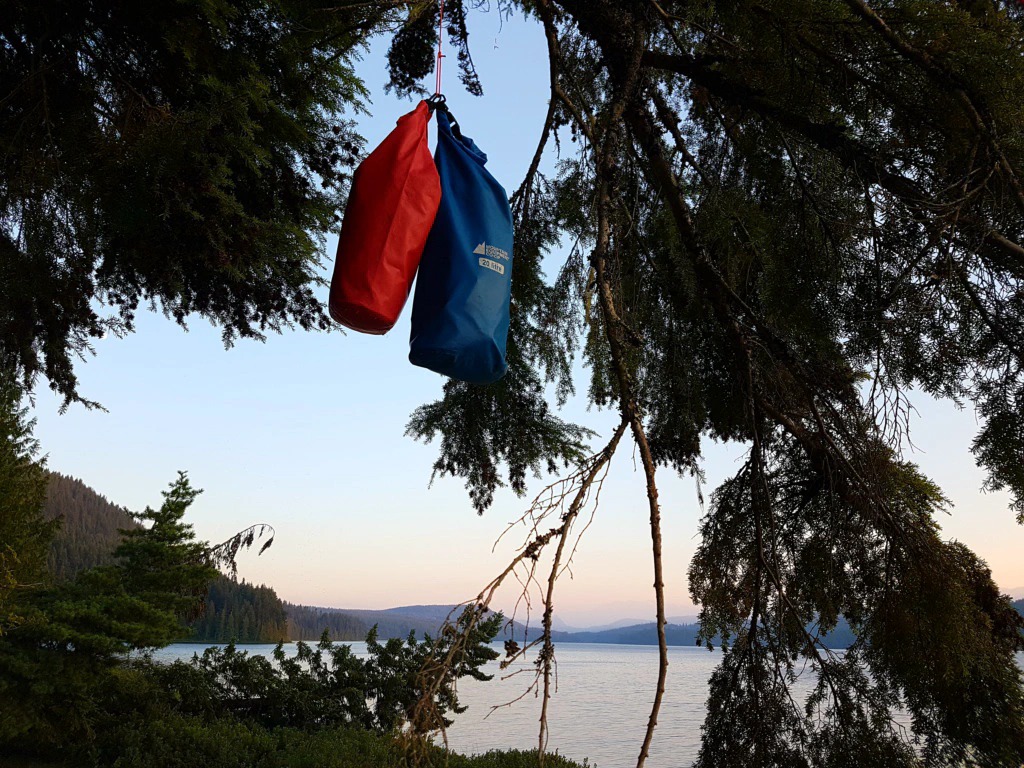
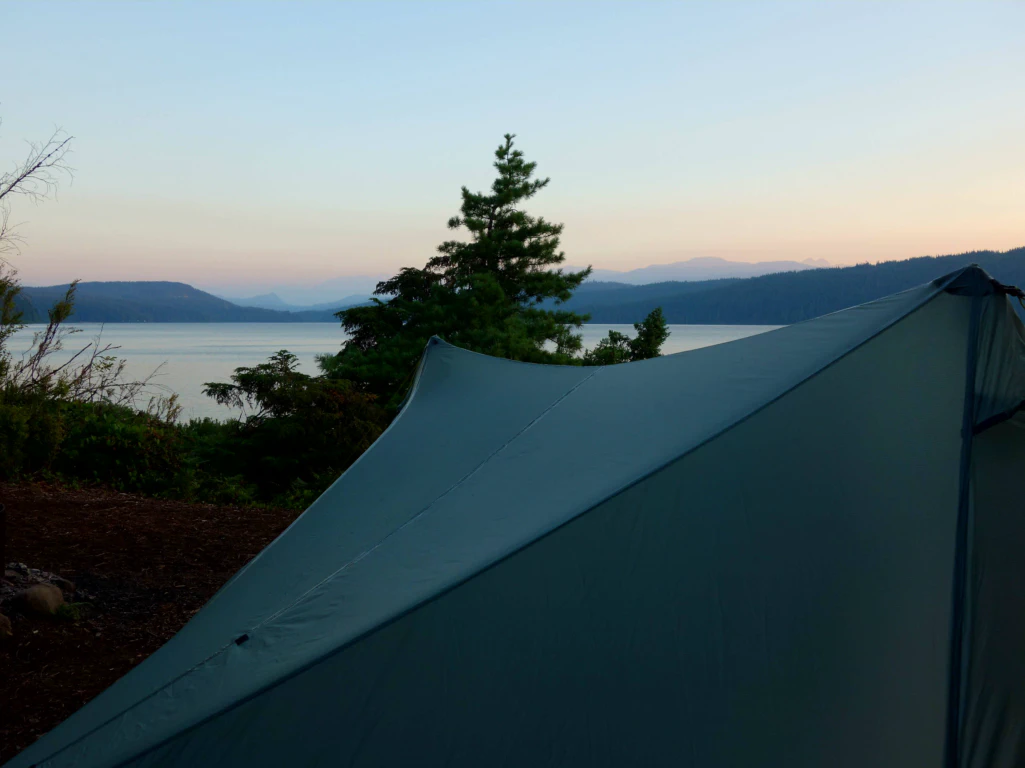
Over the course of the evening more and more of the surrounding mountains became visible.
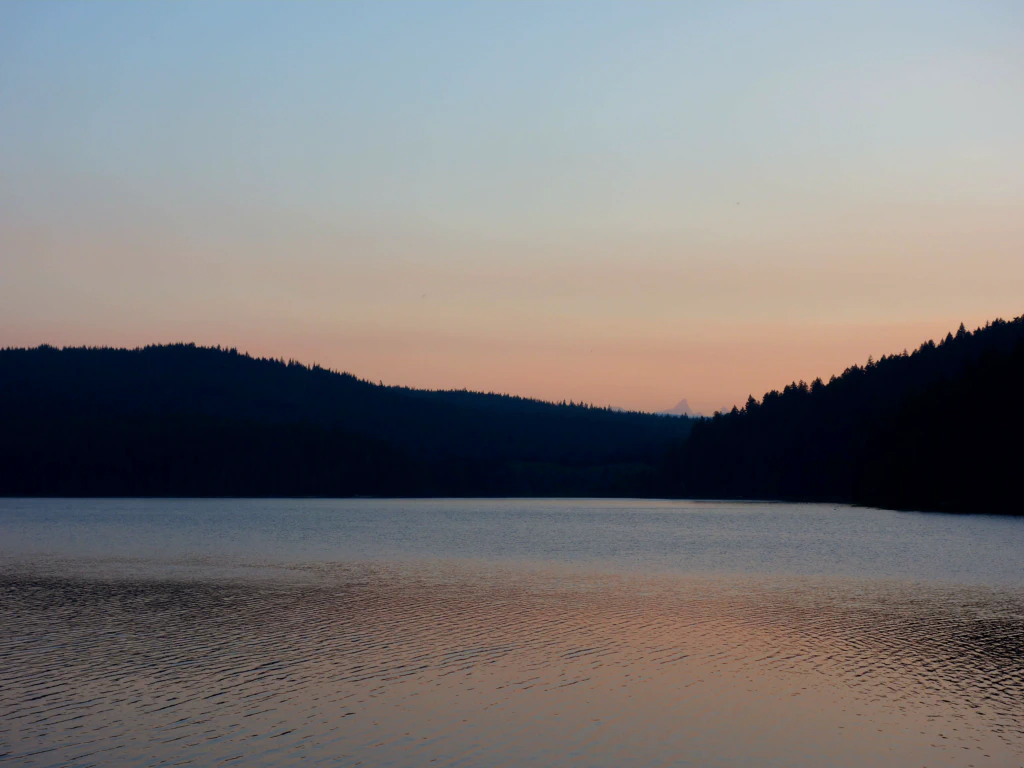
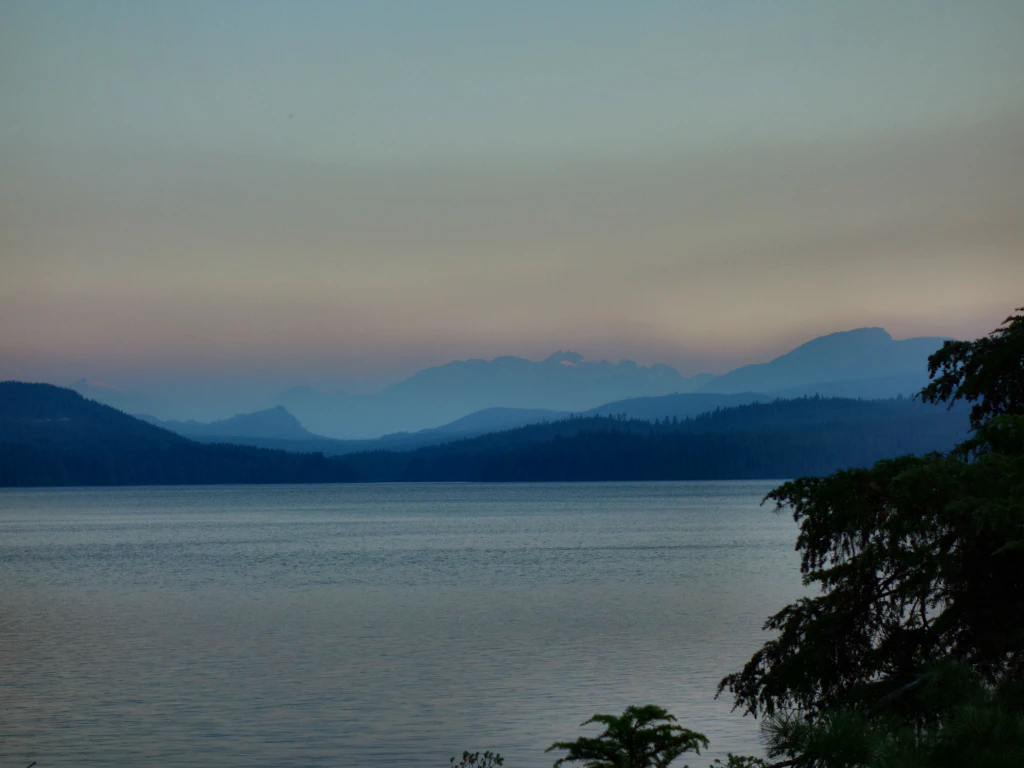
Later in the evening another group joined us at the campsite. Since two of them slept in hammocks, we were assured of a worry-free night: for the bears the two hammock campers would be easier prey than us in our tent.
The next day things got off to a rather laborious start. We had to navigate our canoe through an old bridge, against whose piles masses of driftwood had washed up.
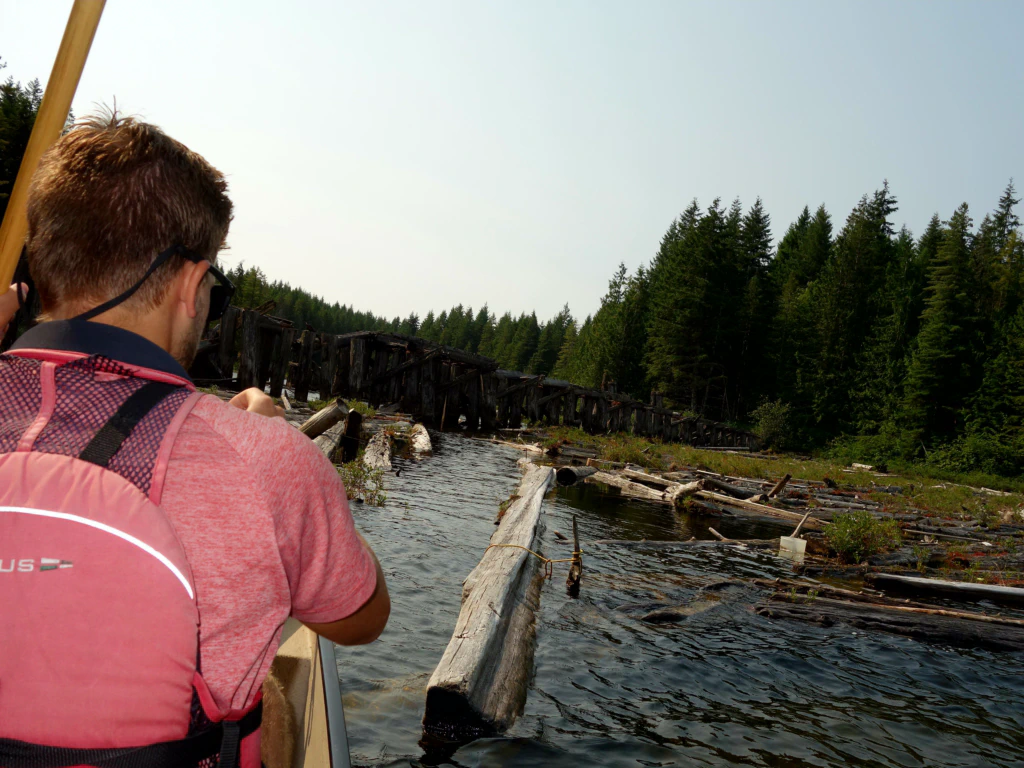
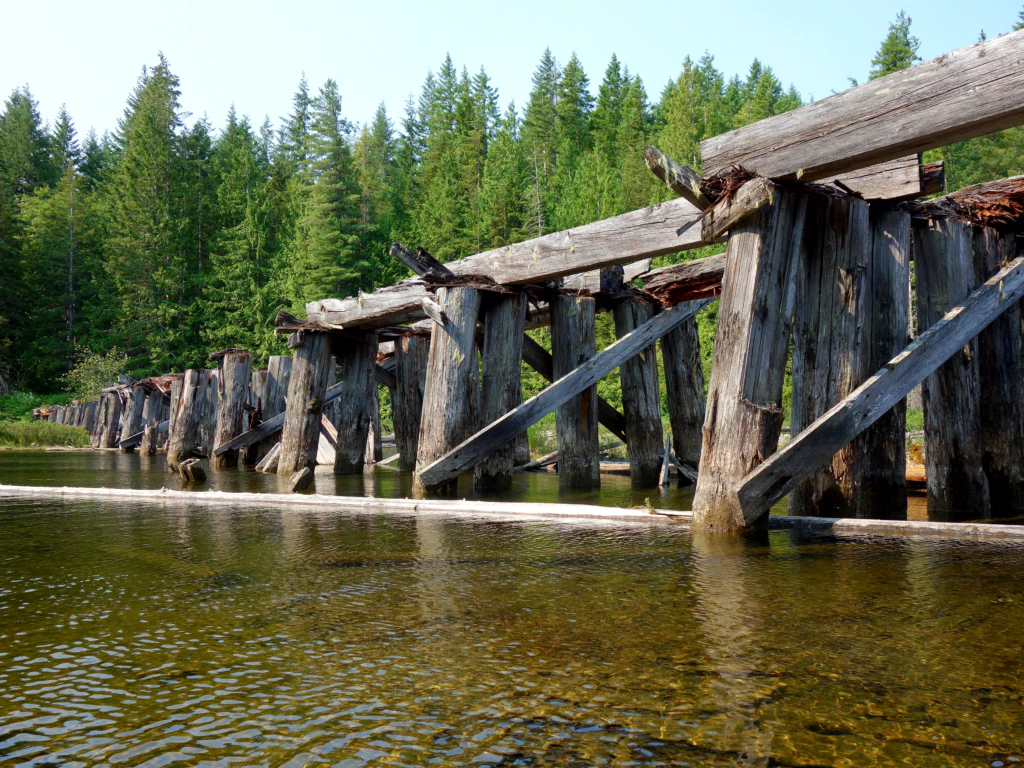
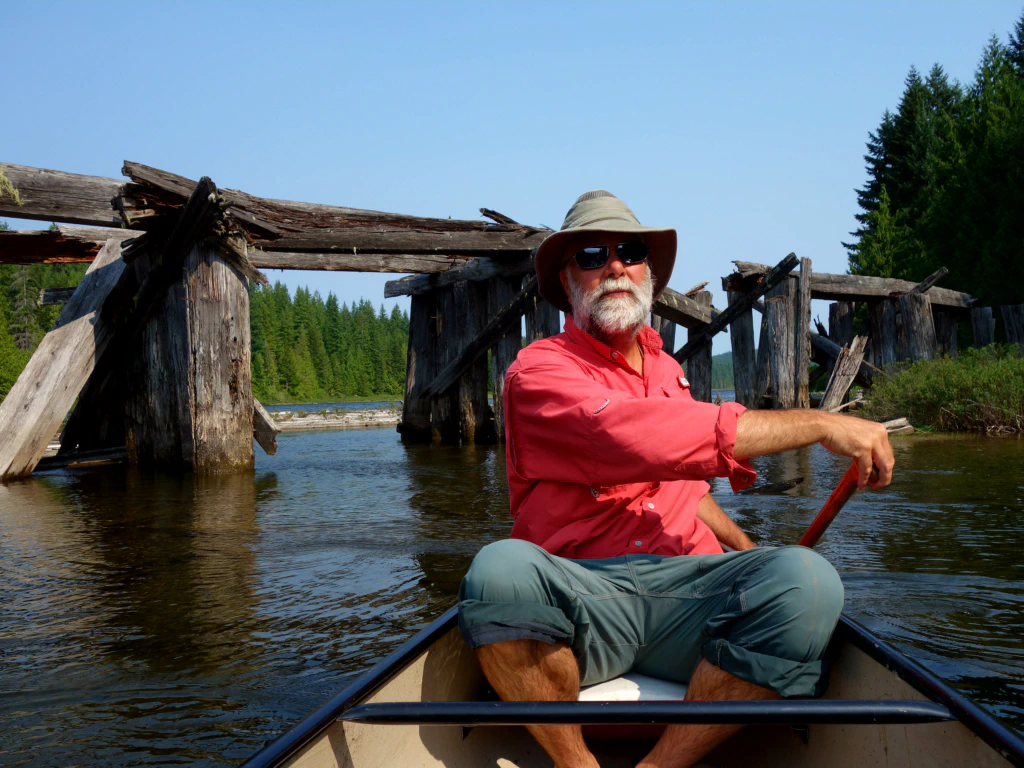
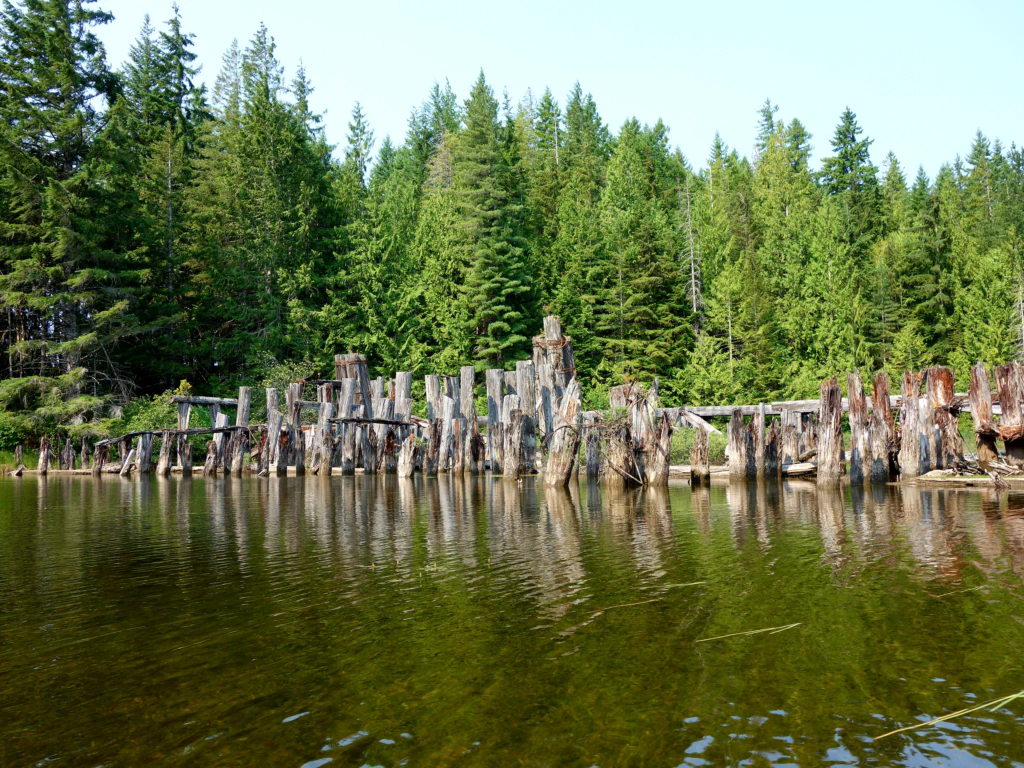
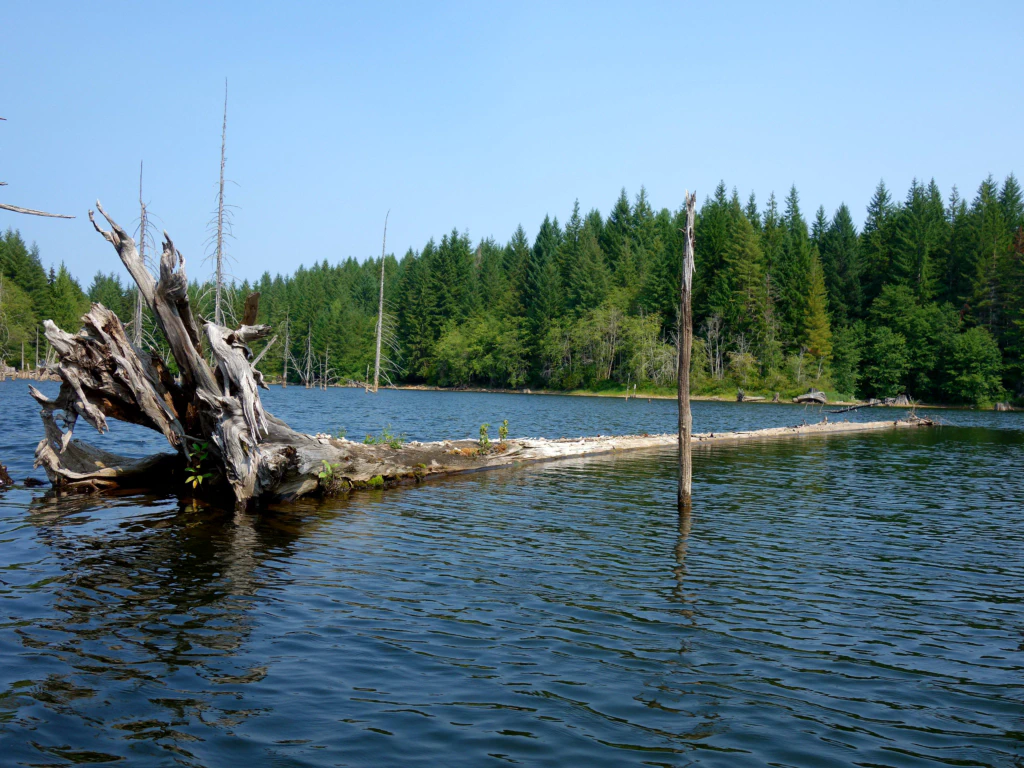
After that it continued in similarly tricky fashion, since we had to cruise through several streams carrying barely any water. Here it meant getting out again and again and wading through the water beside the canoe.
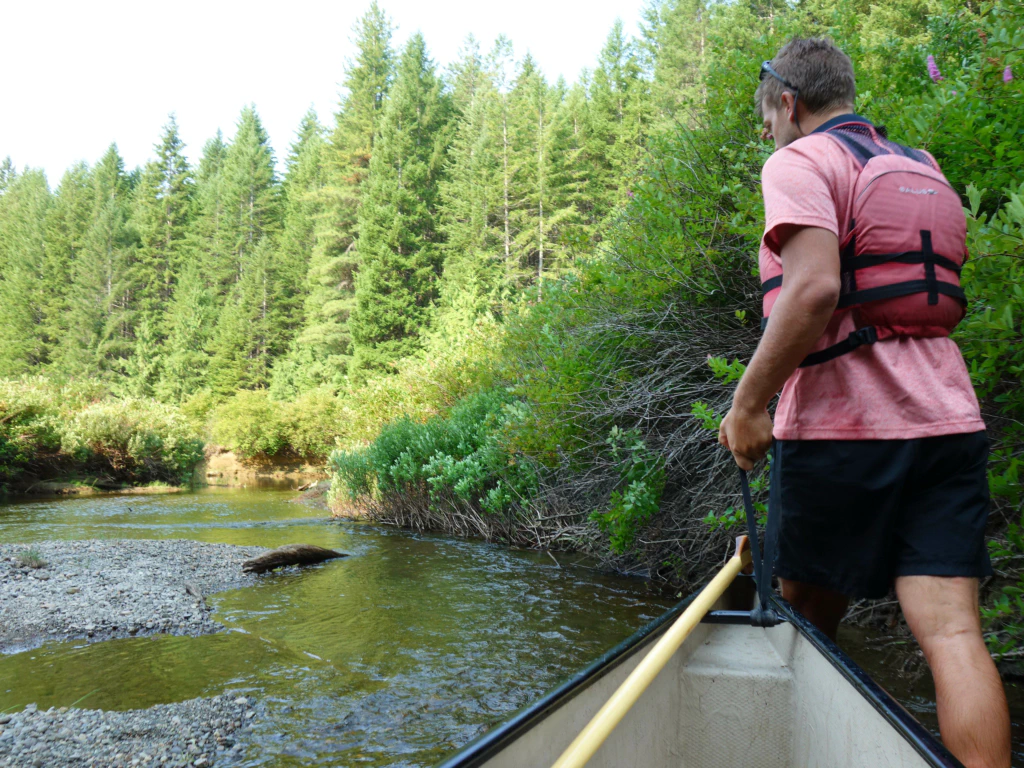
At the start of the next lake Dan found a crayfish in the water, which we caught as the icing on the cake for our lunch. For my lunch, to be precise, since Dan is a vegetarian and Jan is generally rather sceptical about sea creatures. Good for me!
I did of course feel a little sympathy as we threw the crayfish into the boiling water alive. But I greatly appreciated its centimetre of meat and savoured it as it melted on my tongue.
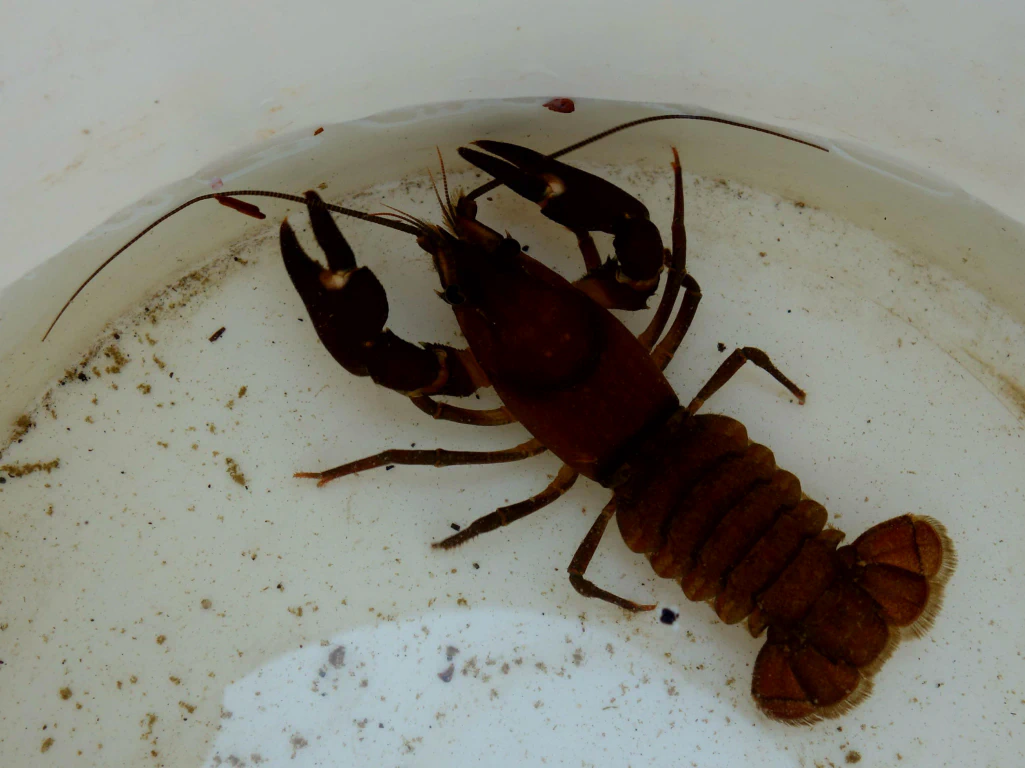
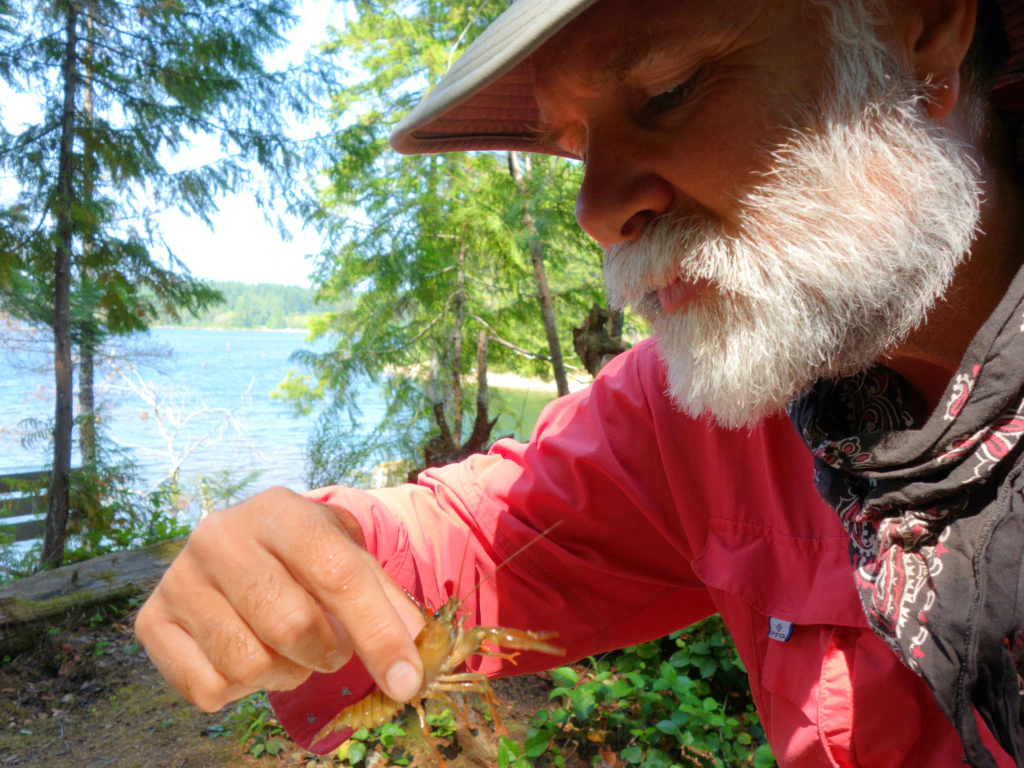
Once again we had found a wonderful campsite all to ourselves, which we enjoyed from the lunch break onwards - especially since the remaining stretch of the Sayward Canoe Route was not long any more either.
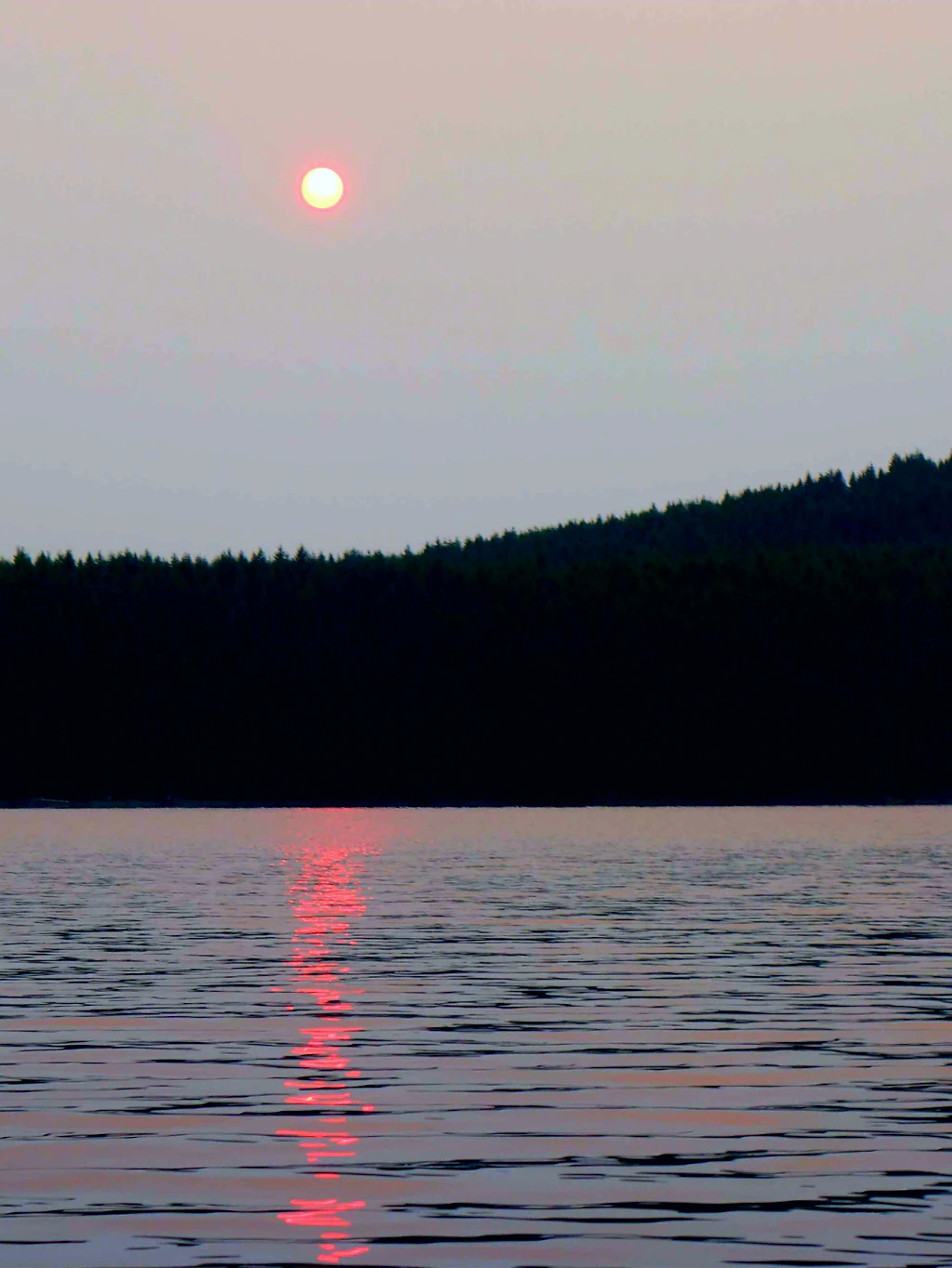
The next morning we paddled early into the day for the final kilometres, to outwit the wind over Campbell Lake that grows stronger as the day goes on. When we woke, the sky was completely overcast for the first time during our stay in Canada. That surprised us, since over 30 degrees had been forecast. As we paddled around the corner towards the east, we caught sight of a fiery red ball in the sky. We had never seen the sun like that before!
Sadly my attempts at photographing it do not come close to conveying the sight. It turned out that the smoke from the forest fires on the mainland had drifted over to Vancouver Island, which is why we could see the sun as a red fireball with perfectly clear outlines - what a way to round off this lovely canoe trip!